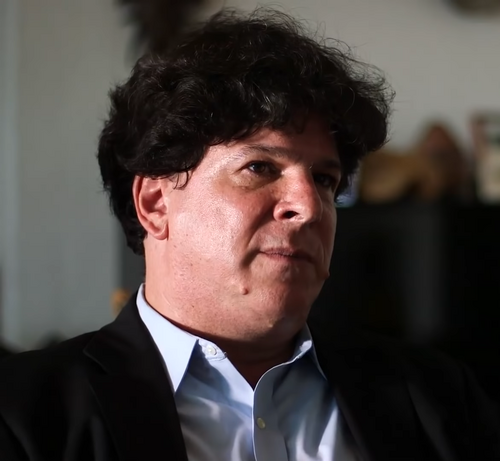
Eric Weinstein
Investor and podcast host who coined the term 'intellectual dark web' and proposed a theory of everything he calls Geometric Unity, which physicists have largely rejected.
 Thiel Capital
More 18

Why mass movements of every kind draw the same frustrated people and use one method.
Also recommended by: Joe Rosenberg, Marc Andreessen and 5 others
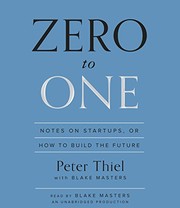
Why startups should build something new and own a small market before growing.
Source: Eric Weinstein on Challenging 'Reality' (The Tim Ferriss Show)
Also recommended by: Balaji S. Srinivasan, Chris Dixon and 37 others
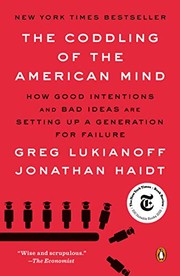
Three false beliefs taught to young Americans, and how they harm their minds.
Also recommended by: Vinod Khosla, Julian Shapiro and 1 other

Mimetic rivalry, where rivals grow alike, and the violence it unleashes in societies.
Also recommended by: Patrick Collison, Peter Thiel
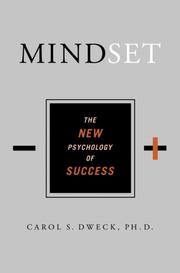
People who think ability grows with effort learn more than those who think it fixed.
Also recommended by: Bill Gates, Derek Sivers, Michael Mauboussin and 15 others

How the spaces it is made for, from cathedrals to earbuds, shape music.
Also recommended by: Derek Sivers, Jim Collins

Rules and a beat sheet for writing a marketable screenplay.
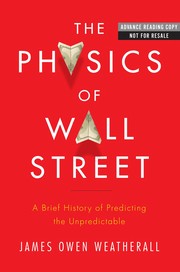
How physicists and mathematicians brought their models into finance.
Also recommended by: John C. Bogle

A four-step method to cut work, automate income and take free time now.
Also recommended by: Andrew Wilkinson, Ev Williams and 19 others
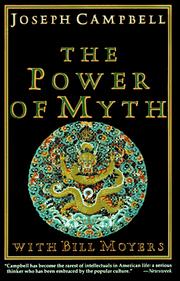
Conversations on the myths that cultures share and the stories they tell themselves.
Also recommended by: Jim Collins, Nat Eliason, David Perell and 2 others

Lectures covering biology and genetics.

An anthology of writing about science.
An elementary introduction to gauge theory in physics.
The concepts of elementary particle physics, in two volumes.
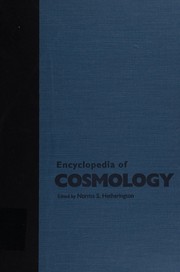
An encyclopedia of cosmology and astronomy.
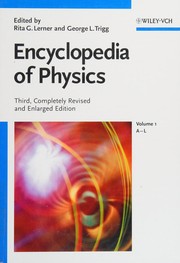
More than 500 articles by experts covering physics and the physical world.

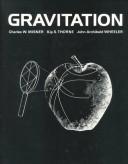
An introduction to special and general relativity.
A textbook on grand unified theories in particle physics.
A graduate tutorial on superstring theory and its attempt to unify physics.
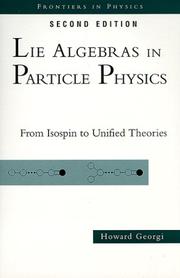
Lectures that teach group theory and Lie algebras for use in particle physics.
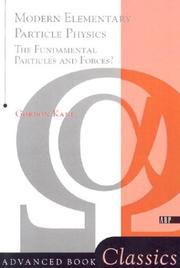
The Standard Model of particle physics for readers with one introductory course.
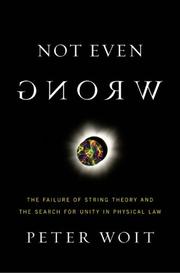
Argues that string theory is not a theory at all, since it makes no predictions.
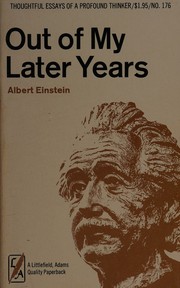
Essays, talks and letters from 1934 to 1950 on social, religious and school issues.
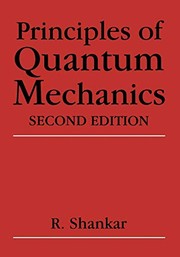
A college textbook of quantum mechanics and its mathematics.
Also recommended by: Patrick Collison

How Dyson, Feynman, Schwinger and Tomonaga built quantum electrodynamics.
Results in quantum field theory obtained by topological methods.
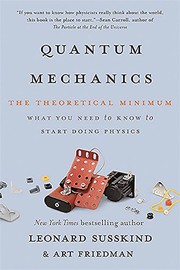
The theory and mathematics of quantum mechanics, from uncertainty to particle states.

A scientist with an uncanny sense of smell and his attempt to explain how noses work.
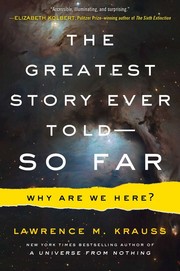
What reality is made of, told through the story of light and the laws of physics.
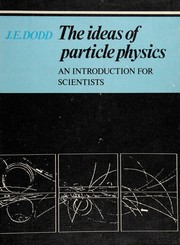
An introduction to particle physics between textbooks and popular accounts.
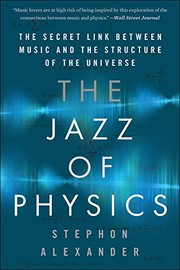
A physicist and jazz musician on sound as a link between relativity and quanta.
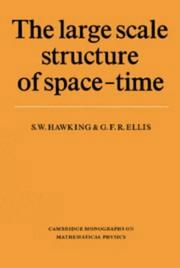
The mathematics of general relativity behind gravitational collapse and singularity.
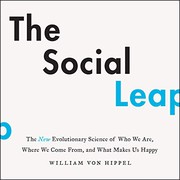
How challenges in human evolution shaped our psychology.
A first course in physics and its mathematics for the ardent amateur.
Also recommended by: Patrick Collison
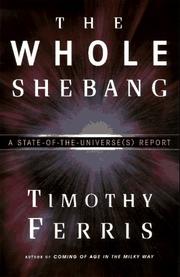
A report on how science today pictures the universe as a whole.
About 150 thinkers on the scientific ideas they expect to change the world.
Also recommended by: Patrick Collison
An introduction to differential geometry: curves, surfaces and curvature.
Also recommended by: John Doerr
A graduate reference on the analysis and geometry used in mathematical physics.

Also recommended by: Patrick Collison

An informal graduate introduction to homotopy and cohomology via differential forms.
An introductory textbook of differential topology.
A textbook on information theory.

A textbook on formal languages, automata and computational complexity.

General relativity presented for mathematicians.
A textbook introduction to econometrics.

Linear algebra taught through the four fundamental subspaces of a matrix.
Graduate geometry of surfaces, transformation groups, fields and manifolds.

The modern theory of supermanifolds, from analysis over supernumbers on.
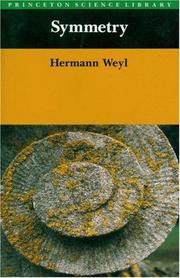
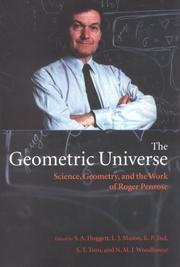
Essays on geometry and physics inspired by the work of Roger Penrose.
Problems and algorithms in advanced scientific computation.

The Atiyah-Singer index formula and its use in gauge-theoretic physics.

A thriller about a computer program that runs on after its creator's death.
Also recommended by: Balaji S. Srinivasan, Brad Feld and 2 others

A novel of the young Einstein's dreams of different kinds of time, in 1905.
Also recommended by: David Perell, Patrick Collison and 2 others

More than two hundred German folk tales, collected in the early nineteenth century.

Thirty of the best tales from the major periods of a master of the short story.
The two Alice books with the original illustrations and extensive notes.

King Gilgamesh and the wild hero Enkidu become friends and travel together.
Also recommended by: Ryan Holiday, Stewart Brand

A bored boy drives through a magic tollbooth into the troubled Kingdom of Wisdom.
A history of economic theory and the economists who built it.

How economics can explain tastes rather than take them as given.

A humorist's world tour asking why some places prosper and others fail.

How economics copied the maths of 19th-century physics, and what that cost it.
Also recommended by: Michael Mauboussin
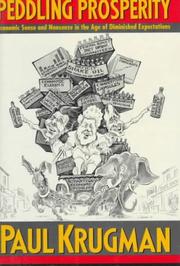
Twenty years of American economic debate, and which ideas made sense.
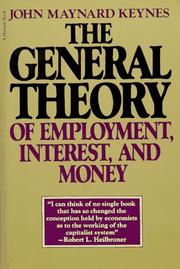
How employment, interest and money interact across a whole economy.
Also recommended by: Howard Marks, John C. Bogle and 5 others

A phrasebook, dictionary and beginner's course in Indonesian.

A course from beginner to intermediate Hindi, in 24 chapters of dialogues.
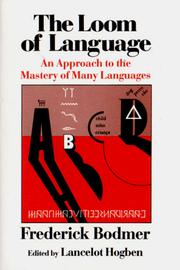
A guide to learning more than one language, focused on Europe's languages.
Also recommended by: Tim Ferriss

A complete course in Russian for beginners.
Collected journalism of a satirist who went from student radical to conservative.

A collection of satirical reporting on war and politics.
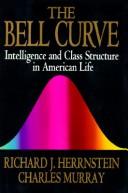
The claim that intelligence shapes income and status in America, and its effects.

A sex researcher's case against popular myths about sex and gender identity.

The plots of a hundred great operas, told for listeners.

The modal system of Turkish art music, including the music of the Whirling Dervishes.

An A-to-Z perfume guide whose authors praise, joke about and scold each scent.

A biochemist's memoir.
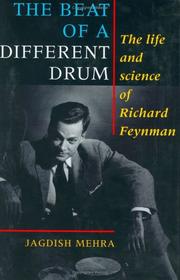
The life and scientific work of the physicist Richard Feynman.

A life of Paul Dirac, a discoverer of quantum mechanics.
Twelve rules for living, each drawn from clinical practice, biology and myth.
Also recommended by: Derek Sivers, Guy Spier, Nat Eliason and 7 others

How people and cultures react to death, and what that reaction does to them.
Also recommended by: Nat Eliason, Marc Andreessen
A case for free speech against censorship and ideology.
How media in democracies serve state and corporate power while claiming independence.

A guide to building vocabulary with words from the press.

A text and reference on pattern recognition, from speech to character recognition.

A volume of a writer's diary: art, drugs and travels to Sweden, Paris and Venice.

The Nazi and Stalinist mass murders in the lands between, told as one history.
Also recommended by: Peter Thiel

Case histories of patients with strange neurological disorders.

Short advice for fathers raising sons.

A history of professional wrestling in America, from legitimate sport to spectacle.
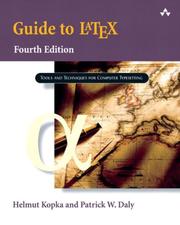
How to typeset technical material with LaTeX.
| Eric Weinstein: The Hidden Tech That Could Save Us Is Being Buried | First Principles | 2026-11-01 | 19 min | What if the most important technologies that could save humanity are being deliberately buried by the people who claim to protect us? In this eye-opening episode, Adrian Wells sits down with Eric Weinstein to expose the hidden power structures suppressing breakthrough innovations while we watch civilization teeter on the edge. 🎯 What You'll Learn: • Why over 5,000 patents get classified by the US government every single year under secrecy orders • How major tech giants like Google and Facebook maintain deep intelligence agency connections through contracts most people never hear about • The shocking reason nuclear weapons technology hasn't evolved since the 1960s despite billions in research funding • Eric's framework for recognizing when you're being fed manufactured narratives versus actual truth 👤 Perfect for: lifelong learners and anyone passionate about personal growth who wants to understand the real forces shaping our world behind the scenes. 📍 Chapters: [00:00] Adrian Wells introduces the technologies being hidden from us [01:30] The government's post-WWII physics research lockdown [04:00] 5,000 patents classified annually: what they don't want you to build [07:00] Big Tech's intelligence connections: the contracts that change everything [10:00] Why breakthrough energy and propulsion research gets buried [12:00] How to spot suppressed innovation in your own field This isn't conspiracy theory territory. |
| Eric Weinstein: The Coming Tsunami of Artificial Life, AI Existential Risk & Global Chaos | Joannes Wyckmans Podcast | 2026-10-14 | 48 min | Eric Weinstein: The Coming Tsunami of Artificial Life, AI Existential Risk & Global Chaos Is humanity approaching a turning point that could change civilization forever? In this thought-provoking discussion, Eric Weinstein explores the coming tsunami of artificial intelligence, the potential emergence of artificial life, and the existential risks that advanced AI could pose to humanity, capitalism, and the global labor market. Weinstein examines escalating geopolitical tensions involving Ukraine, China, and Iran, the mysteries surrounding unidentified anomalous phenomena (UAPs) and non-human intelligence, and the controversial possibility that government programs are concealing information from the public. He also challenges the current state of academia and theoretical physics, questioning whether institutional power is holding back scientific progress and new discoveries. Beyond technology and geopolitics, this conversation explores human resilience, the future of work, the limits of scientific institutions, and the importance of maintaining optimism, compassion, independent thinking, and a sense of purpose in an increasingly uncertain world. |
| Eric Weinstein: The State of American Science, Breakthrough Coverups, and the Danger of Physics | All-In with Chamath, Jason, Sacks & Friedberg | 2026-08-26 | 1:30 | (0:00) Eric Weinstein joins the show! (03:09) Has American science stalled? Cowboy science, Fauci, and the scientific precariat (21:31) Weinstein's fix: Blow a hole in the Civil Rights Act, kill peer review, fund people not ideas (41:36) Ed Witten drove physics off a cliff, and is Renaissance Technologies a secret Los Alamos? (52:49) Boom, Vroom, Zoom: Did stagnant physics save the human species? (01:07:11) UAPs, multi-temporal adversaries, and Einstein's prison (01:16:12) China poaches our best scientists, AI reads the trash can corpus Thanks to our partners for making this possible! As wealth grows, complexity compounds. Between investments, tax strategy and estate planning, coordinating it all can feel like a full-time job. Creative Planning can help with the heavy lifting. https://ad.doubleclick.net/ddm/trackclk/N2598215.3565131ALLIN/B36182939.452362736;dc_trk_aid=646454825;dc_trk_cid=260464105;dc_lat=;dc_rdid=;tag_for_child_directed_treatment=;tfua=;ltd=;dc_tdv=1 With over nine million acres protected across all fifty states, The Conservation Fund secures the irreplaceable lands we love. |
| The Conversation That Changed Everything: Ben Shapiro, Jordan Peterson, Eric Weinstein & Dave Rubin | The Rubin Report | 2026-08-10 | 56 min | Dave Rubin of "The Rubin Report" talks with Ben Shapiro, Jordan Peterson, and Eric Weinstein about the origins of the Intellectual Dark Web; why free speech, open debate, and civil disagreement became the foundation of their conversations; how challenging the strongest version of opposing arguments leads to better thinking; why identity politics and ideological tribalism undermine meaningful discourse; the importance of intellectual humility, curiosity, and changing your mind; self-improvement versus systemic problems; entrepreneurship, individual responsibility, and institutional failure; the future of political conversation; and much more. Today's Sponsors: Kalshi - Download the Kalshi app and use code RUBINREPORT to get up to $500 in bonus credits when you trade $25 or go to https://kalshi.com/r/RUBINREPORT . DISCLAIMER: 18+ only. Restrictions and eligibility requirements apply. Event contract trading involves risk and may not be suitable for all investors. Prices, values, and available markets may differ from those mentioned. For more information see kalshi.com/regulatory BUBS Naturals - BUBS helps restore collagen levels closer to what your body had in its youth—so your joints feel stronger, your hair and nails grow healthier, and your skin looks smoother. Live Better Longer with BUBS Naturals. |
| ‘I STAND By It!' Nicholas Kristof DOUBLES DOWN on NYT Israel Brutality Report - With Eric Weinstein | Piers Morgan Uncensored | 2026-06-25 | 1:08 | President Trump reportedly berated members of his own party yesterday in a bad-tempered meeting with Senate Republicans on the Iran War. Several Republicans defied Trump to pass a War Powers resolution which - symbolically - orders him to end military action or get their permission first. But while the endless MAGA schisms are fascinating, they are not the main barrier to peace - and Trump knows it. Israel is bitterly opposed to the US deal with Iran and has made its feelings known. Successive US presidents stood by Israel throughout the war on Gaza, even as many of its traditional allies expressed shock and alarm at the scale of civilian suffering. But just as the US met the limits of its power in the war on Iran. Israel is discovering that the limits to its power are met by challenging America’s interests. Piers Morgan speaks to New York Times columnist Nicholas Kristof, a twice-winner of the Pulitzer Prize, who faced a ferocious outcry for his work last month and Executive Director of the Urban Warfare Institute John Spencer. Then, for the first time in our Uncensored London studios, Piers sits down with mathematician Eric Weinstein, who’s both a close friend of JD Vance and a strident supporter of Israel. Piers Morgan Uncensored is proudly independent and sponsored by: Dose: New customers save 35% on your first month of subscription by going to dosedaily.co/PIERS or entering PIERS at checkout. |
| Joe Rogan Experience #2503 - Eric Weinstein | The Joe Rogan Experience | 2026-05-21 | 3:00 | Eric Weinstein, PhD, is a mathematician, former managing director of Thiel Capital, and a manager of the Galileo Project research team. He is the originator of the Intellectual Dark Web and creator of Geometric Unity: a proposed geometrically unified theory of fundamental physics. www.youtube.com/@EricWeinsteinPhD www.geometricunity.org www.eric-weinstein.com Perplexity: Download the app or ask Perplexity anything at https://pplx.ai/rogan . Visit https://squarespace.com/ROGAN to save 10% off your first purchase of a website or domain. MANSCAPED® 15% OFF your entire order. Visit https://manscaped.com/joeroganexperience Learn more about your ad choices. Visit podcastchoices.com/adchoices |
| "Existential Threat To Human Life" Eric Weinstein On Iran, Epstein, UFOs & More... | Piers Morgan Uncensored | 2026-03-06 | 49 min | While many of us have been debating men in women’s sport and woke Hollywood, Dr Eric Weinstein has long maintained that three far more consequential stories will define our age… the success or failure of the Iranian regime; the looming artificial intelligence megashock, and the extraordinary reach of Jeffrey Epstein into HIS world - the field of science. He joined Piers Morgan to explain more… Learn more about your ad choices. Visit podcastchoices.com/adchoices |
| Do breakthroughs require rule-breakers? with Eric Weinstein | Inner Cosmos with David Eagleman | Inner Cosmos with David Eagleman | 2026-02-23 | 1:33 | Why do revolutionary ideas so often come from outsiders? Do good scientists sometimes crowd out great ones? Do we still have room for scientific cowboys? And what is the relationship between national security and modern science? Are scientists participants in a larger game they barely see? What if the most important ideas are the ones you’re not allowed to hear about? From Crick and Watson to nuclear bombs and AI, today we’ll cover it all with physicist, mathematician, and iconoclast Eric Weinstein. |
| Is This The End of Humanity? - Eric Weinstein | TRIGGERnometry | 2026-02-11 | 1:22 | Eric Weinstein is a mathematician and commentator known for Geometric Unity and sharp cultural analysis. | Earn a yield on gold https://monetary-metals.com/triggernometry/ Triggernometry is proudly independent. Thanks to the sponsors below for making that possible: - Qualia Stem Cell. Go to https://Qualialife.com/TRIG for up to 50% off AND use code TRIG at checkout for an additional 15% off. - Let our sponsor, American Financing, help you regain control of your finances. Go to https://americanfinancing.net/triggernometry | Disclaimer: NMLS 182334, nmlsconsumeraccess.org. APR for rates in the 5s start at 6.196% for well qualified borrowers. Call 866-885-1948, for details about credit costs and terms. Join our exclusive TRIGGERnometry community on Substack! https://triggernometry.substack.com/ OR Support TRIGGERnometry Here: Bitcoin: bc1qm6vvhduc6s3rvy8u76sllmrfpynfv94qw8p8d5 Shop Merch here - https://www.triggerpod.co.uk/shop/ Advertise on TRIGGERnometry: marketing@triggerpod.co.uk Find TRIGGERnometry on Social Media: https://twitter.com/triggerpod https://www.facebook.com/triggerpod/ https://www.instagram.com/triggerpod/ About TRIGGERnometry: Stand-up comedians Konstantin Kisin (@konstantinkisin) and Francis Foster (@francisjfoster) make sense of politics, economics, free speech, AI, drug policy and WW3 with the help of presidential advisors, renowned economists, award-winning journalists, controversial writers, leading scientists and notorious comedians. |
| Aliens, Illuminati & REAL Time Travel - Top Scientist Eric Weinstein On TRS | The Ranveer Show हिंदी | 2026-01-29 | 2:09 | Check out BeerBiceps SkillHouse's YouTube 1O1 Course - https://youtube.beerbicepsskillhouse.in/youtube-101Check out my Mind Performance app: Level SuperMindLink:- https://level4665.u9ilnk.me/d/F1ZOZV4OnTShare your guest suggestions hereMail - connect@beerbiceps.comLink - https://forms.gle/aoMHY9EE3Cg3Tqdx9Join the Level Community Here:https://linktr.ee/levelsupermindcommunityFollow BeerBiceps SkillHouse's Social Media Handles:YouTube: https://www.youtube.com/@BeerBicepsSkillHouseInstagram: https://www.instagram.com/beerbiceps_skillhouseWebsite : https://beerbicepsskillhouse.inFor any other queries EMAIL: support@beerbicepsskillhouse.comIn case of any payment-related issues, kindly write to support@tagmango.comFollow Eric Weinstein's Social Media Handles:-Instagram: https://www.instagram.com/ericrweinstein/?hl=enX: https://x.com/EricRWeinsteinIn this 459th episode of The Ranveer Show, we are joined by Dr. Eric Weinstein, a world-renowned mathematician and physicist. He shares deep insights on the existence of Aliens, the "Legacy Program," Quantum Physics, the Deep State, and the future of Human Consciousness. This episode takes you into the hidden corners of science, government secrecy, and the mathematical fabric of our reality.In this conversation with Eric Weinstein, we talk about the Mystery of UFOs, the Geometry of Waves, the "End of Physics" theory, and how AI is revolutionizing scientific discovery through tools like Alphafold. |
| Eric Weinstein: The Theory He Kept Secret for Four Decades (Geometric Unity) | Theories of Everything with Curt Jaimungal | 2025-06-03 | 3:10 | Eric Weinstein reveals the core of his Geometric Unity theory after 40 years of development. He also explores philosophical implications, quantum‑classical relationships, and the challenges of communicating his ideas. - 00:00 - Intro - 06:50 - Simplifying GU - 07:58 - Philosophical Implications - 11:24 - Quantum vs Classical - 14:15 - Generations Role - 27:58 - Restricted Data - 32:30 - Clear Communication - 36:59 - Explaining GU Challenges - 38:14 - Recognizing Contributions - 49:34 - Seiberg-Witten Story - 1:06:12 - Critical View of Modern Physics - 1:11:59 - Criteria for Valid Theories - 1:14:32 - Quantization Challenge - 1:21:00 - Non-Positive Killing Forms - 1:26:33 - Steelmanning Importance - 1:32:11 - Understanding GU - 1:36:09 - Supersymmetry Nature - 1:37:30 - Supersymmetry Misunderstandings - 1:46:30 - Honoring Contributions - 1:53:06 - Peer Review Injustice - 1:56:33 - Struggle for Recognition - 2:06:02 - Academic Critique - 2:06:51 - Communicating GU Challenge - 2:23:05 - Reactions in Academia - 2:52:57 - Future of GU Discussions - 2:58:49 - Reflections on GU Journey SPONSORS: - Curt Jaimungal Substack: https://curtjaimungal.substack.com Every episode days early, ad-free, plus my essays: https://curtjaimungal.substack.com/subscribe RESOURCES: - Curt explains Eric's Geometric Unity theory: https://youtu.be/AThFAxF7Mgw - Eric's Oxford lecture on Geometric Unity: https://youtu.be/Z7rd04KzLcg - Garrett Lisi discusses his theory of everything on TOE… |
| 'HYPOCRITE!' Dave Smith on Douglas Murray Joe Rogan Debate | Feat Eric Weinstein | Piers Morgan Uncensored | 2025-04-15 | 1:09 | Joe Rogan’s debate between Dave Smith and Douglas Murray has dominated online discourse for days, with supporters spinning for both sides as if it was a presidential election debate. Even President Trump himself seemingly picked a team, when he posted a glowing endorsement of Murray’s new book the very next day. Almost as interesting as the main debate were some of the issues it raised about the way debate has transformed in the digital age. Do you need to travel to a specific country, or experience a war, to have valid opinions about what’s happening there? And should the podcasters who now wield more influence than any TV network be more judicious about who they platform? And who really won Murray vs Smith? Joining Piers Morgan to debate all this is John Spencer, executive director of the Urban Warfare Institute, who took issue with a number of Dave’s points and felt he was “epically dismantled” by Murray. Plus Dave Smith himself, comedian and host of ‘Part of the Problem’ defends himself, before being delving into deeper discussion on war discourse with Harvard mathematician and podcaster Dr Eric Weinstein. Uncensored is proudly independent and supported by: VanMan: Go to https://www.Vanman.shop/discount/PIERS and save 10% off your first purchase. American Hartford Gold: Protect your wealth with precious metals! Call American Hartford Gold today & get up to $15,000 in free silver on your 1st order! |
| Eric Weinstein Reveals UFO Physics! (Exclusive Interview) | American Alchemy with Jesse Michels | 2024-10-04 | 47 min | Eric Weinstein is a mathematician, cultural commentator and Managing Director of Thiel Capital. He has a theory in physics, called Geometric Unity, which attempts to reconcile quantum field theory and relativity. He's a walking anomaly and a complete polymath; genius doesn't do him justice. In this episode, we grab in n' out, talk about intergenerational theft, malaise among young people, artificial general intelligence, UFO's and the "theoretical" media company of the future. *** AMERICAN ALCHEMY is an original series hosted by Jesse Michels that explores the frontier of science and tech. Each week, we bring you exclusive interviews with some of the leading thinkers of our time. INSTAGRAM ➤ https://www.instagram.com/jessemichels TWITTER ➤ https://twitter.com/AlchemyAmerican EMAIL/BOOKINGS ➤ usa.alchemy@gmail.com SUBSCRIBE TO OUR CHANNEL: https://www.youtube.com/channel/UC7eOJzNRWY4l2UTDvIquxYg?app=desktop original music: https://open.spotify.com/artist/6LlLRudDi60Uy4jcmOSEs1 Learn more about your ad choices. Visit megaphone.fm/adchoices |
| Eric Weinstein On Presidential Debate & Beyond | Piers Morgan Uncensored | 2024-09-10 | 42 min | Dr Eric Weinstein, who first coined the term “intellectual dark web”, is a superstar of the alternative media space. Millions watch him for his challenging and sometimes contrarian views on science, culture and politics. In February this year he predicted what he calls “The Switch” - the replacement of President Joe Biden with Kamala Harris. Weinstein now rails against how readily “The Switch” has been normalised and says that - even as a lifelong Democrat - the party has lost its mind. So, who is he backing? And what are his predictions for the debate, the election and the world beyond November 5? Piers Morgan Uncensored is the global arena for fearless debate, bold opinions and major interviews. Subscribe for all-new and exclusive daily content. YouTube: @PiersMorganUncensored X: @PiersUncensored TikTok: @piersmorganuncensored Insta: @piersmorganuncensored Hosted on Acast. See acast.com/privacy for more information. Learn more about your ad choices. Visit podcastchoices.com/adchoices |
| Something Very Strange Is Happening at the Top - Eric Weinstein (4K) | Modern Wisdom | 2024-09-02 | 3:29 | Eric Weinstein is a mathematician, economist, former Managing Director of Thiel Capital and a podcaster. It feels like the world is reaching a fever-pitch. From deep fakes to cheap fakes, AI girlfriends to senile presidents, we've never had more access to information, and yet it's never been harder to work out what is true. So, what do we do? Expect to learn Eric’s thoughts on the 2024 presidential election, whether we are being gaslit on a global scale by the media, the future of string theory and what's next for theoretical physics, why we have canned humour and what that means as a society, Eric’s thoughts on Joe Rogan, what my biggest weaknesses as a human are and much more… Sponsors: See discounts for all the products I use and recommend: https://chriswillx.com/deals Get a Free Sample Pack of all LMNT Flavours with your first box at https://drinklmnt.com/modernwisdom (automatically applied at checkout) Get a 20% discount on Nomatic’s amazing luggage at https://nomatic.com/modernwisdom (automatically applied at checkout) Get 5 Free Travel Packs, Free Liquid Vitamin D and more from AG1 at https://drinkag1.com/modernwisdom (automatically applied at checkout) Get $350 off the Pod 4 Ultra at https://eightsleep.com/modernwisdom (use code MODERNWISDOM) Timestamps: (00:00) Will Trump be Allowed to Become President? (12:02) MSNBC’s Editing of Joe Rogan to Support Kamala (16:48) The Media’s Gaslighting of Modern Politics (31:07) Is Google Influencing the Election? |
| Eric Weinstein | Duncan Trussell Family Hour | 2024-07-04 | 1:45 | Eric Weinstein is a mathematician, economist, public speaker, podcast host, and coined the term "intellectual dark web" and is very good at simultaneously freaking Duncan out with his terrifying prognostications regarding the future of humanity and invigorating Duncan with his notion that humans are much closer to becoming a galactic civilization than most people realize. Original music by Aaron Michael Goldberg and Duncan Trussell. This episode is brought to you by: Bilt - Earn points by paying rent right now when you go to joinbilt.com/DUNCAN Squarespace - Use offer code: DUNCAN to save 10% on your first site. AG1 - Visit DrinkAG1.com/Duncan for a FREE 1-year supply of vitamin D and 5 FREE travel packs with your first purchase! |
| Joe Rogan Experience #2171 - Eric Weinstein & Terrence Howard | The Joe Rogan Experience | 2024-07-01 | 4:08 | Eric Weinstein holds a PhD in mathematical physics from Harvard University and is a member of the Galileo Project research team. www.ericweinstein.org www.geometricunity.org Terrence Howard is an actor of stage and screen, musician, and researcher in the fields of logic and engineering. www.terryslynchpins.com www.tcotlc.com Learn more about your ad choices. Visit podcastchoices.com/adchoices |
| Sam Harris Vs Eric Weinstein: Israel-Palestine | TRIGGERnometry | 2023-10-20 | 2:02 | Sam and Eric join us to discuss current events and debate the wider issues at play. Sam Harris is an American neuroscientist, author, and podcast host. A central voice in the New Atheism movement, he is a well-known critic of religious ideology. Eric Weinstein is a mathematical physicist, public thinker and host of the podcast ‘The Portal’. Become a Premium Member to receive exclusive benefits https://triggernometry.supercast.com/ OR Support TRIGGERnometry Here: Bitcoin: bc1qm6vvhduc6s3rvy8u76sllmrfpynfv94qw8p8d5 Music by: Music by: Xentric | info@xentricapc.com | https://www.xentricapc.com/ YouTube: @xentricapc Buy Merch Here: https://www.triggerpod.co.uk/shop/ Advertise on TRIGGERnometry: marketing@triggerpod.co.uk Join the Mailing List: https://www.triggerpod.co.uk/sign-up/ Find TRIGGERnometry on Social Media: https://twitter.com/triggerpod https://www.facebook.com/triggerpod/ https://www.instagram.com/triggerpod/ About TRIGGERnometry: Stand-up comedians Konstantin Kisin (@konstantinkisin) and Francis Foster (@francisjfoster) make sense of politics, economics, free speech, AI, drug policy and WW3 with the help of presidential advisors, renowned economists, award-winning journalists, controversial writers, leading scientists and notorious comedians. Learn more about your ad choices. Visit megaphone.fm/adchoices |
| What the Elite Know that You Don’t - Eric Weinstein (4K) | Modern Wisdom | 2023-09-04 | 3:13 | Eric Weinstein is a mathematician, economist, managing director of Thiel Capital and a podcaster. The last 3 years have been a time of massive confusion. No one can agree on what is real, or true, or who is good faith, or a grifter. No matter what you believe in, we can all agree that this epidemic of uncertainty can't continue. Expect to learn what you learn from being around the most rich and powerful people in the world, what it was like to meet Jeffrey Epstein face to face, what Eric thinks about the recent surge in UFO disclosures, his thoughts on Sam Harris’ recent episode with me, whether the downfall of physics and academia is the nail in the coffin for humanity, the biggest issues with having easy access to porn, how women could take a bigger role in the crisis of masculinity and much more... Timestamps: (00:00) Eric’s First Holiday for a Long Time (05:41) What Normal People Misunderstand about Elite People (12:53) Balancing Your Scarcity Mentality & Abundance Mentality (16:04) When Eric Met Jeffrey Epstein (32:23) The Response from the Recent UFO Whistleblowers (38:50) How to Defend Against Manipulative Uncertainty (45:38) Where Eric Differs from Sam Harris (48:56) Have We Become Too Sceptical of Institutions? (1:03:32) How the Human Race Becomes Multi-Planetary (1:28:53) Explaining How Good Albert Einstein Was (1:35:49) Why is the Sagrada Familia So Significant? |
| Joe Rogan Experience #1945 - Eric Weinstein | The Joe Rogan Experience | 2023-02-22 | 4:11 | Eric Weinstein is a mathematician and host of The Portal podcast. www.ericweinstein.org Learn more about your ad choices. Visit podcastchoices.com/adchoices |
| Eric Weinstein: Difficult Conversations, Freedom of Speech, and Physics | Lex Fridman Podcast #163 | Lex Fridman Podcast | 2021-02-23 | 2:45 | Eric Weinstein is a mathematical physicist and podcaster. Please support this podcast by checking out our sponsors: – Indeed : https://indeed.com/fridman to get $75 credit – Theragun : https://www.theragun.com/ to get 30 day trial – Wine Access : https://wineaccess.com/lex to get 20% off first order – Blinkist : https://blinkist.com/lex and use code LEX to get 25% off premium EPISODE LINKS: Eric’s Twitter: https://twitter.com/EricRWeinstein Eric’s YouTube: https://www.youtube.com/ericweinsteinphd The Portal podcast: https://podcasts.apple.com/us/podcast/the-portal/id1469999563 PODCAST INFO: Podcast website: https://lexfridman.com/podcast Apple Podcasts: https://apple.co/2lwqZIr Spotify: https://open.spotify.com/episode/5WzQHly9dTGA4u8ML57ieq RSS: https://lexfridman.com/feed/podcast/ YouTube Full Episodes: https://youtube.com/lexfridman YouTube Clips: https://youtube.com/lexclips SUPPORT & CONNECT: – Check out the sponsors above, it’s the best way to support this podcast – Support on Patreon: https://www.patreon.com/lexfridman – Twitter: https://twitter.com/lexfridman – Instagram: https://www.instagram.com/lexfridman – LinkedIn: https://www.linkedin.com/in/lexfridman – Facebook: https://www.facebook.com/LexFridmanPage OUTLINE: Here’s the timestamps for the episode. On some podcast players you should be able to click the timestamp to jump to that time. |
| Eric Weinstein: On the Nature of Good and Evil, Genius and Madness | Lex Fridman Podcast #134 | Lex Fridman Podcast | 2020-10-30 | 2:58 | Eric Weinstein is a mathematical physicist, podcaster, and intellectual. Please support this podcast by checking out our sponsors: – Grammarly : https://grammarly.com/lex to get 20% off premium – Sun Basket : https://sunbasket.com/lex and use code LEX to get $35 off – SEMrush : https://www.semrush.com/partner/lex/ to get a free month of Guru – ExpressVPN : https://expressvpn.com/lexpod and use code LexPod to get 3 months free EPISODE LINKS: Eric’s Twitter: https://twitter.com/EricRWeinstein Eric’s YouTube: https://www.youtube.com/ericweinsteinphd The Portal podcast: https://podcasts.apple.com/us/podcast/the-portal/id1469999563 PODCAST INFO: Podcast website: https://lexfridman.com/podcast Apple Podcasts: https://apple.co/2lwqZIr Spotify: https://open.spotify.com/episode/19tmVOaTSiDk0Eh6xFj3mW RSS: https://lexfridman.com/feed/podcast/ YouTube Full Episodes: https://youtube.com/lexfridman YouTube Clips: https://youtube.com/lexclips SUPPORT & CONNECT: – Check out the sponsors above, it’s the best way to support this podcast – Support on Patreon: https://www.patreon.com/lexfridman – Twitter: https://twitter.com/lexfridman – Instagram: https://www.instagram.com/lexfridman – LinkedIn: https://www.linkedin.com/in/lexfridman – Facebook: https://www.facebook.com/LexFridmanPage OUTLINE: Here’s the timestamps for the episode. On some podcast players you should be able to click the timestamp to jump to that time. |
| Eric Weinstein on how he comes up with ideas, Black Lives Matter's Marxism, and why he doesn't use nootropics | Theories of Everything with Curt Jaimungal | 2020-07-06 | 1:40 | Eric Weinstein joins Curt to discuss how he generates ideas, the Marxist roots of Black Lives Matter, and his decision to avoid nootropics. The conversation deconstructs his cognitive process and offers a fresh perspective on contemporary cultural debates. RESOURCES: - YouTube channel: https://www.youtube.com/c/TheoriesOfEverything - Patreon for conversations on Theories of Everything, Consciousness, Free Will, and God: https://patreon.com/curtjaimungal - Crypto: https://nowpayments.io/donation/TOE - Help support conversations like this via PayPal: https://bit.ly/2EOR0M4 - Twitter: https://twitter.com/TOEwithCurt - iTunes: https://podcasts.apple.com/ca/podcast/better-left-unsaid-with-curt-jaimungal/id1521758802 - Pandora: https://pdora.co/33b9lfP - Spotify: https://open.spotify.com/show/4gL14b92xAErofYQA7bU4e - Google Podcasts: https://play.google.com/music/listen?u=0#/ps/Id3k7k7mfzahfx2fjqmw3vufb44 - Eric's podcast, The Portal: https://www.youtube.com/user/nobani88 Theories of Everything with Curt Jaimungal features long-form, technically detailed interviews with leading researchers in physics, mathematics, consciousness, and philosophy, exploring topics at the level of active research. For academics, graduate students, and anyone seeking depth beyond popular science. Every episode days early, ad-free, plus my essays: https://curtjaimungal.substack.com/subscribe FOLLOW: Substack | Spotify | YouTube | Twitter Learn more about your ad choices. Visit megaphone.fm/adchoices |
| Eric Weinstein: Geometric Unity and the Call for New Ideas & Institutions | Lex Fridman Podcast #88 | Lex Fridman Podcast | 2020-04-13 | 2:47 | Eric Weinstein is a mathematician with a bold and piercing intelligence, unafraid to explore the biggest questions in the universe and shine a light on the darkest corners of our society. He is the host of The Portal podcast, a part of which, he recently released his 2013 Oxford lecture on his theory of Geometric Unity that is at the center of his lifelong efforts in arriving at a theory of everything that unifies the fundamental laws of physics. Support this podcast by signing up with these sponsors: – Cash App – use code “LexPodcast” and download: – Cash App (App Store): https://apple.co/2sPrUHe – Cash App (Google Play): https://bit.ly/2MlvP5w EPISODE LINKS: Eric’s Twitter: https://twitter.com/EricRWeinstein Eric’s YouTube: https://www.youtube.com/ericweinsteinphd The Portal podcast: https://podcasts.apple.com/us/podcast/the-portal/id1469999563 Graph, Wall, Tome wiki: https://theportal.wiki/wiki/Graph,_Wall,_Tome If you would like to get more information about this podcast go to https://lexfridman.com/ai or connect with @lexfridman on Twitter , LinkedIn , Facebook , or YouTube where you can watch the video versions of these conversations. If you enjoy the podcast, please rate it 5 stars on Apple Podcasts , follow on Spotify , or support it on Patreon . Here’s the outline of the episode. On some podcast players you should be able to click the timestamp to jump to that time. |
| ERIC WEINSTEIN IS THE SMARTEST MAN IN THE WORLD - IMPAULSIVE EP. 96 | Impaulsive with Logan Paul | 2019-07-03 | 1:15 | Eric Weinstein is an American mathematician and economist known widely for his brilliance as managing director for Thiel Capital. This magical human bean describes what life is like as genius atheist Christian.Join The Movement. Be A Maverick ► https://maverickbyloganpaul.comSUBSCRIBE TO THE PODCAST ► https://www.youtube.com/impaulsiveLISTEN ON:ITUNES: https://itunes.apple.com/us/podcast/i...SPOTIFY: https://open.spotify.com/show/36PzTdM...CASTBOX: https://castbox.fm/vc/1486024Subscribe to Eric Weinstein’s new podcast, “The Portal” at: https://podcasts.apple.com/us/podcast/the-portal/id1469999563Watch Previous (Adam Heimann) ► https://youtu.be/gVrrnZDyJ5MADD US ON:INSTAGRAM: https://www.instagram.com/impaulsives...***PLEASE NOTE***Impaulsive is a significant break from the typical content viewers have come to expect from the vlog channel & we could not be more proud and excited to watch this unfold and grow. Please be advised that we will be exploring a wide variety of topics (some adult-themed) and our younger viewers (and their parents) should be advised that some topics will be for mature audiences only. See omnystudio.com/listener for privacy information. See omnystudio.com/listener for privacy information. |
| Eric Weinstein: Revolutionary Ideas in Science, Math, and Society | Lex Fridman Podcast #16 | Lex Fridman Podcast | 2019-03-20 | 1:22 | Eric Weinstein is a mathematician, economist, physicist, and managing director of Thiel Capital. He formed the “intellectual dark web” which is a loosely assembled group of public intellectuals including Sam Harris, Jordan Peterson, Steven Pinker, Joe Rogan, Michael Shermer, and a few others. Video version is available on YouTube . If you would like to get more information about this podcast go to https://lexfridman.com/ai or connect with @lexfridman on Twitter , LinkedIn , Facebook , or YouTube where you can watch the video versions of these conversations. |
| Joe Rogan Experience #1203 - Eric Weinstein | The Joe Rogan Experience | 2018-11-15 | 3:56 | Eric Weinstein is a mathematician and economist, and he is also the managing director at Thiel Capital. https://www.youtube.com/ericweinsteinphd Learn more about your ad choices. Visit podcastchoices.com/adchoices |
| #112 — The Intellectual Dark Web | Making Sense with Sam Harris | 2018-01-02 | 55 min | Sam Harris speaks with Eric Weinstein and Ben Shapiro about the breakdown of shared values, the problem with identity politics, religion, free will, the primacy of reason, and many other topics. If the Making Sense podcast logo in your player is BLACK, you can SUBSCRIBE to gain access to all full-length episodes at samharris.org/subscribe. |
| Joe Rogan Experience #1022 - Eric Weinstein | The Joe Rogan Experience | 2017-10-10 | 2:45 | Eric Weinstein is a mathematician and economist, and he is also the managing director at Thiel Capital. Learn more about your ad choices. Visit podcastchoices.com/adchoices |
| #41 — Faith in Reason | Making Sense with Sam Harris | 2016-08-01 | 1:04 | Sam Harris speaks with Eric Weinstein about the relationship between faith and reason and about some of the factors that make conversations on important topics so difficult. If the Making Sense podcast logo in your player is BLACK, you can SUBSCRIBE to gain access to all full-length episodes at samharris.org/subscribe . |
| Eric Weinstein on Challenging “Reality,” Working with Peter Thiel, and Destroying Education to Save It (#131) | The Tim Ferriss Show | 2016-01-13 | ||
| 23 - Network State Conference 2026 - Eric Weinstein and Balaji on the Race for the Exits | The Network State Podcast | |||
| You’re Watching the End of the World in Real Time - Eric Weinstein | The Diary Of A CEO with Steven Bartlett | |||
| Eric Weinstein on Islamic Terrorism, Scientific Courage, And Superpower India | Dostcast | Dostcast | |||
| Eric Weinstein Debates CIA UFO Expert Hal Puthoff | Jesse Michels | |||
| Joe Rogan Experience #1320 - Eric Weinstein | PowerfulJRE |
 FEric Weinstein: The Hidden Tech That Could Save Us Is Being BuriedFirst Principles · 2026-11-01
 JEric Weinstein: The Coming Tsunami of Artificial Life, AI Existential Risk & Global ChaosJoannes Wyckmans Podcast · 2026-10-14
 AEric Weinstein: The State of American Science, Breakthrough Coverups, and the Danger of PhysicsAll-In with Chamath, Jason, Sacks & Friedberg · 2026-08-26
 TThe Conversation That Changed Everything: Ben Shapiro, Jordan Peterson, Eric Weinstein & Dave RubinThe Rubin Report · 2026-08-10
 P‘I STAND By It!' Nicholas Kristof DOUBLES DOWN on NYT Israel Brutality Report - With Eric WeinsteinPiers Morgan Uncensored · 2026-06-25
 TJoe Rogan Experience #2503 - Eric WeinsteinThe Joe Rogan Experience · 2026-05-21P"Existential Threat To Human Life" Eric Weinstein On Iran, Epstein, UFOs & More...Piers Morgan Uncensored · 2026-03-06
 IDo breakthroughs require rule-breakers? with Eric Weinstein | Inner Cosmos with David EaglemanInner Cosmos with David Eagleman · 2026-02-23
 TIs This The End of Humanity? - Eric WeinsteinTRIGGERnometry · 2026-02-11
 TAliens, Illuminati & REAL Time Travel - Top Scientist Eric Weinstein On TRSThe Ranveer Show हिंदी · 2026-01-29
 TEric Weinstein: The Theory He Kept Secret for Four Decades (Geometric Unity)Theories of Everything with Curt Jaimungal · 2025-06-03P'HYPOCRITE!' Dave Smith on Douglas Murray Joe Rogan Debate | Feat Eric WeinsteinPiers Morgan Uncensored · 2025-04-15
 AEric Weinstein Reveals UFO Physics! (Exclusive Interview)American Alchemy with Jesse Michels · 2024-10-04
 PEric Weinstein On Presidential Debate & BeyondPiers Morgan Uncensored · 2024-09-10
 MSomething Very Strange Is Happening at the Top - Eric Weinstein (4K)Modern Wisdom · 2024-09-02
 DEric WeinsteinDuncan Trussell Family Hour · 2024-07-04
 TJoe Rogan Experience #2171 - Eric Weinstein & Terrence HowardThe Joe Rogan Experience · 2024-07-01
 TSam Harris Vs Eric Weinstein: Israel-PalestineTRIGGERnometry · 2023-10-20
 MWhat the Elite Know that You Don’t - Eric Weinstein (4K)Modern Wisdom · 2023-09-04
 TJoe Rogan Experience #1945 - Eric WeinsteinThe Joe Rogan Experience · 2023-02-22
 LEric Weinstein: Difficult Conversations, Freedom of Speech, and Physics | Lex Fridman Podcast #163Lex Fridman Podcast · 2021-02-23
 LEric Weinstein: On the Nature of Good and Evil, Genius and Madness | Lex Fridman Podcast #134Lex Fridman Podcast · 2020-10-30
 TEric Weinstein on how he comes up with ideas, Black Lives Matter's Marxism, and why he doesn't use nootropicsTheories of Everything with Curt Jaimungal · 2020-07-06
 LEric Weinstein: Geometric Unity and the Call for New Ideas & Institutions | Lex Fridman Podcast #88Lex Fridman Podcast · 2020-04-13
 IERIC WEINSTEIN IS THE SMARTEST MAN IN THE WORLD - IMPAULSIVE EP. 96Impaulsive with Logan Paul · 2019-07-03
 LEric Weinstein: Revolutionary Ideas in Science, Math, and Society | Lex Fridman Podcast #16Lex Fridman Podcast · 2019-03-20
 TJoe Rogan Experience #1203 - Eric WeinsteinThe Joe Rogan Experience · 2018-11-15
 M#112 — The Intellectual Dark WebMaking Sense with Sam Harris · 2018-01-02
 TJoe Rogan Experience #1022 - Eric WeinsteinThe Joe Rogan Experience · 2017-10-10
 M#41 — Faith in ReasonMaking Sense with Sam Harris · 2016-08-01TEric Weinstein on Challenging “Reality,” Working with Peter Thiel, and Destroying Education to Save It (#131)The Tim Ferriss Show · 2016-01-13
 T23 - Network State Conference 2026 - Eric Weinstein and Balaji on the Race for the ExitsThe Network State Podcast
 TYou’re Watching the End of the World in Real Time - Eric WeinsteinThe Diary Of A CEO with Steven Bartlett
 DEric Weinstein on Islamic Terrorism, Scientific Courage, And Superpower India | DostcastDostcast
 JEric Weinstein Debates CIA UFO Expert Hal PuthoffJesse Michels
 PJoe Rogan Experience #1320 - Eric WeinsteinPowerfulJRE