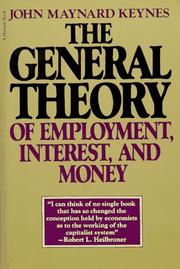
The General Theory of Employment, Interest, and Money
How employment, interest and money interact across a whole economy.
Who recommended it 8 · 6 direct
“In 1936, the economist John Maynard Keynes wrote in The General Theory of Employment, Interest and Money, “Worldly wisdom teaches that it is better for reputation to fail conventionally than to succeed unconventionally” [italics added].”
“A decade later, in 1936, in his classic The General Theory of Employment, Interest, and Money, Keynes focused on the two broad reasons that explain the returns on stocks.”
“During the quarter, I reread three volumes authored by great economists: The General Theory of Employment, Interest and Money by John Maynard Keynes, The Road to Serfdom by F. A. Hayek, and Capitalism and Freedom by Milton Friedman.”
“John Maynard Keynes, The General Theory of Employment, Interest, and Money (New York: Harcourt, Brace and Company, 1936)”
“Source: The General Theory of Employment, Interest and Money John Maynard Keynes Why is no one doing a good job?”
Similar books 6
Chosen by shared topics, the entries that hold them, and the people who recommended both.
How the division of labour and free markets make a nation rich.
“In The Wealth of Nations (published in 1776) Smith noted that land prices had risen in recent decades, as interest rates declined.” — Howard Marks
Source: Easy Money
Recommended by: Howard Marks, John C. Bogle and 11 others
Books One to Three: division of labour, money, prices, wages, profit and capital.
“Adam Smith, An Inquiry into the Nature and Causes of the Wealth of Nations (London: W. Strahan and T. Cadell, 1776)” — Michael Mauboussin
Source: Increasing Returns: Identifying Forms of Increasing Returns and What Drives Them, page 15
Recommended by: Michael Mauboussin, Mohnish Pabrai and 1 other
Essays on the Versailles treaty, the gold standard and Britain's currency.
Recommended by: Mohnish Pabrai, Warren Buffett

How economics copied the maths of 19th-century physics, and what that cost it.
“Mirowski, Philip, More Heat than Light: Economics as Social Physics, Physics as Nature’s Economics (Cambridge: Cambridge University Press, 1989)” — Michael Mauboussin
Source: Size Matters: The Kelly Criterion and the Importance of Money Management, page 12
Recommended by: Michael Mauboussin, Eric Weinstein
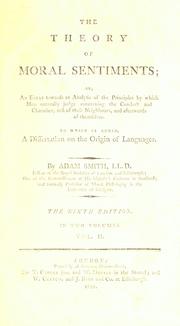
How moral judgement grows from sympathy and an imagined impartial spectator.
“Years before he wrote The Wealth of Nations, extolling the virtues of the invisible hand of competition and the essential nature of personal advantage and self-love in making the world’s economic system work, Adam Smith wrote The Theory of Moral Sentiments.” — John C. Bogle
Source: Business as a Calling, page 4
Recommended by: John C. Bogle, Mohnish Pabrai
A history of economic theory and the economists who built it.
Recommended by: Eric Weinstein
Where it sits in the reference 1
Topics 1
As an Amazon Associate I earn from qualifying purchases.