Martin J. Whitman
Investment adviser who managed the Third Avenue Value Fund and criticised the direction of changes to US accounting rules (GAAP). Died in 2018. Four books plus three decades of unusually didactic shareholder letters built out safe-and-cheap and distress investing as a distinct branch of the value tradition.
 Third Avenue Management
Start here
- The Aggressive Conservative InvestorMartin Shubik, 1979
- Value Investing: A Balanced Approach1999
- Dear Shareholder2006
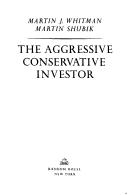
Safe and cheap investing: a security can be both lower-risk and higher-return.
“Joel Greenblatt’s You Can Be a Stock Market Genius6 is tactical and includes some very specific and interesting strategies, and The Aggressive Conservative Investor,7 by Marty Whitman and Martin Shubik, is also very interesting.” — Seth Klarman
Source: Opportunities for Patient Investors (Klarman-Zweig interview, Financial Analysts Journal), page 11
Recommended by: Guy Spier, Mohnish Pabrai, Seth Klarman
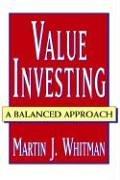
Net asset value and resource conversion as the real drivers of investment return.
Recommended by: Guy Spier, Mohnish Pabrai, Seth Klarman
Third Avenue Value Fund's shareholder letters on markets, analysis and positions.

How to invest in troubled companies' securities, from bankruptcy to restructuring.
Recommended by: Mohnish Pabrai
Security analysis that weighs the balance sheet over reported earnings.
Recommended by: Mohnish Pabrai
 The Aggressive Conservative Investor | Safe and cheap investing: a security can be both lower-risk and higher-return. | 1979 | T2 | Guy Spier, Mohnish Pabrai, Seth Klarman |
 Value Investing: A Balanced Approach | Net asset value and resource conversion as the real drivers of investment return. | 1999 | T3 | Guy Spier, Mohnish Pabrai, Seth Klarman |
| Dear Shareholder | Third Avenue Value Fund's shareholder letters on markets, analysis and positions. | 2006 | T3 | – |
 Distress Investing | How to invest in troubled companies' securities, from bankruptcy to restructuring. | 2009 | T3 | Mohnish Pabrai |
| Modern Security Analysis | Security analysis that weighs the balance sheet over reported earnings. | 2013 | T4 | Mohnish Pabrai |
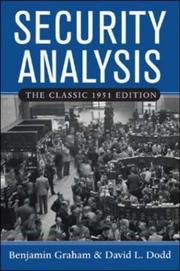
How to read financial statements sceptically and value bonds and stocks.
“The Fund’s definition of Net-Nets is taken from Graham and Dodd’s Security Analysis, but with a few twists.” — Martin J. Whitman
Source: Third Avenue Funds Q1 2006 Shareholder Letters (Chairman's letter by Martin J. Whitman), page 5
Also recommended by: Bill Miller, Christopher Bloomstran and 17 others
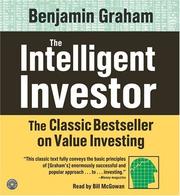
Treat stocks as parts of businesses and buy only with a margin of safety.
“As Graham states on Page 103 of the 1973 edition of The Intelligent Investor, we are led “to a conclusion of practical importance to the conservative investor in common stocks. If he is to pay some special attention to the selection of his portfolio, it might be best for him to concentrate on issues selling at reasonably close approximations to their tangible-asset value–say, at not more than one third above that figure.” — Martin J. Whitman
Source: Third Avenue Funds Q3 2003 Shareholder Letters (Chairman's letter by Martin J. Whitman)
Also recommended by: Benjamin Graham, Christopher Bloomstran and 31 others
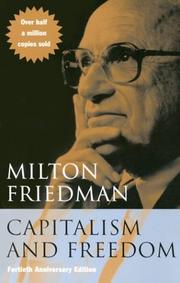
Economic freedom as a condition of political freedom, applied to policy questions.
“During the quarter, I reread three volumes authored by great economists: The General Theory of Employment, Interest and Money by John Maynard Keynes, The Road to Serfdom by F. A. Hayek, and Capitalism and Freedom by Milton Friedman.” — Martin J. Whitman
Source: Third Avenue Funds Q4 2005 Shareholder Letters (Chairman's letter by Martin J. Whitman)
Also recommended by: Marc Andreessen
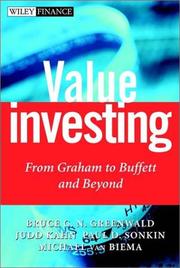
Columbia's value investing method: a valuation in three stages, most reliable first.
“In the book, Value Investing–From Graham to Buffett and Beyond, by Greenwald, Kahn, Sonkin and Van Biema, there are discussions of NAV.” — Martin J. Whitman
Source: Third Avenue Funds Q3 2003 Shareholder Letters (Chairman's letter by Martin J. Whitman)
Also recommended by: Michael Mauboussin, Mohnish Pabrai and 4 others

Why central economic planning erodes political freedom.
“During the quarter, I reread three volumes authored by great economists: The General Theory of Employment, Interest and Money by John Maynard Keynes, The Road to Serfdom by F. A. Hayek, and Capitalism and Freedom by Milton Friedman.” — Martin J. Whitman
Source: Third Avenue Funds Q4 2005 Shareholder Letters (Chairman's letter by Martin J. Whitman)
Also recommended by: Li Lu, Marc Andreessen, Peter Thiel
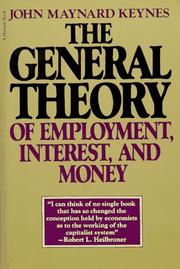
How employment, interest and money interact across a whole economy.
“During the quarter, I reread three volumes authored by great economists: The General Theory of Employment, Interest and Money by John Maynard Keynes, The Road to Serfdom by F. A. Hayek, and Capitalism and Freedom by Milton Friedman.” — Martin J. Whitman
Source: Third Avenue Funds Q4 2005 Shareholder Letters (Chairman's letter by Martin J. Whitman)
Also recommended by: Howard Marks, John C. Bogle and 5 others
“During the quarter, I read an interesting book, The Great Risk Shift, by Jacob S. Hacker, a Political Science Professor at Yale University.” — Martin J. Whitman
Source: Third Avenue Funds Q2 2007 Shareholder Letters (Chairman's letter by Martin J. Whitman)
| Martin Whitman: They Just Don't Get It! | WEALTHTRACK | 2013-10-25 | They just don’t get it! That’s the view of legendary deep value investor Martin Whitman, Founder and Chairman of Third Avenue Management. In this exclusive interview taped at the Museum of American Finance, Whitman takes on Congressional and Wall Street ignorance about debt, credit worthiness, and earnings. Whitman will also discuss his long term mantra, to buy “safe and cheap” stocks, and his four elements to getting growth at dirt cheap prices. WATCH NOW… |

| Martin Whitman, Founder of Third Avenue, Dies at 93 Paywall | Institutional Investor | 2018 |
| Martin Whitman, Founder of Third Avenue Management, Dies at 93 | WealthManagement.com | 2018 |