
Seth Klarman
Value investor in the tradition of Benjamin Graham who buys unpopular assets when undervalued and insists on a margin of safety; his Boston partnership dates from 1982. A long public record at Baupost and one book, Margin of Safety, that became a value-investing touchstone despite never being reprinted.
 The Baupost Group
Start here
- Margin of Safety: Risk-Averse Value Investing Strategies for the Thoughtful Investor1991
- Security Analysis, Seventh EditionBenjamin Graham, David L. Dodd, 2023
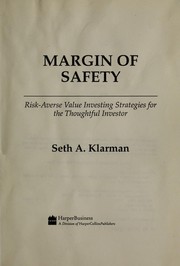
Avoid permanent loss: buy well below value and aim for absolute returns.
“Seth Klarman, the founder, chief executive, and portfolio manager of the very successful value investing firm The Baupost Group, shares a similar sentiment in his book Margin of Safety:22 It is not clear why investors suddenly came to accept EBITDA as a measure of corporate cash flow.” — Michael Mauboussin
Source: What Does an EV/EBITDA Multiple Mean?, page 4
Recommended by: Arnold Van Den Berg, Frank Martin, Guy Spier and 7 others
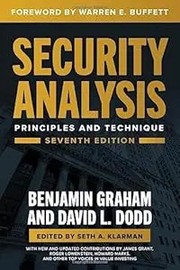
One of the most influential works of value investing, updated for today's investors.
 Margin of Safety: Risk-Averse Value Investing Strategies for the Thoughtful Investor | Avoid permanent loss: buy well below value and aim for absolute returns. | 1991 | T2 | Arnold Van Den Berg, Frank Martin, Guy Spier and 7 others |
 Security Analysis, Seventh Edition | One of the most influential works of value investing, updated for today's investors. | 2023 | – |
More 8
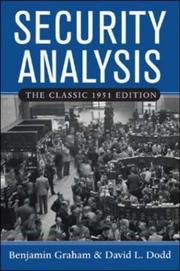
How to read financial statements sceptically and value bonds and stocks.
“First, however, let me say that Graham’s The Intelligent Investor,4 which you recently revised, is probably more accessible than Graham and Dodd’s Security Analysis, 5 although the nifty thing about the sixth edition of Security Analysis is the updated comments.” — Seth Klarman
Source: Opportunities for Patient Investors (Klarman-Zweig interview, Financial Analysts Journal), page 11
Also recommended by: Bill Miller, Christopher Bloomstran and 17 others
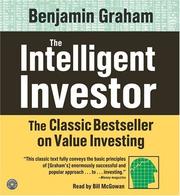
Treat stocks as parts of businesses and buy only with a margin of safety.
“First, however, let me say that Graham’s The Intelligent Investor,4 which you recently revised, is probably more accessible than Graham and Dodd’s Security Analysis, 5 although the nifty thing about the sixth edition of Security Analysis is the updated comments.” — Seth Klarman
Source: Opportunities for Patient Investors (Klarman-Zweig interview, Financial Analysts Journal), page 11
Also recommended by: Benjamin Graham, Christopher Bloomstran and 31 others
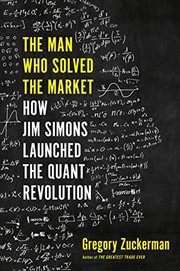
How Jim Simons's Renaissance used maths and data to earn the best returns on record.
Source: MarketFolly — Seth Klarman's Recommended Reading List
Also recommended by: Andrew Wilkinson, Michael Mauboussin and 1 other
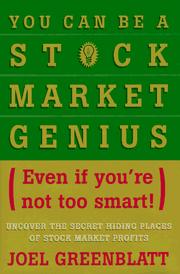
Where to find mispriced stocks: spinoffs, mergers, bankruptcies and restructurings.
“Joel Greenblatt’s You Can Be a Stock Market Genius6 is tactical and includes some very specific and interesting strategies, and The Aggressive Conservative Investor,7 by Marty Whitman and Martin Shubik, is also very interesting.” — Seth Klarman
Source: Opportunities for Patient Investors (Klarman-Zweig interview, Financial Analysts Journal), page 11
Also recommended by: Dan Loeb, Guy Spier, Michael Mauboussin and 7 others
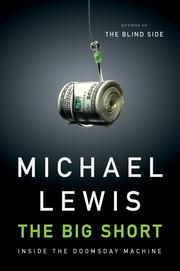
The few investors who saw subprime mortgage bonds would fail, and bet against them.
“Michael Lewis, The Big Short: Inside the Doomsday Machine (New York: W.W. Norton, 2010)” — Seth Klarman
Source: Opportunities for Patient Investors (Klarman-Zweig interview, Financial Analysts Journal), page 11
Also recommended by: Jim Collins, Michael Mauboussin and 6 others
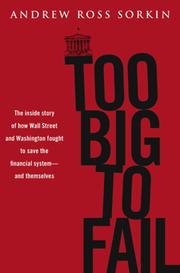
Inside the meetings of bankers and regulators during the 2008 financial crisis.
“Andrew Ross Sorkin’s Too Big to Fail10 is fabulous, as is Roger Lowenstein’s The End of Wall Street.11 In fact, all of Roger Lowenstein’s books are excellent, and so we should read everything Roger has written.” — Seth Klarman
Source: Opportunities for Patient Investors (Klarman-Zweig interview, Financial Analysts Journal), page 11
Also recommended by: Bill Gates, Mohnish Pabrai, Max Levchin and 1 other
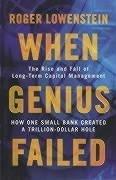
How a hedge fund's bond bets on borrowed money lost $4.6 billion in four months.
Also recommended by: Bill Gurley, Michael Mauboussin and 8 others
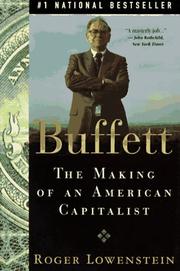
Buffett's life from Omaha and Graham's class to building Berkshire Hathaway.
Also recommended by: Andrew Wilkinson, Bill Miller and 13 others

How biased samples, chosen averages and cut-off chart axes make numbers mislead.
“One is called How to Lie with Statistics,12 by Darrell Huff.” — Seth Klarman
Source: Opportunities for Patient Investors (Klarman-Zweig interview, Financial Analysts Journal), page 11
Also recommended by: Bill Gates, Jason Zweig, Mohnish Pabrai and 6 others

How the Oakland A's won on a small payroll by buying players the market undervalued.
“Michael Lewis, Moneyball: The Art of Winning an Unfair Game (New York: W.W. Norton, 2003)” — Seth Klarman
Source: Opportunities for Patient Investors (Klarman-Zweig interview, Financial Analysts Journal), page 11
Also recommended by: Bill Nygren, Jim Collins, Joel Greenblatt and 4 others
Avoid permanent loss: buy well below value and aim for absolute returns.
Also recommended by: Arnold Van Den Berg, Frank Martin, Guy Spier and 6 others
Safe and cheap investing: a security can be both lower-risk and higher-return.
“Joel Greenblatt’s You Can Be a Stock Market Genius6 is tactical and includes some very specific and interesting strategies, and The Aggressive Conservative Investor,7 by Marty Whitman and Martin Shubik, is also very interesting.” — Seth Klarman
Source: Opportunities for Patient Investors (Klarman-Zweig interview, Financial Analysts Journal), page 11
Also recommended by: Guy Spier, Mohnish Pabrai

How the way organisations divide work blinds them, and how some break down silos.

Sex evolved as a defence against parasites, and that shapes human mating.
“I love the Red Queen, evolutionary biology.” — Seth Klarman
Source: Masters in Business — Transcript: Seth Klarman, The Baupost Group, books segment
Also recommended by: Mohnish Pabrai, Naval Ravikant, Nick Szabo
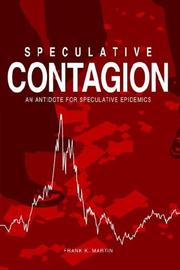
Client letters that tracked the dot-com bubble as it inflated and burst.
Also recommended by: Mohnish Pabrai, Warren Buffett
Why the cheapest stocks on enterprise value to operating earnings beat other screens.
Source: Equities.com / Acquirer's Multiple — Seth Klarman: 32 Books Every Investor Should Read
Also recommended by: Bill Ackman, David Einhorn, Joel Greenblatt and 1 other
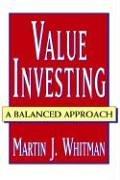
Net asset value and resource conversion as the real drivers of investment return.
Source: MarketFolly — Seth Klarman's Recommended Reading List
Also recommended by: Guy Spier, Mohnish Pabrai
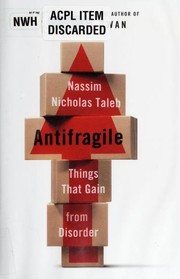
Why some things gain from volatility and disorder, and how to build them.
Also recommended by: Ana Fabrega, Andrew Chen, Derek Sivers and 23 others
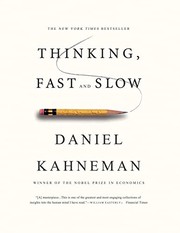
How fast, automatic thought and slow, deliberate thought shape judgment and error.
Also recommended by: Andrew Wilkinson, Charles de Vaulx and 35 others
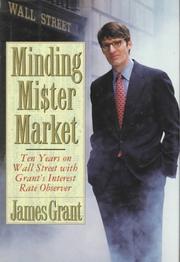
A decade of pieces from a newsletter on interest rates and credit markets.
Source: Equities.com / Acquirer's Multiple — Seth Klarman: 32 Books Every Investor Should Read
Also recommended by: Mohnish Pabrai, William J. Bernstein
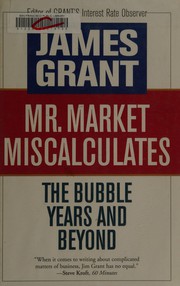
A decade of essays on the technology bubble, its collapse and the credit boom after.
Source: Equities.com / Acquirer's Multiple — Seth Klarman: 32 Books Every Investor Should Read
Also recommended by: Mohnish Pabrai
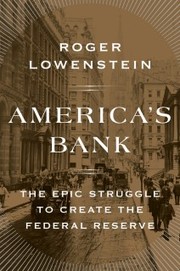
How the Federal Reserve was argued into existence, from the 1907 panic to 1913.
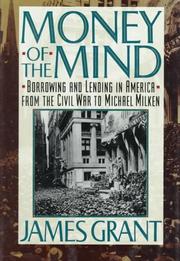
How American lending standards loosen in long cycles as the memory of losses fades.
“In the 1990s, Jim Grant wrote a book about credit called Money of the Mind.3 I think sovereign debt is “money of the mind.” — Seth Klarman
Source: Opportunities for Patient Investors (Klarman-Zweig interview, Financial Analysts Journal), page 5
Also recommended by: John C. Bogle, Mohnish Pabrai and 1 other
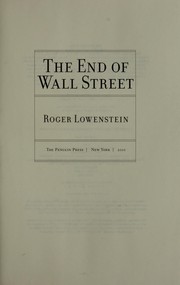
The housing boom, the fall of the banks, and the government's rescues.
“Andrew Ross Sorkin’s Too Big to Fail10 is fabulous, as is Roger Lowenstein’s The End of Wall Street.11 In fact, all of Roger Lowenstein’s books are excellent, and so we should read everything Roger has written.” — Seth Klarman
Source: Opportunities for Patient Investors (Klarman-Zweig interview, Financial Analysts Journal), page 11
Also recommended by: Mohnish Pabrai

A financier and statesman's own account of his life in markets and politics.
Source: Equities.com / Acquirer's Multiple — Seth Klarman: 32 Books Every Investor Should Read
Also recommended by: Michael Mauboussin, Mohnish Pabrai
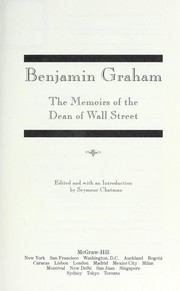
The memoirs of the investor who laid the foundation of security analysis.
Source: MarketFolly — Seth Klarman's Recommended Reading List
Also recommended by: Guy Spier, Jason Zweig, Mohnish Pabrai and 7 others
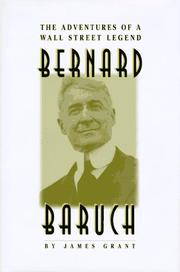
Bernard Baruch, from speculator to adviser of presidents and public figure.
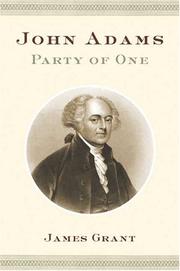
A biography of a paradoxical president, a fierce revolutionary and reluctant leader.
Source: Equities.com / Acquirer's Multiple — Seth Klarman: 32 Books Every Investor Should Read
Also recommended by: Jim Collins, Mohnish Pabrai
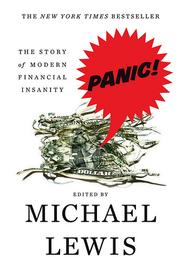
Journalism written during four crises, from the 1987 crash to LTCM's collapse.
Also recommended by: Mohnish Pabrai
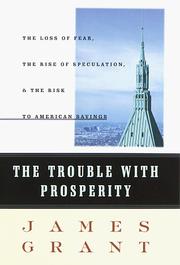
Why long good times erode the memory of losses and set up the reversal.
Source: Equities.com / Acquirer's Multiple — Seth Klarman: 32 Books Every Investor Should Read
Also recommended by: Mohnish Pabrai, William J. Bernstein

The history of the race to fly and the Wright brothers' Flyer.
“This man was Wilbur Wright, whose aeronautical accomplishments are recounted in To Conquer the Air, by James Tobin.” — Seth Klarman
Source: MIT Remarks, October 20, 2007 (MIT Sloan Investment Management Conference speech), page 8
Also recommended by: Paul Graham
The life of Thomas B. Reed, Speaker of the House in the Gilded Age.
Source: Equities.com / Acquirer's Multiple — Seth Klarman: 32 Books Every Investor Should Read
Also recommended by: Mohnish Pabrai
| Baupost Group letters (collected) | A collection of Baupost Fund letters opening with fiscal 1995, when the fund gained 7.91%, beating Treasury bills but trailing U.S. stock indexes on low equity exposure. | 2022 | Microsoft, General Motors | |
| Seth Klarman Interview, Harvard Business School, 2022 | Seth Klarman's 2022 Harvard Business School video interview covers inflation and the war in Ukraine, market efficiency, Baupost's culture, crypto and the US debt. | 2022 | ||
| Baupost Limited Partnerships 2021 year-end letter | 2021 | |||
| Baupost Group Q4 2019 letter | 4 2020 | |||
| Baupost Group Q4 2018 letter | 4 2019 | |||
| What I've Learned From Warren Buffett (twelve lessons) | Seth Klarman lists twelve lessons from Warren Buffett, arguing he is of interest for his integrity and ideas, not his wealth. | 2015 | ||
| Collection of Baupost Group letters, December 1995 - June 2001 | A collection of Seth Klarman's Baupost letters from December 1995 to June 2001. | 4 2011 | ||
| Opportunities for Patient Investors (Klarman-Zweig interview, Financial Analysts Journal) | Seth Klarman tells Jason Zweig at the 2010 CFA conference where patient investors find opportunities. | 2010 | ||
| The Forgotten Lessons of 2008 (twenty lessons, from the Baupost 2010 annual letter) | Seth Klarman lists twenty lessons of the 2008 financial crisis that investors have already forgotten, from Baupost's 2010 letter. | 2010 | ||
| MIT Remarks, October 20, 2007 (MIT Sloan Investment Management Conference speech) | Seth Klarman tells MIT in October 2007 that subprime losses and quant fund woes reveal extreme risk-taking across finance. | 4 2007 | 2007-10-20 |
| Opportunities for Patient Investors Paywall | Financial Analysts Journal | Research paper | 2010 |
| The Timeless Wisdom of Graham and Dodd (preface to Security Analysis, sixth edition) Not online | McGraw-Hill | Foreword | 2008 |
| MIT Sloan Investment Management Conference remarks MIT Sloan Investment Management Conference | Speech | 2007-10-20 | |
| A Response to Lowenstein's Searching for Rational Investors in a Perfect Storm | Journal of Corporation Law | Research paper | 2005 |
| Seth Klarman & The Baupost Group 1982–2024 : Structural Cash Mechanics, Downside Mandates & Multi-Decade Compounding│File 44 T1 | Financial Forensics : The Signal Files | 2026-09-24 | 9 min | This episode is part of Financial Forensics Labs — two shows, one forensic methodology: The Due Diligence Files traces how institutions collapse, The Signal Files traces how the good calls get made. Built from primary-record research by a 15-year capital markets professional. Get to know the framework, the other show, and the tools built from it — all in one place. Explore Financial Forensics Labs — Forensic Finance Intelligence In an asset management industry structurally incentivized to maintain high capital deployment to maximize fee generation, treating cash as an active investment position represents a rare institutional discipline. For over four decades, Seth Klarman and The Baupost Group have operated under a capital preservation framework where cash allocations—frequently ranging between 30% and 50% of total portfolio assets—are held deliberate, priced, and unconstrained by market benchmarks. This structural posture forces the firm to absorb prolonged periods of relative underperformance during extended bull markets, isolating the psychological and commercial friction of maintaining downside discipline when market liquidity is abundant. Founded in May 1982 with $27 million in seed capital from four Boston families, Baupost’s founding mandate prioritized downside protection over asset gathering. This alignment enabled Klarman to enforce rigorous margin-of-safety standards without the imperative to stay fully invested. |
| Seth Klarman: Nadčasové princípy hodnotového investovania a ako riadiť 27 miliárd $ | Preklady z Wall Street: Lekcie investičnej elity | 2026-07-17 | 1:43 | V siedmej epizóde druhej série privítame žijúcu legendu Wall Street, ktorá sa na verejnosti a v médiách objavuje len raz za dlhé roky. Naším hosťom je Seth Klarman, šéf a portfolio manažér fondu The Baupost Group, ktorý od roku 1982 úspešne alokuje kapitál, pričom dnes pod jeho vedením fond spravuje majetok vo výške 27 miliárd dolárov. V hlbokom rozhovore s Tedom Seidesom pre podcast Capital Allocators Klarman rozoberá, ktoré princípy hodnotového investovania zostávajú večné a ktoré sa, naopak, museli pod tlakom moderného trhu zmeniť. Pozrieme sa priamo do kuchyne Baupost Group – od vyhľadávania príležitostí a hĺbkovej analýzy firiem až po stavbu portfólia a nekompromisný manažment rizika. Klarman sa delí o svoje myšlienky o nelikvidných aktívach, medzinárodných trhoch a vysvetľuje svoj aktuálny pohľad na legendárne knihy Margin of Safety a Security Analysis , ktorej najnovšie 7. vydanie sám editoval. Na záver poodhalí aj svoje netradičné osobné investície do bejzbalového tímu Boston Red Sox či konských dostihov. Kľúčové témy epizódy: Večné vs. meniace sa princípy: Čo z klasickej školy hodnotového investovania funguje dodnes a čo už na dnešnom trhu neplatí Anatómia fondu Baupost Group: Ako hľadať skryté príležitosti a ako riadiť riziko pri správe desiatok miliárd dolárov Sila nelikvidity: Prečo sa oplatí investovať tam, kde ostatní hráči na trhu nemôžu alebo nechcú Pohľad na investičnú bibliu: Prečo Klarman editoval 7. |
| Value Investing Legend and Charlie Munger Disciple Seth Klarman | At the Money | Masters in Business | 2026-06-19 | 1:10 | Barry sits down with Seth Klarman, CEO of Baupost Group, a Boston-based investment manager with a multi-strategy approach. They discuss Seth's start as a 25 year-old and journey to CEO. They also discuss his approach to risk, IPOs, and sectors along with his sports passions including a smaller ownership in the Boston Red Sox, horse racing, and his feelings about the Boston Celtics' 2026 season. See omnystudio.com/listener for privacy information. |
| Seth Klarman - Contrarian Investing, Discipline, and Building Baupost | Value Investing with Legends | 2025-08-01 | 55 min | In this episode, host Michael Mauboussin sits down with Seth Klarman, CEO and portfolio manager of The Baupost Group. One of the most influential practitioners of value investing, Seth shares his formative stories — from arbitraging coins as a kid to launching Baupost in 1982 — and reflects on his decades-long investment philosophy. They explore timeless principles of market inefficiencies, the importance of temperament, specialization versus generalization, the role of patient capital, and the challenges and opportunities ahead for investors in today's world. Seth also opens up about technology trends like AI, the evolving market structure, and the enduring lessons from Graham & Dodd — and much more! Key Topics: Seth's early entrepreneurial ventures and coin arbitrage (2:10) Lessons from working at Mutual Shares with Max Heine and Michael Price (4:12) Starting Baupost and managing the founding families' wealth (10:53) Core principles behind value investing and market inefficiencies (13:06) The impact of indexing, ETFs, and passive investing trends (16:42) Generalists vs. |
| Seth Klarman on Finding Value and Maintaining Discipline | Talks at GS | 2025-07-23 | 34 min | Seth Klarman, CEO and portfolio manager of The Baupost Group, is known for his unwavering focus on value. In this conversation with Goldman Sachs President and COO John Waldron, Klarman discusses how his philosophy fits into the current market environment, and how his approach to leading Baupost has evolved in his long career as a fund manager. This session was recorded on May 27, 2025. Learn more about your ad choices. Visit megaphone.fm/adchoices |
| Yossi Klein Halevi in Conversation with Seth Klarman: The End of the Post-Holocaust Era - November 20, 2024 | Temple Emanuel Hartman Learning Initiative | 2024-11-21 | 1:19 | Our Hartman Learning Initiative continues in person at Temple Emanuel on November 20, 2024 with Yossi Klein Halevi in conversation with Seth Klarman, CEO of The Baupost Group. In the nearly 80 years following the Holocaust, the Jewish people saw the realization of two long-held dreams: the reclamation of our homeland and the development of a robust and welcoming Diaspora. Since October 7, we have seen major fractures in both dreams. Join Yossi Klein Halevi in conversation with Seth Klarman as they explore the aspirations of the Jewish people in Israel and in the Diaspora post-October 7 and how we can move forward following a year of grief, pain, and war. |
| Seth Klarman – Timeless Value Investing (EP.328) | Capital Allocators – Inside the Institutional Investment Industry | 2023-07-17 | 1:33 | Seth Klarman is a legendary value investor and CEO and Portfolio Manager of The Baupost Group, an investment firm founded in 1982 that manages $27 billion. Seth authored the very out-of-print Margin of Safety and edited the recently released 7th edition of Graham and Dodd's value investing classic, Security Analysis. Our conversation covers Seth's early experience in business and investing, path to Baupost, timeless value investing principles and those that have changed over time. We discuss Baupost's application of value investing across sourcing, diligence, portfolio construction, and risk management. We then turn to Seth's thoughts illiquidity, international investing, the weird current environment, positioning portfolios for it, alignment with clients, succession at Baupost, and his updated perspectives on Securities Analysis and Margin of Safety. We close discussing Seth's personal investments in the Boston Red Sox, horse racing, and philanthropy. Seth generally stays away from the public eye, so I was particularly grateful to share this conversation some twenty-five years after we first met. For full show notes, visit the episode webpage here . Learn More Follow Ted on Twitter at @tseides or LinkedIn Subscribe to the mailing list Access Transcript with Premium Membership |
| David Abrams - Applying a Fundamental and Value-Oriented Approach to Investing | Value Investing with Legends | 2019-06-14 | 53 min | Today's conversation is with investor David Abrams, who was described by the Wall Street Journal as a "one man wealth machine." David is the CEO and Portfolio Manager of Abrams Capital, an investment firm that he founded in 1999. Abrams Capital is unlevered and long-term oriented and currently holds over $9 billion in assets under management. David is notoriously private and is not keen on interviews and appearances so I'm especially grateful to him for sharing with us today. After graduating with a BA in History from the University of Pennsylvania, David made an unplanned entrance into a career in investing. It was then that he discovered his love for the field and he went on to work with another value investing legend, Seth Klarman of the Baupost Group, before starting his own firm. David is a member of the Board of Trustees of Berklee College of Music and an overseer of the College of Arts and Sciences at the University of Pennsylvania. On this episode, David and I discuss how his experience working on merger and risk arbitrage transactions led to his decision to join the Baupost Group, what it was like to start Abrams Capital in the midst of economic uncertainty, why David prefers a generalist approach, the importance of the fundamentals in assessing investment opportunities, and so much more! |
| Value Investing Legend Seth Klarman: Masters in Business | Bloomberg Podcasts | |||
| Seth Klarman: "This Is a Bubble" | The Legendary Investor's Brutal AI Warning | iConnections |
 FSeth Klarman & The Baupost Group 1982–2024 : Structural Cash Mechanics, Downside Mandates & Multi-Decade Compounding│File 44 T1Financial Forensics : The Signal Files · 2026-09-24
 PSeth Klarman: Nadčasové princípy hodnotového investovania a ako riadiť 27 miliárd $Preklady z Wall Street: Lekcie investičnej elity · 2026-07-17
 MValue Investing Legend and Charlie Munger Disciple Seth Klarman | At the MoneyMasters in Business · 2026-06-19
 VSeth Klarman - Contrarian Investing, Discipline, and Building BaupostValue Investing with Legends · 2025-08-01
 TSeth Klarman on Finding Value and Maintaining DisciplineTalks at GS · 2025-07-23
 TYossi Klein Halevi in Conversation with Seth Klarman: The End of the Post-Holocaust Era - November 20, 2024Temple Emanuel Hartman Learning Initiative · 2024-11-21
 CSeth Klarman – Timeless Value Investing (EP.328)Capital Allocators – Inside the Institutional Investment Industry · 2023-07-17
 VDavid Abrams - Applying a Fundamental and Value-Oriented Approach to InvestingValue Investing with Legends · 2019-06-14
 BValue Investing Legend Seth Klarman: Masters in BusinessBloomberg Podcasts
 iSeth Klarman: "This Is a Bubble" | The Legendary Investor's Brutal AI WarningiConnections