 C
Podcast · 39 episodes in the reference, 2017 to 2026
Capital Allocators – Inside the Institutional Investment Industry
Published by Ted Seides – Allocator and Asset Management Expert
Episodes
| Best of Decision-Making: Annie Duke (2018) | Annie Duke | 3 August 2026 | Our Summer Series kickoff is with one of the all-time greats, Annie Duke. The former world-class poker player has become a noted academic and practitioner in the art of decision-making. Her best-seller Thinking in Bets is a one-of-a-kind set of tools and tips to try (emphasis on try) to get past our embedded behavioral biases. And her follow-up works How to Decide and Quit pull different threads in the decision-making process. Since writing Thinking in Bets, Annie has consulted several investment organizations to apply her insights to investing, including becoming a Special Partner focused on Decision Science at venture firm, First Round Capital. For the series, we've shared two of Annie's most popular appearance on the show – coinciding with the launched of Thinking in Bets in 2018 and Quit in 2022. Please enjoy these great conversations with Annie Duke. Any leader should see for themselves the benefits of elite coaching. Try ALEX: tryalex.admiredleadership.com . Learn More Follow Ted on Twitter at @tseides or LinkedIn Subscribe to the mailing list Access Transcript with Premium Membership Editing and post-production work for this episode was provided by The Podcast Consultant ( https://thepodcastconsultant.com ) | |
| Best of Decision-Making: Annie Duke (2022) | Annie Duke | 3 August 2026 | Our Summer Series kickoff is with one of the all-time greats, Annie Duke. The former world-class poker player has become a noted academic and practitioner in the art of decision-making. Her best-seller Thinking in Bets is a one-of-a-kind set of tools and tips to try (emphasis on try) to get past our embedded behavioral biases. And her follow-up works How to Decide and Quit pull different threads in the decision-making process. Since writing Thinking in Bets, Annie has consulted several investment organizations to apply her insights to investing, including becoming a Special Partner focused on Decision Science at venture firm, First Round Capital. For the series, we've shared two of Annie's most popular appearance on the show – coinciding with the launched of Thinking in Bets in 2018 and Quit in 2022. Please enjoy these great conversations with Annie Duke. Any leader should see for themselves the benefits of elite coaching. Try ALEX: tryalex.admiredleadership.com . Learn More Follow Ted on Twitter at @tseides or LinkedIn Subscribe to the mailing list Access Transcript with Premium Membership Editing and post-production work for this episode was provided by The Podcast Consultant ( https://thepodcastconsultant.com ) | |
 Bubbles, Value Investing, and the Long Game at GMO | Jeremy Grantham - EP. 493 | Jeremy Grantham | 23 March 2026 | 1:18 | Jeremy Grantham is the Co-Founder of GMO, a $100 billion Boston-based asset management firm co-founded in 1977. Over six decades in markets, Jeremy has been one of the most respected and outspoken voices on value, market bubbles, and long-term investing. He recently published The Making of a Permabear with Edward Chancellor, an account of his career and investment lessons learned along the way. Our conversation begins with Jeremy's early lessons in frugality growing up in wartime Yorkshire and his interest in numbers and investing. We trace his career through the founding of Batterymarch and GMO, the golden period of value, painful lessons of the dot-com bubble, and the challenges since. We cover Jeremy's framework for identifying and navigating market bubbles, career risk, and the current AI investment boom, and close with his essential philanthropic work to change the trajectory of the environment alongside the investment strategy he deploys in his Foundation. Learn more about our Strategic Investments: OWL . Learn More Follow Ted on Twitter at @tseides or LinkedIn Subscribe to the mailing list Access Transcript with Premium Membership Editing and post-production work for this episode was provided by The Podcast Consultant ( https://thepodcastconsultant.com ) |
 Josh Wolfe – Seeing the Lux (Capital Allocators, EP.65) | Josh Wolfe | 8 December 2025 | 1:10 | Josh Wolfe is the co-founder of Lux Capital, a $1.5 billion venture capital firm formed to support scientists and entrepreneurs who pursue counter-conventional solutions to the most vexing puzzles of our time. Josh's innovative thought process across his activities offers frameworks and insights applicable across the spectrum of investing. Our conversation covers Josh's early passion for science and finance, building a competitive advantage in venture capital from scratch, sourcing ideas, conducting due diligence, making investment decisions, constructing portfolios, making exits, learning from mistakes, navigating a challenging private equity environment, posting on Twitter, active vs. passive management, dinner table conversation, and life lessons. Learn More Follow Ted on Twitter at @tseides or LinkedIn Subscribe to the mailing list Access Transcript with Premium Membership Editing and post-production work for this episode was provided by The Podcast Consultant ( https://thepodcastconsultant.com ) |
| Josh Wolfe & Brett McGurk – Venture, Geopolitics, and the Next Frontier | Brett McGurk | 8 December 2025 | Josh Wolfe and Brett McGurk are Partners at Lux Capital, a $5 billion venture capital firm that specializes in emerging science and technology companies that turn sci-fi into sci-fact. Josh co-founded Lux and is a repeat past guest on the show. His first appearance from 2018 discusses his story, including phrases: 'chips in shoulders put chips in pockets,' 'failure comes from a failure to imagine failure,' and 'directional arrows of progress.' Brett joined Lux last year, following a 20-year career in public service where he advised four U.S. presidents and helped shape national security strategy across the Middle East. Our conversation kicks off with Josh's state of the venture industry and Lux's positioning within it. Brett then describes his background, sovereign ambitions, and geopolitical risks. We discuss directional arrows of progress across AI, cap-ex maintenance, biology, defense systems, and space. Learn More Follow Ted on Twitter at @tseides or LinkedIn Subscribe to the mailing list Access Transcript with Premium Membership Editing and post-production work for this episode was provided by The Podcast Consultant ( https://thepodcastconsultant.com ) | |
 Josh Wolfe & Brett McGurk – Venture, Geopolitics, and the Next Frontier (EP.476) | Josh Wolfe, Brett McGurk | 8 December 2025 | 1:02 | Josh Wolfe and Brett McGurk are Partners at Lux Capital, a $5 billion venture capital firm that specializes in emerging science and technology companies that turn sci-fi into sci-fact. Josh co-founded Lux and is a repeat past guest on the show. His first appearance from 2018 discusses his story, including phrases: 'chips in shoulders put chips in pockets,' 'failure comes from a failure to imagine failure,' and 'directional arrows of progress.' Brett joined Lux last year, following a 20-year career in public service where he advised four U.S. presidents and helped shape national security strategy across the Middle East. Our conversation kicks off with Josh's state of the venture industry and Lux's positioning within it. Brett then describes his background, sovereign ambitions, and geopolitical risks. We discuss directional arrows of progress across AI, cap-ex maintenance, biology, defense systems, and space. Learn More Follow Ted on Twitter at @tseides or LinkedIn Subscribe to the mailing list Access Transcript with Premium Membership Editing and post-production work for this episode was provided by The Podcast Consultant ( https://thepodcastconsultant.com ) |
 Howard Marks - Navigating Private Credit (EP.439) | Howard Marks | 7 April 2025 | 47 min | Howard Marks is a renowned investment thinker and the co-founder and co-chairman of Oaktree Capital Management, a leading global investment firm overseeing $200 billion primarily in credit investments that is majority owned by Brookfield Asset Management. Our conversation covers Howard's journey from his early days in finance to his current insights on the evolving credit landscape. We dive into themes from his latest Memo, Gimme Credit, exploring the pendulum swings in investor sentiment, the rise of private credit, and implications for investors. We also discuss the changing dynamics of private equity, the trend of asset manager M&A, and life as a public company. Throughout our conversation, Howard shares his timeless wisdom on risk management, market cycles, and the enduring principles of successful investing. Learn More Follow Ted on Twitter at @tseides or LinkedIn Subscribe to the mailing list Access Transcript with Premium Membership Editing and post-production work for this episode was provided by The Podcast Consultant ( https://thepodcastconsultant.com ) |
 Top 5 of 2024: #3: Cliff Asness - EP.385 | Clifford Asness | 1 January 2025 | 1:10 | We're counting down the top 5 episodes of 2024. Coming in at number three is Episode 385 with the irrepressible Cliff Asness from AQR. Cliff is part brilliant quant and part standup comic. That combination always makes for an entertaining conversation, chockfull of research-backed insights. Head of Business Development Job Posting Learn More Follow Capital Allocators at @tseides or LinkedIn Subscribe to the mailing list Access transcript with Premium Membership Editing and post-production work for this episode was provided by The Podcast Consultant ( https://thepodcastconsultant.com ) |
 Alexis Ohanian – From Reddit to 776, a Technology Company that Deploys Venture Capital (EP.388) | Alexis Ohanian | 27 May 2024 | 1:11 | Alexis Ohanian is the General Partner and Founder of Seven Seven Six, an early-stage venture capital firm with $1 billion under management that he describes as a technology company that deploys venture capital. Alexis was the co-founder of Reddit, one of the most popular online forums in the world, which he sold 18 months after its 2005 launch for $10 million and returned as Executive Chair in 2014 to help lead the turnaround of the business. In between and since, he has invested in early-stage ventures as a partner at Y Combinator, a co-founder of Initialized Capital, and most recently founder of 776. Despite his success in entrepreneurship and investing, Alexis is most well known in the world at large as the husband of tennis star Serena Williams. Our conversation covers Alexis' initial ride at Reddit, taste of early-stage venture capital, and return to Reddit to scale the business alongside the challenges of managing a modern social media platform. We then turn to his investing as a technology company, including Cerebro – 776's transparent operating system, thematic ideas, traits of successful founders, social media engagement, investments in women's sports, and lessons learned from his wife Serena. Learn More Follow Ted on Twitter at @tseides or LinkedIn Subscribe to the mailing list Access Transcript with Premium Membership |
 Cliff Asness - Simple Investing is Hard (EP.385) | Clifford Asness | 13 May 2024 | 1:09 | Cliff Asness is the Founder and CIO at AQR, an investment management firm at the intersection of financial theory and practice that oversees $100 billion in assets. He is famously intelligent, comical, and irreverent, all wrapped into one. Our conversation covers Cliff's journey from studying market efficiency under Eugene Fama to capitalizing on market inefficiencies at AQR. We discuss regime changes in factors, difficult periods for performance and AQR's business, research innovation, machine learning, index funds, pod shops, areas of cognitive dissonance, private equity, and serving on investment committees. Learn More Follow Ted on Twitter at @tseides or LinkedIn Subscribe to the mailing list Access Transcript with Premium Membership |
 Chris Dixon - Empty Rooms: Web3 After the Fall (EP.380) | Chris Dixon | 15 April 2024 | 1:00 | On today's show, we'll discuss another empty room – an opportunity ignored by most investors because they either don't want to or can't participate. We've shared conversations under this theme about a range of forgotten opportunities from specific emerging markets to biotech. Previous episodes are available under the mini-series or topic search at capitalallocators.com . This time around, we discuss a room that was overflowing two years ago, has been abandoned since, and might be coming back once again - crypto and blockchain technologies. My guest is Chris Dixon, a general partner at a16z and one of the leading voices and investors in the space. Chris recently published a book entitled Read Write Own, which explains the history, thesis, features, and importance of blockchain technology in his classic framework-driven, non-technical style. Our conversation covers aspects of the book, including the history of the internet, rationale for blockchains, and tokenomics. We then turn to what's happened in the ignored space since the fall of FTX across stablecoins, NFTs, DeFi, Bitcoin ETFs, regulation, and the devotees still involved in the space. Learn More Follow Ted on Twitter at @tseides or LinkedIn Subscribe to the mailing list Access Transcript with Premium Membership |
 Michael Mauboussin - Pattern Recognition and Public Markets (EP.370) | Michael Mauboussin | 19 February 2024 | 50 min | Michael Mauboussin is the Head of Consilient Research at Counterpoint Global, a $70 billion equity manager. Michael is renowned for his ability to articulate important investment concepts backed by academic research. His first of three prior conversations on the show is replayed in the feed. You can find the rest at capitalallocators.com . Our conversation explores Michael's most recent piece on pattern recognition, including when it works and when it doesn't. We then transition to discussing the changing nature of public markets, inspired by another of Michael's recent research reports entitled Birth, Death, and Wealth Creation. Learn More Follow Ted on Twitter at @tseides or LinkedIn Subscribe to the mailing list Access Transcript with Premium Membership |
 Seth Klarman – Timeless Value Investing (EP.328) | Seth Klarman | 17 July 2023 | 1:33 | Seth Klarman is a legendary value investor and CEO and Portfolio Manager of The Baupost Group, an investment firm founded in 1982 that manages $27 billion. Seth authored the very out-of-print Margin of Safety and edited the recently released 7th edition of Graham and Dodd's value investing classic, Security Analysis. Our conversation covers Seth's early experience in business and investing, path to Baupost, timeless value investing principles and those that have changed over time. We discuss Baupost's application of value investing across sourcing, diligence, portfolio construction, and risk management. We then turn to Seth's thoughts illiquidity, international investing, the weird current environment, positioning portfolios for it, alignment with clients, succession at Baupost, and his updated perspectives on Securities Analysis and Margin of Safety. We close discussing Seth's personal investments in the Boston Red Sox, horse racing, and philanthropy. Seth generally stays away from the public eye, so I was particularly grateful to share this conversation some twenty-five years after we first met. For full show notes, visit the episode webpage here . Learn More Follow Ted on Twitter at @tseides or LinkedIn Subscribe to the mailing list Access Transcript with Premium Membership |
 Chris Sacca – Hustling to Save the Planet at Lowercarbon (Capital Allocators, EP.321) | Chris Sacca | 12 June 2023 | 1:16 | Chris Sacca is one of the most accomplished venture investors of the last half century. He founded Lowercase Capital in 2010 and made seed stage investments in Twitter, Uber, Instagram, Blue Bottle Coffee, and Stripe. Lowercase's first fund famously became one of the highest returning venture funds in history and landed Chris at #2 on the Midas List in 2017. After retiring together with his wife Crystal that year, they came back to the business to found Lowercarbon Capital to fund "kickass companies that make money slashing carbon emissions." Lowercarbon manages in excess of $2 billion of outside capital, excluding its largest investor – Chris and Crystal. Our conversation covers Chris's humble upbringing, early entrepreneurial endeavors, and ups and downs in his early professional years. We cover his transition to Google, foundations of his investing philosophy at Lowercase, and work today at Lowercarbon. Along the way, Chris shares his sourcing of deals, evaluation of founders, and work with portfolio companies. He is a gifted storyteller and a walking case-study on grit. For full show notes, visit the episode webpage here. Learn More Follow Ted on Twitter at @tseides or LinkedIn Subscribe to the mailing list Access Transcript with Premium Membership |
| Adam Shapiro – Post-Breeding Grounds for Rising Stars and Families | Adam Shapiro | 5 June 2023 | Adam Shapiro is the Managing Partner of East Rock Capital, where he oversees $3 billion on behalf of a handful of families investing primarily in hedge funds and private deals alongside early-stage sponsors. Adam has recently begun sharing his insights on a LinkedIn newsletter entitled "From Star to Founder." Our conversation covers Adam's background, his investment objectives for families, and his process for achieving them. We discuss East Rock's assessment of managers, portfolio construction, and risk management from their carefully selected set of ideas. We close with Adam's thoughts on family offices and the future of East Rock. For full show notes, visit the episode webpage here . Learn More Follow Ted on Twitter at @tseides or LinkedIn Subscribe to the mailing list Access Transcript with Premium Membership | |
| Charley Ellis - Figuring Out Investing and Vanguard | Charles D. Ellis | 12 December 2022 | 1:02 | Charley Ellis is an investment luminary, founder of Greenwich Associates, author of seventeen investment books, longtime member of Yale's Investment Committee, and regular guest on the show. At the tender age of 85, Charley has published two books this year: Figuring It Out, an annotated compilation of some of his best investment writing over fifty years, and Inside Vanguard, a history of the index juggernaut. We sat down to discuss both of his latest works. Our conversation covers common characteristics of the best professional services firms and selections from Figuring It Out and Inside Vanguard. From Figuring It Out, we discuss the challenges of professional investment management, investment committees, and analogies to investing from tennis, baseball, golf, and running. From Inside Vanguard, we cover the rocky early days of Bogle's folly, the firm's on again/off again relationship with Wellington, its growth under Jack Brennan, compensation model, recent initiatives, and future prospects. Access Stream by AlphaSense Free Trial For full show notes, visit the episode webpage here . Learn More Follow Ted on Twitter at @tseides or LinkedIn Subscribe to the mailing list Access Transcript with Premium Membership |
 Sebastian Mallaby – The Making of the New Future in Venture, Venture is Eating the Investment... | Sebastian Mallaby | 11 April 2022 | 53 min | Sebastian Mallaby is the Paul A. Volcker senior fellow for international economics at the Council on Foreign Relations, a contributing columnist for The Washington Post , two-time Pulitzer Prize Finalist, and New York Times best selling author. His most recent book, The Power Law: Venture Capital and the Making of the New Future , chronicles the history of the industry, and his key takeaways serve as the perfect conclusion to our mini-series. Our conversation starts with his career as a writer and how he approaches writing books. We then dive into the origins of the venture industry, foundations of early-stage investing, and critical success factors. We dissect different ownership structures, the importance of mentorship, competition, the current pace of capital deployment, and venture capital abroad. We close discussion the industry's gender gap, challenges to future success, and thoughts on Sebastian's next project. Learn More Follow Ted on Twitter at @tseides or LinkedIn Subscribe to the mailing list Access Transcript with Premium Membership |
 Josh Wolfe – Caution and Innovation at Lux Capital, Venture is Eating the Investment World 8 ... | Josh Wolfe | 21 February 2022 | 1:07 | Josh Wolfe is the Co-Founder and Managing Partner of Lux Capital, a $4 billion venture capital firm that invests in solutions to the most vexing puzzles of our time. Josh described his background and Lux's approach back in 2018 on the show and that conversation is replayed in the feed. This time around, we dive into Josh's cautious perspective on the venture landscape and how it impacts Lux's investment process. We then turn to updates on companies we last discussed and a handful of "directional arrows of progress," including smell, deception and detection, the tech of science, infrastructure for the metaverse, crypto, elemental power, space, and Africa. Learn More Follow Ted on Twitter at @tseides or LinkedIn Subscribe to the mailing list Access Transcript with Premium Membership |
| Bill Trenchard - First Round Capital (Manager Meetings, EP.23) | Bill Trenchard | 9 December 2021 | On today's Manger Meeting, Chris Douvos interviews Bill Trenchard. Chris was an early guest on Capital Allocators and is the Founder of Ahoy Capital, a boutique fund of funds focused on early-stage venture. Bill is a Partner at First Round Capital, which focuses on seed-stage investing in technology companies. Bill joined First Round after starting five companies and led First Round's investments in Uber, Flexport and LendingHome. Before they get going, Chris and I discuss his initial discovery of First Round, the evolution of the firm, and his ability to get capacity in what has become a first-tier, oversubscribed venture capital firm. Learn More Follow Ted on Twitter at @tseides or LinkedIn Subscribe to the mailing list Access Transcript with Premium Membership | |
 Private Equity Masters 4: David Rubenstein – Carlyle Group (Capital Allocators, EP.203) | David M. Rubenstein | 12 July 2021 | 1:02 | David Rubenstein is the Co-Founder and Co-Chairman of The Carlyle Group. Founded back in 1987, Carlyle is one of the world's largest and most diversified global investment firms with $260 billion in asset under management across three business segments and twenty-nine offices around the world. Our conversation covers David's start in private equity, growing Carlyle from the early days, raising capital skillfully, recruiting talent globally, and managing a public company. We then turn to David's outlook for the industry, advice for CIOs, and his recent activity across his family office, writing, philanthropy, and interviewing. Learn More Subscribe: Apple | Spotify | Google Follow Ted on Twitter at @tseides or LinkedIn Subscribe Monthly Mailing List Read the Transcript |
 Jeremy Grantham – GMO (Manager Meetings, EP.01) | Jeremy Grantham | 8 July 2021 | 56 min | Alex Shahidi speaks with Jeremy Grantham. Alex is a past guest on the show and Co-CIO of Evoke Wealth and ARIS Consulting, a $19 billion registered investment advisor he co-founded in 2014. Jeremy is the famed leader of money manager GMO, overseeing $60 billion in assets. Their conversation discusses the current market bubble unlike any other in history, some thoughts on climate change, value investing, and where to invest today . Alex and I kick it off with his thoughts on GMO and the fit inside his portfolios. Learn More Subscribe: Apple | Spotify | Google Follow Ted on Twitter at @tseides or LinkedIn Subscribe Monthly Mailing List Read the Transcript |
| Charley Ellis – The Magic of David Swensen | Charles D. Ellis | 31 May 2021 | 51 min | Charley Ellis is the founder of Greenwich Associates, author of sixteen investment books, and now a three-time guest on the show. The bookends of his published library - his seminal book, Investment Policy, and most recent work, The Index Revolution , discuss the case for indexing for most investors. Yet one of Charley's most longstanding and passionate engagements proved the exception to the rule – his decade and a half of service on Yale University's Investment Committee, including nine years as Chair. Charley and I first met about twenty-five years ago in that capacity, and he's occupied a front row seat to Yale's success ever since. With the recent passing of David Swensen, we decided to sit down and reminisce about David in a conversational tribute to the investor, man, and leader we both so greatly admired. We discuss Yale's Investment Committee, roster of managers, investment team, and the unique aspects that made David great. We also touch on Charley's latest book, the 8th edition of his seminal classic. Learn More Subscribe: Apple | Spotify | Google Follow Ted on Twitter at @tseides or LinkedIn Subscribe Monthly Mailing List Read the Transcript |
 Dan Ariely – The Human Capital Factor (Capital Allocators, EP.195) | Dan Ariely | 17 May 2021 | 59 min | Dan Ariely is a leading behavioral economist, author, entrepreneur and the James B. Duke Professor of Psychology and Behavioral Economics at Duke University. Dan is a founding partner of Irrational Capital, an investment research firm that quantifies the impact of corporate culture and employee motivation on financial performance. My initial conversation with Dan two years ago has been one of the most downloaded episodes of the show, and a recent research piece by JP Morgan entitled The Human Capital Factor that highlights his work got me excited to catch up with him again. Our conversation covers many aspects of his continuing research to identify positive human capital practices and performance in the workplace, including data collection and assessment, gender differences, goodwill, ESG, and changes during Covid. We then turn to the practical application of the research in the capital markets through two indexes and customized research. We close by talking about Dan's new research projects and some of his favorite recent answers to his Ask Ariely column in the WSJ. Learn More Subscribe: Apple | Spotify | Google Follow Ted on Twitter at @tseides or LinkedIn Subscribe Monthly Mailing List Read the Transcript |
| BONUS – Michael Mauboussin on the Decision Education Podcast | Michael Mauboussin | 4 February 2021 | 42 min | I am excited to share the first episode of a new podcast called The Decision Education Podcast . It's the brainchild of the Alliance for Decision Education, a non-profit on whose Advisory Board I serve, whose mission is founded on the belief that better decisions lead to better lives and a better society. In the first season of the podcast, Dr. Joe Sweeney talks to experts and shares tips on all things related to decision making. Today's special episode is Joe's interview with Michael Mauboussin, entitled Base Rates and Bees. Please enjoy this introduction to The Decision Education podcast , which you can subscribe on your favorite podcast platform. |
| Joel Greenblatt – Common Sense for Value at Gotham Capital | Joel Greenblatt | 23 November 2020 | 1:14 | Joel Greenblatt is a legendary value investor, founder of Gotham Capital, longtime teacher at Columbia Business School, and author of four investment books, the latest of which, Common Sense: The Investors' Guide to Equality, Opportunity, and Growth recently hit the bookstands. Our conversation takes a tour through Joel's career. We cover his background, early success running a concentrated portfolio, closing of the fund to manage his own money, and re-opening with a more diversified approach. We discuss Joel's timeless investment beliefs and along the way also discuss the Value Investors Club, seeding managers, and applying investment lessons to education. Learn More Read the Transcript Subscribe to the Capital Allocators Blog or Monthly Mailing List Don't Subscribe, but Let Us Know Who You Are Write a review on iTunes Follow Ted on twitter at @tseides Review past episodes of the Podcast |
 Adam Fisher – Blending Global Macro and Real Estate at Commonwealth Asset Management (First... | Adam Fisher | 13 July 2020 | 59 min | Adam Fisher is the CIO of Commonwealth Asset Management, which he founded as Commonwealth Opportunity Capital in 2008 and re-launched in 2019 after a two-year interlude Soros Fund Management. Commonwealth manages both a global macro hedge fund and private real estate assets with a thematic bent. In getting there, Adam traded his bar mitzvah money, attended law school, and started real estate investment companies in the U.S. and Asia. Our conversation covers Adam's self-taught trading, early stumbles in private equity, and a one-off encounter with Richard Rainwater that led to his creating his first business. From there, we touch on thematic real estate investing, hedging his investments leading into the financial crisis, and pivoting back to trading alongside real estate investing thereafter. We discuss the challenges of traditional global macro businesses, the benefits of investing in one-off big ideas, the synergies across real estate and macro investing, interest rates, and Adam's outlook on the markets and industry. Learn More Read the Transcript Subscribe to the Capital Allocators Blog or Monthly Mailing List Don't Subscribe, but Let Us Know Who You Are Write a review on iTunes Follow Ted on twitter at @tseides Review past episodes of the Podcast |
 Michael Mauboussin – Consilient Observations in a Crisis (Capital Allocators, EP.127) | Michael Mauboussin | 23 March 2020 | 42 min | Michael Mauboussin is the Head of Consilient Research at Counterpoint Global and fortunately, a regular guest on the show. Michael is an astute researcher of behavior, decision-making and complex systems, and I reached out to him to get his reasoned temperature on the current climate. We discussed frameworks for making a good decision in turbulent markets, monitoring stress, assessing valuation, and determining where to look for opportunities. We then touch on Michael's current research and detour to our inevitable topic of sports. Learn More Read the Transcript Subscribe to the Capital Allocators Blog or Monthly Mailing List Don't Subscribe, but Let Us Know Who You Are Write a review on iTunes Follow Ted on twitter at @tseides Review past episodes of the Podcast |
 Gregory Zuckerman – Decoding Renaissance Medallion (Capital Allocators, EP.119) | Gregory Zuckerman | 6 January 2020 | 1:01 | Gregory Zuckerman is a special writer at the Wall Street Journal and the author of five books, including his most recent, The Man Who Solved the Market: How Jim Simons Launched the Quant Revolution . Greg joined the Journal in 1996 and writes about big financial trades, firms, and personalities. He's a three-time winner of the Gerald Loeb award, the highest honor in business journalism, and his work has included breaking the stories of the discord between Bill Gross and PIMCO, the London Whale trade, subprime mortgage collapse, and meltdown of hedge fund Amaranth in 2007. Our conversation starts with Greg's path to journalism, touches on the aftermath of his book The Greatest Trade Ever about John Paulson and the subprime meltdown. We then turn to his recent tome on Jim Simons and Renaissance, including the formation and evolution of the Medallion fund, precarious moments in its history, the human element of a quant shop, differences between Renaissance and other quant competitors, leadership, impacting the world with vast wealth, and why Renaissance has been so special. Learn More Read the Transcript Subscribe to the Capital Allocators Blog or Monthly Mailing List Don't Subscribe, but Let Us Know Who You Are Write a review on iTunes Follow Ted on twitter at @tseides Review past episodes of the Podcast |
| Dawn Fitzpatrick – Multi-Faceted Investing at Soros Fund Management | Dawn Fitzpatrick | 4 November 2019 | Dawn Fitzpatrick is the Chief Investment Officer at Soros Fund Management, where she manages $25 billion in Soros family and philanthropic assets. Dawn started her career as a trader at O'Connor and went on to serve as the global head and CIO of O'Connor. In 2016, UBS Asset Management promoted her to Global Head of Equities, Multi-Asset and O'Connor, where she oversaw more than $500 billion in assets. Dawn regularly appears on lists of the most powerful women in finance, most recently getting named to the 2018 Worth Power 100. Our conversation starts with Dawn's development in the industry from trading in option pits to navigating the Global Financial Crisis at O'Connor and leadership roles at UBS. We then turn to her taking the helm at Soros Fund Management, including creating a long-term strategy tied to the needs of the Foundation, building in short and medium-term targets to allow flexibility, blending internal and external management, connecting the dots across asset classes, sharing perspectives on public markets, private credit and private equity and measuring and managing risk. Dawn contends that Soros has a uniquely attractive platform for the right type of leading investors to apply their trade, and I would agree. | |
 Michael Mauboussin – Who’s on the Other Side (Capital Allocators, EP.99) | Michael Mauboussin | 13 May 2019 | 55 min | Michael Mauboussin is the well-known investment strategist currently plying his wares at Blue Mountain Capital. He joined me for the second time to discuss his new research entitled "Who's on the Other Side?" Our conversation dives into the work, discussing how investors can focus on process over outcome, the four types of investment edges, behavioral traits of single and group portfolio managers, portfolio position weighting, informational edges available from paying attention and complexity, the principal-agent issues that create cycles and opportunities during dislocations, the growth of private markets, and implementing his research. We close with a discussion of data analytics in the game of lacrosse. Learn More Discuss show and Read the Transcript Join Ted's mailing list at CapitalAllocatorsPodcast.com Join the Capital Allocators Forum Write a review on iTunes Follow Ted on twitter at @tseides For more episodes go to CapitalAllocatorsPodcast.com/Podcast |
 Dan Ariely – Investing in Irrationality (Capital Allocators, EP.93) | Dan Ariely | 1 April 2019 | 1:09 | Dan Ariely is a renowned behavioral economist, author, entrepreneur, and investor. He is the James B. Duke Professor of Psychology and Behavioral Economics at Duke University and a founding member of the Center for Advanced Hindsight. Dan is the author of six books, most of which have the word "Irrationality" in the title and has a weekly column in the The Wall Street Journal called "Ask Ariely." Dan's TED Talks have been downloaded more than 10 million times. Dan also is a Founding Partner of Irrational Capital, an investment firm that identifies and quantifies the nuanced relationship between companies and their employees, and invests in human capital factors that are linked to long-term stock price performance. Last month, Irrational Capital announced a strategic partnership with Jeff Ubben's ValueAct Capital, a firm that shares their belief in the importance of the impact of corporate culture on long-term enterprise value. Our conversation starts with Dan's journey studying pain and intuition and turns to applications of his research in the corporate setting. We discuss his research process, measurement of human capital, applying experiments to an investment strategy, employee motivation and compensation schemes as investment factors, and constructing a portfolio of factors based purely on human capital. We close by touching on Dan's projects in government and with start-ups. |
 Charley Ellis - Indexing and Its Alternatives (EP.62) | Charles D. Ellis | 30 July 2018 | 1:14 | Investment luminary Charley Ellis is the founder of Greenwich Associates, author of 16 books, and one of the most sought-after industry advisors worldwide. He also believes deeply in the paradox of skill and his latest book, The Index Revolution: Why Investors Should Join It Now , presents a compelling case for indexing for most investors.. Charley was an early guest on the show and we reconvened to talk through the full case of indexing for individuals and some of its constraints for institutions. Our conversation covers the case for indexing, smart beta, the retirement problem, investing in alternatives, private equity, and indexing challenges in emerging markets. After we turned off the recording, Charley proffered that we offer a prize for anyone who can find valid fault with the case against active management for most investors. Any takers can drop me an email, and I'll be happy to put them toe-to-toe with Charley to debate the issue. Discuss the show and Read the transcript Join Ted's mailing list at CapitalAllocatorsPodcast.com Write a review on iTunes Follow Ted on twitter at @tseides For more episodes go to CapitalAllocatorsPodcast.com/Podcast |
 Basil Qunibi - Moneyball for Allocators | Michael Mauboussin | 5 March 2018 | 56 min | Increased sophistication in manager assessment is an important trend in the search for alpha. My conversations with Michael Mauboussin and Annie Duke suggested frameworks to think about enhanced decision-making processes and prompted a deeper dive into the ways allocators and managers can improve their craft. This week and next explores some of the tools available to help make it happen. Basil Qunibi is the CEO of Novus Partners, a data analytics company whose mission is to help the world's top investors generate higher returns. As big data pervades commerce across industries, Novus is the most well-known provider of tools to analyze investment manager performance, allowing allocators to play Moneyball by breaking down the attributes of manager skill. Novus' 200 clients are split between allocators and hedge fund managers who collectively oversee approximately $3.5 trillion of assets. You can learn more about the company and its service at novus.com Our conversation starts with Basil's path to creating Novus and dives into the tools an allocator can use to improve their understanding of a manager's skill, including the data sets available to allocators, the levers a manager employs in driving returns, the relationship between data and a manager's process, a framework to analyze crowded names, and future horizons for data-driven assessments of managers. DONATE TO CYCLE FOR SURVIVAL, http://mskcc.convio.net/goto/ted . |
 Michael Mauboussin – Active Challenges, Rational Decisions and Team Dynamics (Capital... | Michael Mauboussin | 8 January 2018 | 1:11 | Michael Mauboussin currently is the Director of Research at BlueMountain Capital, a multi-billion dollar hedge fund and asset manager. He spent the majority of his professional career thinking and writing about decision making, behavior and complex systems, with long stints at Credit Suisse and nearly a decade alongside Bill Miller at Legg Mason. Michael has been an Adjust Professor at Columbia Business School for 24 years. Our conversation covers Michael's early career, the paradox of skill, academic research more favorable to active management, decision-making, optimal size and composition of teams, unsettling features in the market, data analysis in sports, career risk, the Santa Fe Institute, and Michael's new research on the horizon. Every time I speak to Michael I come away thinking better and feeling smarter, and this time was no exception. |
| Charley Ellis – Multiple Ways to Win | Charles D. Ellis | 22 May 2017 | 1:11 | Charley Ellis is one of the most highly regarded experts in the investment business. After spending nearly a decade as an equity research analyst in the 1960s, Charley founded financial services consulting firm Greenwich Associates in 1972 to help institutions understand what their clients think of them. Over 50 years, Charley has worked hand in hand with nearly every major financial institution in the world and has published sixteen books on investing, including his most recent "The Index Revolution: Why Investors Should Join It Now." Charley is not just another preacher for index fund investing. He extols the virtues of indexing after having looked both broadly and deeply under the covers of some of the most successful active managers in the world. Our conversation begins with a glimpse at what equity research and the structure of the markets looked like in the 1960s and the monumentally different way research is conducted and markets function today. Charley describes elegantly why indexing is a winner's game for many, and then walks through very special and rare qualities of three of the most successful active managers over the last few decades – Vanguard, Capital Group, and Yale University. Charley is a brilliant communicator and masterful storyteller. I hope you enjoy the show as much as I enjoyed the conversation. For more episodes, go to capitalallocatorspodcast.com/podcast Follow Ted on twitter at @tseides |
| Adam Shapiro – Post-Breeding Grounds for Rising Stars and Families (Capital Allocators, EP.319) | Adam Shapiro | |||
| Dawn Fitzpatrick – Multi-Faceted Investing at Soros Fund Management (Capital Allocators, EP.112) | Dawn Fitzpatrick | |||
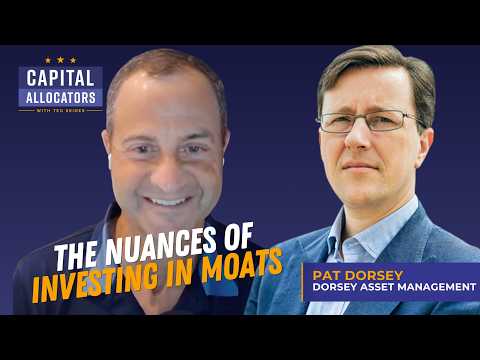 Pat Dorsey: The Nuances of Investing in Moats (Capital Allocators, EP.509) | Pat Dorsey | |||
 Patrick O’Shaughnessy – O'Shaughnessy Asset Management (First Meeting, EP.01) | Patrick O'Shaughnessy |
CBest of Decision-Making: Annie Duke (2018)Annie Duke · 3 August 2026CBest of Decision-Making: Annie Duke (2022)Annie Duke · 3 August 2026CBubbles, Value Investing, and the Long Game at GMO | Jeremy Grantham - EP. 493Jeremy Grantham · 23 March 2026CJosh Wolfe – Seeing the Lux (Capital Allocators, EP.65)Josh Wolfe · 8 December 2025CJosh Wolfe & Brett McGurk – Venture, Geopolitics, and the Next FrontierBrett McGurk · 8 December 2025CJosh Wolfe & Brett McGurk – Venture, Geopolitics, and the Next Frontier (EP.476)Josh Wolfe, Brett McGurk · 8 December 2025CHoward Marks - Navigating Private Credit (EP.439)Howard Marks · 7 April 2025CTop 5 of 2024: #3: Cliff Asness - EP.385Clifford Asness · 1 January 2025CAlexis Ohanian – From Reddit to 776, a Technology Company that Deploys Venture Capital (EP.388)Alexis Ohanian · 27 May 2024CCliff Asness - Simple Investing is Hard (EP.385)Clifford Asness · 13 May 2024CChris Dixon - Empty Rooms: Web3 After the Fall (EP.380)Chris Dixon · 15 April 2024CMichael Mauboussin - Pattern Recognition and Public Markets (EP.370)Michael Mauboussin · 19 February 2024CSeth Klarman – Timeless Value Investing (EP.328)Seth Klarman · 17 July 2023CChris Sacca – Hustling to Save the Planet at Lowercarbon (Capital Allocators, EP.321)Chris Sacca · 12 June 2023CAdam Shapiro – Post-Breeding Grounds for Rising Stars and FamiliesAdam Shapiro · 5 June 2023CCharley Ellis - Figuring Out Investing and VanguardCharles D. Ellis · 12 December 2022CSebastian Mallaby – The Making of the New Future in Venture, Venture is Eating the Investment...Sebastian Mallaby · 11 April 2022CJosh Wolfe – Caution and Innovation at Lux Capital, Venture is Eating the Investment World 8 ...Josh Wolfe · 21 February 2022CBill Trenchard - First Round Capital (Manager Meetings, EP.23)Bill Trenchard · 9 December 2021CPrivate Equity Masters 4: David Rubenstein – Carlyle Group (Capital Allocators, EP.203)David M. Rubenstein · 12 July 2021CJeremy Grantham – GMO (Manager Meetings, EP.01)Jeremy Grantham · 8 July 2021CCharley Ellis – The Magic of David SwensenCharles D. Ellis · 31 May 2021CDan Ariely – The Human Capital Factor (Capital Allocators, EP.195)Dan Ariely · 17 May 2021CBONUS – Michael Mauboussin on the Decision Education PodcastMichael Mauboussin · 4 February 2021CJoel Greenblatt – Common Sense for Value at Gotham CapitalJoel Greenblatt · 23 November 2020CAdam Fisher – Blending Global Macro and Real Estate at Commonwealth Asset Management (First...Adam Fisher · 13 July 2020CMichael Mauboussin – Consilient Observations in a Crisis (Capital Allocators, EP.127)Michael Mauboussin · 23 March 2020CGregory Zuckerman – Decoding Renaissance Medallion (Capital Allocators, EP.119)Gregory Zuckerman · 6 January 2020CDawn Fitzpatrick – Multi-Faceted Investing at Soros Fund ManagementDawn Fitzpatrick · 4 November 2019CMichael Mauboussin – Who’s on the Other Side (Capital Allocators, EP.99)Michael Mauboussin · 13 May 2019CDan Ariely – Investing in Irrationality (Capital Allocators, EP.93)Dan Ariely · 1 April 2019CCharley Ellis - Indexing and Its Alternatives (EP.62)Charles D. Ellis · 30 July 2018CBasil Qunibi - Moneyball for AllocatorsMichael Mauboussin · 5 March 2018CMichael Mauboussin – Active Challenges, Rational Decisions and Team Dynamics (Capital...Michael Mauboussin · 8 January 2018CCharley Ellis – Multiple Ways to WinCharles D. Ellis · 22 May 2017CAdam Shapiro – Post-Breeding Grounds for Rising Stars and Families (Capital Allocators, EP.319)Adam ShapiroCDawn Fitzpatrick – Multi-Faceted Investing at Soros Fund Management (Capital Allocators, EP.112)Dawn FitzpatrickCPat Dorsey: The Nuances of Investing in Moats (Capital Allocators, EP.509)Pat DorseyCPatrick O’Shaughnessy – O'Shaughnessy Asset Management (First Meeting, EP.01)Patrick O'Shaughnessy
CBubbles, Value Investing, and the Long Game at GMO | Jeremy Grantham - EP. 493Jeremy Grantham · 23 March 2026CJosh Wolfe – Seeing the Lux (Capital Allocators, EP.65)Josh Wolfe · 8 December 2025CJosh Wolfe & Brett McGurk – Venture, Geopolitics, and the Next FrontierBrett McGurk · 8 December 2025CJosh Wolfe & Brett McGurk – Venture, Geopolitics, and the Next Frontier (EP.476)Josh Wolfe, Brett McGurk · 8 December 2025CHoward Marks - Navigating Private Credit (EP.439)Howard Marks · 7 April 2025CTop 5 of 2024: #3: Cliff Asness - EP.385Clifford Asness · 1 January 2025CAlexis Ohanian – From Reddit to 776, a Technology Company that Deploys Venture Capital (EP.388)Alexis Ohanian · 27 May 2024CCliff Asness - Simple Investing is Hard (EP.385)Clifford Asness · 13 May 2024CChris Dixon - Empty Rooms: Web3 After the Fall (EP.380)Chris Dixon · 15 April 2024CMichael Mauboussin - Pattern Recognition and Public Markets (EP.370)Michael Mauboussin · 19 February 2024CSeth Klarman – Timeless Value Investing (EP.328)Seth Klarman · 17 July 2023CChris Sacca – Hustling to Save the Planet at Lowercarbon (Capital Allocators, EP.321)Chris Sacca · 12 June 2023CAdam Shapiro – Post-Breeding Grounds for Rising Stars and FamiliesAdam Shapiro · 5 June 2023CCharley Ellis - Figuring Out Investing and VanguardCharles D. Ellis · 12 December 2022CSebastian Mallaby – The Making of the New Future in Venture, Venture is Eating the Investment...Sebastian Mallaby · 11 April 2022CJosh Wolfe – Caution and Innovation at Lux Capital, Venture is Eating the Investment World 8 ...Josh Wolfe · 21 February 2022CBill Trenchard - First Round Capital (Manager Meetings, EP.23)Bill Trenchard · 9 December 2021CPrivate Equity Masters 4: David Rubenstein – Carlyle Group (Capital Allocators, EP.203)David M. Rubenstein · 12 July 2021CJeremy Grantham – GMO (Manager Meetings, EP.01)Jeremy Grantham · 8 July 2021CCharley Ellis – The Magic of David SwensenCharles D. Ellis · 31 May 2021CDan Ariely – The Human Capital Factor (Capital Allocators, EP.195)Dan Ariely · 17 May 2021CBONUS – Michael Mauboussin on the Decision Education PodcastMichael Mauboussin · 4 February 2021CJoel Greenblatt – Common Sense for Value at Gotham CapitalJoel Greenblatt · 23 November 2020CAdam Fisher – Blending Global Macro and Real Estate at Commonwealth Asset Management (First...Adam Fisher · 13 July 2020CMichael Mauboussin – Consilient Observations in a Crisis (Capital Allocators, EP.127)Michael Mauboussin · 23 March 2020CGregory Zuckerman – Decoding Renaissance Medallion (Capital Allocators, EP.119)Gregory Zuckerman · 6 January 2020CDawn Fitzpatrick – Multi-Faceted Investing at Soros Fund ManagementDawn Fitzpatrick · 4 November 2019CMichael Mauboussin – Who’s on the Other Side (Capital Allocators, EP.99)Michael Mauboussin · 13 May 2019CDan Ariely – Investing in Irrationality (Capital Allocators, EP.93)Dan Ariely · 1 April 2019CCharley Ellis - Indexing and Its Alternatives (EP.62)Charles D. Ellis · 30 July 2018CBasil Qunibi - Moneyball for AllocatorsMichael Mauboussin · 5 March 2018CMichael Mauboussin – Active Challenges, Rational Decisions and Team Dynamics (Capital...Michael Mauboussin · 8 January 2018CCharley Ellis – Multiple Ways to WinCharles D. Ellis · 22 May 2017CAdam Shapiro – Post-Breeding Grounds for Rising Stars and Families (Capital Allocators, EP.319)Adam ShapiroCDawn Fitzpatrick – Multi-Faceted Investing at Soros Fund Management (Capital Allocators, EP.112)Dawn FitzpatrickCPat Dorsey: The Nuances of Investing in Moats (Capital Allocators, EP.509)Pat DorseyCPatrick O’Shaughnessy – O'Shaughnessy Asset Management (First Meeting, EP.01)Patrick O'Shaughnessy