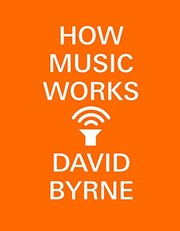
How Music Works
How the spaces it is made for, from cathedrals to earbuds, shape music.
Byrne argues that music is not created in a vacuum but is shaped by the spaces it's designed to fill — a cathedral's reverb, a club's noise floor, an iPod earbud. Part memoir, part cultural history, part production theory. The chapter on how CBGB's acoustics shaped Talking Heads's sound alone is worth the cover price.
Who recommended it 3 · 2 direct
“Some interesting historical perspectives I hadn't thought of, like how the venue's reverberation changed composition. Highlight for me was the Byrne/Eno creative thoughts on their approach to writing and recording music, which I've always loved.”
Similar books 6
Chosen by shared topics, the entries that hold them, and the people who recommended both.
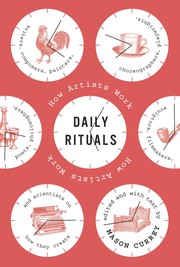
How artists, writers and composers structure their working days.
“Collections of the creative routines of famous writers, artists, musicians, and scientists. Some interesting insights, but mostly reinforcing proof that it's important to keep a daily routine to put aside time for your creative work.” — Derek Sivers
Source: Derek Sivers book notes (primary, rated list) · Rating: 5/10
Recommended by: Derek Sivers, Jim Collins, Nat Eliason and 2 others

A method for playing music free of the fear and self-judgment that freeze performers.
Strategies for electronic music producers stuck starting, finishing or arranging.
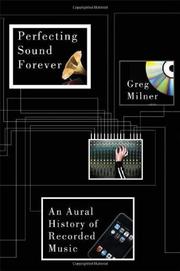
Recording from cylinder to Pro Tools: should it capture reality or improve on it?
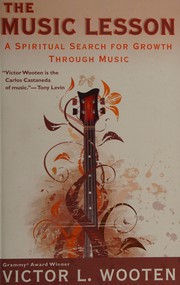
A novel in which a teacher upends a musician's ideas about practice and mistakes.