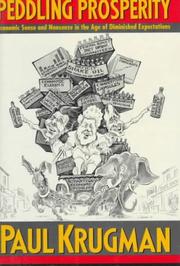
Peddling Prosperity
Twenty years of American economic debate, and which ideas made sense.
Summary
Paul Krugman's 1994 book, published by W. W. Norton under the subtitle Economic Sense and Nonsense in an Age of Diminished Expectations, examines twenty years of economic disappointment and intense economic debate in the United States. Krugman argues it has been the age of the policy entrepreneur, the economic snake-oil seller of the right or the left who offers easy answers to hard problems.
Conservative economists led by Milton Friedman made strong arguments against activist government that kept liberals on the defensive for years. But when Ronald Reagan brought conservatism to power, he did so in the name of the supply-siders, whose ideas Krugman calls cartoon-like in their simplicity; the supply-side treatment cured nothing and left a $3 trillion bill. Meanwhile, even under conservative rule in the 1980s, ideas that justified government activism revived. Liberals, Krugman argues, have their own supply-siders: the strategic traders, who picture the US economy in win-lose competition with other countries, a vision more appealing to politicians than the less dramatic truth. He traces the swing of ideas from left to right and back, and what happens to economic ideas on their way to power. Newsweek called it the best primer on recent US economic history.
Key takeaways 4
- Policy entrepreneurs sell simple economic answers that serious economists reject.
- Supply-side economics, Krugman argues, cured nothing and added $3 trillion of debt.
- Strategic trade theory became the left's version of supply-side simplicity.
- Economic ideas change on their way from academia into policy.
Who should read it
Readers who want a sharp guide to the economic policy debates of the 1970s to 1990s.
Who recommended it 1
Similar books 6
Chosen by shared topics, the entries that hold them, and the people who recommended both.
The drug trade as a business: how cartels handle supply chains, staff and branding.
A humorist's world tour asking why some places prosper and others fail.
Recommended by: Eric Weinstein
How prices, incentives and trade-offs work, from housing and labour to trade.
Recommended by: Marc Andreessen
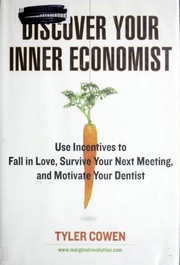
Economics for daily life: motivating people, choosing food, giving to charity.
“Recommendations for the transactions of life. When to give to charity, what restaurants to choose, what insurance to buy, etc. He makes a rational case for these, often surprising, from an economics point of view.” — Derek Sivers
Source: Derek Sivers book notes (primary, rated list) · Rating: 8/10
Recommended by: Derek Sivers, Graham Duncan
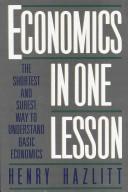
Judge a policy by its long-run effects on all groups, applied to two dozen cases.
“I've given dozens of copies of this classic to students... The book should be required reading on every campus.” — Christopher Bloomstran
Source: Semper Augustus 2020 Letter to Clients, 'To Read or Not to Read', p. 57
Recommended by: Christopher Bloomstran, Changpeng Zhao and 3 others
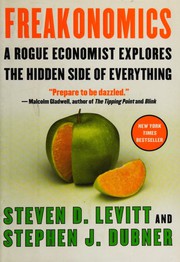
Incentives and data applied to cheating teachers, sumo wrestlers and other puzzles.
“Also, see the story of cheating in the Chicago Public School system in Steven D. Levitt and Stephen J. Dubner, Freakonomics: A Rogue Economist Explores the Hidden Side of Everything (New York: Harper Perennial, 2009), 23-35” — Michael Mauboussin
Source: Blaming the Rat: Incentives, Motivation, and How They Interact, page 14
Recommended by: Michael Mauboussin, Mohnish Pabrai and 7 others