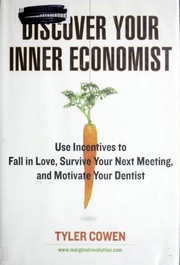
Discover Your Inner Economist
Economics for daily life: motivating people, choosing food, giving to charity.
Summary
Cowen applies economic reasoning to ordinary decisions: how to get people to do what you want, how to choose food in an unfamiliar city, how to get more out of art and music, how to give to charity effectively, and how to manage your own attention and motivation.
His central analytical point concerns incentives, and it is more careful than the standard treatment. He argues that monetary incentives frequently reduce the behaviour they are meant to encourage, because paying someone for an activity converts it from something done for its own reasons into a transaction, and the payment then becomes the measure of its worth. He extends this to charitable giving, to parenting, to management and to volunteering, drawing on the crowding-out literature. His alternative is that control over the framing and the meaning of an activity is a more effective lever than payment.
The practical chapters include his method for choosing restaurants, which is to identify where the rent is low relative to the food's ambition and where the customers are people who care about the specific cuisine; his argument that attention rather than money is the binding constraint on most consumption; and his position on charitable giving, which is that most giving is self-directed and that effectiveness requires accepting outcomes you do not observe.
The book is a collection of applications rather than an argument, and some chapters are stronger than others. Several of the behavioural findings cited come from the pre-replication period. Cowen writes to provoke and states positions more firmly than he defends them.
Key takeaways 7
- Paying someone for an activity can reduce it, because payment converts an intrinsically motivated act into a transaction whose price becomes its measured worth.
- Control over how an activity is framed and what it means is a more effective lever on behaviour than money in many situations.
- Attention rather than money is the binding constraint on most consumption, which changes what is worth buying and what is worth doing.
- Most charitable giving is directed at the giver's own feelings, and effectiveness requires accepting outcomes the giver will never observe.
- Signalling explains a large share of consumption and of stated preference, and separating what people signal from what they want changes what you should offer them.
- Restaurant quality can be predicted from rent levels, customer composition and the specificity of the cuisine rather than from reviews.
- Economic reasoning applies to the allocation of one's own attention and motivation, not only to market transactions.
Who should read it
Readers who want economic reasoning applied to everyday decisions, particularly on why monetary incentives backfire.
About Tyler Cowen
Professor of economics at George Mason University, director of the Mercatus Center and co-author of the Marginal Revolution blog.
The books apply price theory to questions operators actually face: which skills complement machines, how large firms really behave, why long-run growth should outrank near-term redistribution. Talent sets out a practical interviewing method for finding underrated people, drawn from his own grant-making at Emergent Ventures.
Who recommended it 2 · 1 direct
“Recommendations for the transactions of life. When to give to charity, what restaurants to choose, what insurance to buy, etc. He makes a rational case for these, often surprising, from an economics point of view.”
Similar books 6
Chosen by shared topics, the entries that hold them, and the people who recommended both.

Why societies should put sustainable long-run growth almost above all else.
“Subtitle “A Vision for a Society of Free, Prosperous, and Responsible Individuals” gives a hint of its contents. I love these kinds of books: full of well-considered, smart, rational and surprising ideas from an economist.” — Derek Sivers
Source: Derek Sivers book notes (primary, rated list) · Rating: 8/10
Recommended by: Derek Sivers, Jackie Vullinghs and 1 other
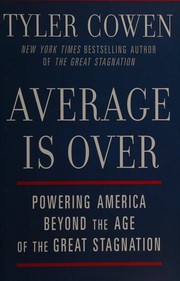
Work is splitting between those who work well with smart machines and the rest.
“Tyler Cowen, a professor of economics at George Mason University, dedicates a chapter to freestyle chess in his terrific book, Average Is Over.” — Michael Mauboussin
Source: Lessons from Freestyle Chess: Merging Fundamental and Quantitative Analysis, page 3
Recommended by: Michael Mauboussin, Ryan Holiday
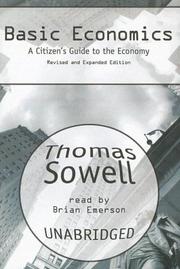
How prices, incentives and trade-offs work, from housing and labour to trade.
Recommended by: Marc Andreessen
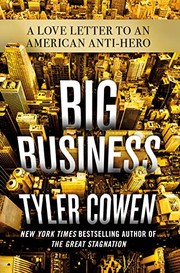
A defence of American business on fraud, CEO pay, monopoly and tech, issue by issue.
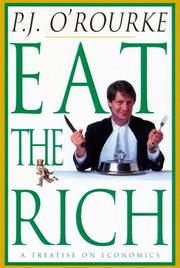
A humorist's world tour asking why some places prosper and others fail.
Recommended by: Eric Weinstein
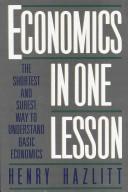
Judge a policy by its long-run effects on all groups, applied to two dozen cases.
“I've given dozens of copies of this classic to students... The book should be required reading on every campus.” — Christopher Bloomstran
Source: Semper Augustus 2020 Letter to Clients, 'To Read or Not to Read', p. 57
Recommended by: Christopher Bloomstran, Changpeng Zhao and 3 others