Updates

  1. 137 new fund letters and reports, each with its own page: Kayne Anderson Rudnick (48 market briefings, KayneCast episodes and TV commentaries), Shelton Capital Management (48 shareholder reports and a commentary), Lakehouse Capital (10 Small Companies Fund letters), Smead (5 newsletters), RIT Capital Partners (5 monthly commentaries), Kovitz, Legal & General, Generation, Hosking, Marram, Munro, Oldfield and others.
  2. 200 new fund letters and reports, each with its own page: Spheria (41 monthly reports), Peapack Private (41 weekly recaps and planning newsletters), Fort Washington (23), Polen Capital (15), Aristotle Pacific (14), Riverwater (13), Chou (10), Apollo Asia Fund (8, back to 1998), Personal Asset Trust, Rockwood Strategic, J Capital Research, I/O Fund, Penn Davis McFarland, Pomona and others.
  3. Investor pages have one Investments tab with shares, changes, % owned, class, market cap and Market cap and Status filters, a Funds tab listing each fund the firm runs, and assets under management from Form ADV. The Investors table shows AUM and current investments, and its search finds investors by what they hold.
  4. Filters, search and sort stay as you left them when you come back to a section. Person cards look like book cards. Company pages name their Investors tab Ownership. Kind and Sector filters use four kinds and GICS sectors with industries. Dead links left the Links tabs.
  5. 190 more investors from fiscal.ai's list, with their sites, letters, partners and 13F holdings; 556 more partner descriptions. Experts now lists only people.
  6. Fund letters lists 144 new documents from 23 firms, each with its own page: a summary, key insights and quotes. Among them: 37 BlackRock articles, 21 Value Partners monthly notes, eight Baron Capital letters, six Stone Sentinel letters to partners, seven Value Line portfolio manager Q&As, BNY's 2026 earnings releases and Starboard Value's 2026 conference presentations.
  7. 584 more investors, with their websites, 6,776 letters from their own sites, 1,385 partners with pages and the 13F holdings of 213 firms. New letters arrive daily from 290 more archives.
  8. Media and Companies filter by GICS sector and industry group, taken from the companies an episode or page names. 1,860 more company pages show a logo, the SEC's list included.
  9. The home page counts what the platform holds and lists features such as the document reader, the player and saved marks. Settings sits at the foot of the rail. Book cards are a quarter wider, so rows hold fewer. Companies drops the Named in filter, and the Role list in your account runs A to Z.
  10. Investor pages of 13 firms show their newsroom's latest posts. New 13F filings are read as the SEC publishes them.
  11. Investor pages have an Investments tab: 13,975 holdings for 105 investors, from their 13F filings with the SEC and their own portfolio pages, with status and sector. 7,338 more companies have a page of their own.
  12. A podcast or YouTube episode keeps playing while you move around the site, in a bar with skip, speed and volume. Media tables show each episode's length and description.
  13. Press releases come from each company's own newsroom (167 companies); SEC filings sit on the Filings tab. Tickers name their exchange, and a company's Experts tab includes guests whose episode description names it.
  14. Letter types now include Market commentary, Fact sheet, Interim report, Annual report, Proxy circular and Governance document. The reader opens over the whole window.
  15. Partners of investment firms have 2,836 appearances and 580 pieces of writing on their pages; Derek Sivers's page lists every book he rates, with his rating.
  16. Fund letters lists three Akre Focus shareholder reports: the ETF's annual report for the year to July 2026, its semi-annual report to January 2026 and the fund's semi-annual report to January 2025, each with its own page: a summary, key insights and quotes.
  17. 837 partners of 73 investment firms now have their own pages, with title, description, photograph and social accounts; Andreessen Horowitz partners' pages also list their writing on a16z.com.
  18. Company pages have a Press releases tab: 8,229 releases for 203 companies, from SEC filings and company newsrooms. Companies filter by For-profit or Non-profit. Own media is a table with filters. Media filters by sector and industry. Publication pages link their publisher in the description.
  19. The Unilever page's Letters tab shows what each fund letter says about Unilever, word for word with its page, and whether the letter is bullish, bearish, mixed or neutral. Filter by sentiment, and see 10 letters at a time.
  20. 492 more fund letters and 3,183 more articles show the day they were published, read from each letter's first page or each article's own page.
  21. The PDF reader has a search box: type words to see every match in the document and step through them. About 540 letters that were web pages, among them Oakmark's commentaries, Bill Miller's letters and Howard Marks's memos, now open in the reader.
  22. Person pages: recommendations open with tier 1 books; one button per organisation; transcripts sit on their episodes; the books on 129 reading lists joined the Recommends tabs.
  23. Companies lists every company with a ticker on the SEC's list, with a Source filter. A quote on a company page opens the letter at that page with the words marked. A company's Media tab lists only episodes that name it, and a new Own media tab lists its podcasts, publications and YouTube channel. Show pages link their publisher. A page opened from a table no longer shows that table's filters beside it.
  24. Company, investor and person pages show more of their social accounts: Facebook, TikTok, Bluesky, Medium, GitHub, Discord and podcast shows. Investor pages list every partner the firm's own team page names: 965 people across 73 investors, 98 for Andreessen Horowitz.
  25. About 170 more letters and papers open in the reader: Mohnish Pabrai's letters and transcripts from his site's new folder, and free copies of papers by Asness, Harvey, Altman, Lo and others from their own or their schools' sites.
  26. Every company a fund letter names has a page, with the letters and quotes that name it: 47 new pages, among them Atom Computing, Hugging Face, Rolls-Royce Holdings and Westinghouse Electric. Company pages have a Quotes tab.
  27. A person's Writing tab has a Type column and filter (Article, Essay, Transcript, Speech, Foreword, Interview and the rest), and Publication names only the publication that published each piece.
  28. Fund letters opens on the newest published letter, and a letter or paper found by search opens its own page here instead of the publisher's site.
  29. A letter or paper with a copy on the site opens its PDF over its page, with a button to open it in a new tab. Select text to highlight or underline it; signed-in readers keep their marks in their account. Each quote opens the PDF at its page with its words marked, and a Source link leads to the publisher's original.
  30. Fund letters lists 61 more documents, each with its own page: Fairfax's 2025 and 2026 interim reports, proxy circulars and 2025 annual report (with their French editions), 26 Charlie Munger meeting transcripts, talks and essays, Third Point's 2026 monthly reports and Malibu Life's interim results, and a Seth Klarman interview. Papers adds Richard Thaler's two 2020 editorials on nudges.
  31. Fund letters lists Lux Capital's letters for Q2 and Q3 2026, by Josh Wolfe, each with its own page: a summary, key insights and quotes.
  32. Fund letters lists Brookfield's letter to shareholders for Q3 2026, by Bruce Flatt, with its own page: a summary, key insights and quotes.
  33. Fund letters lists Howard Marks's memo of 11 November 2026, A Layman Thinks About AI, with its own page: a summary, key insights and quotes.
  34. Fund letters lists 118 more letters, each with its own page: 44 weekly commentaries by Jeremy Siegel from 2026, 31 issues of Van Tharp's newsletter from 2018, 23 Pabrai Investment Funds letters from 2021 to Q3 2026, 13 Efficient Frontier essays by William Bernstein, Oakmark's three 3Q 2026 commentaries, two Lindsell Train reports, a John Hussman comment and Third Point's Q3 2026 letter.
  35. 2,027 more books carry a one-line description in the Books table and on their pages; 7,067 of 7,715 have one, every tier 1, 2 and 3 book among them.
  36. Fund letters lists 187 more letters from 19 firms, among them Permanent Equity, Social Capital, Lux Capital, Square Peg, Bestinver, Cobas, Sequoia Fund, Marketfield and EquityCompass; each shows on its investor's page and has a page of its own.
  37. 2,928 more books carry a one-line description in the Books table and on their pages, so every tier 1, 2 and 3 book has one; 5,040 in all.
  38. Every publication on Newsletters has its own page: its writing, its writers, its staff and who recommends it. Investor pages have a Management tab; a company's Experts tab now leaves out its own people, who list under Management. Tabs on a phone move sideways only.
  39. Every fund letter and research paper has its own page: the thesis, the PDF, the companies and books it names, and for 176 letters and 24 papers so far a summary, key insights and quotes with their page.
  40. 99 books that no page listed now sit under their topics in Books, among them Caste, American Prometheus and Pale Blue Dot.
  41. Newsletters lists every newspaper, magazine, investment newsletter, journal and blog the reference holds, 442 in all, with the people who write there. The search box keeps your last 20 searches. You can create an account.
  42. 283 books that fund managers recommend in their letters are on the shelf, each with the letter's own words and page; investor pages have a Recommends tab.
  43. Person, company, investor and show pages link their own accounts on X, Threads, Instagram, LinkedIn, YouTube and Substack: 275 people, 552 companies and organisations, 88 investors and 478 shows.
  44. 716 more book recommendations name their source: the person's own reading list, letter, blog post, speech or interview, or an article that reports it. 232 of them quote the person's own words about the book, on the book card and on the book's page.
  45. Every US-listed company has a page with its SEC filings. Company pages list their experts and their management, past and present. Fund managers sit under Investors. Each show has a page of its episodes, and an episode page names its guests and hosts. Biographies lists groups, then people. Breadcrumbs show where a page sits.
  46. Media lists every podcast episode, video, interview and talk, over 10,000, by person, company, publisher and event; each filter searches its own choices. Books opens on its table, then Browse, then Authors and Recommenders. A filter's count no longer covers its arrow.
  47. A book that no company, country or subject page lists shows its topics under Where it sits in the reference. On a phone, a page's tabs scroll sideways only. Descriptions read the same on every page. See them in the Experts tab lists every expert the page names.
  48. Every podcast episode, video and interview has its own page with a video or audio player and a link to the source. Investor pages show each company's sector and market cap; firms such as Berkshire Hathaway have one page that holds their letters and their company tabs. Letters tabs filter by company and search the theses. Companies filter by Public, Private and Defunct and link each company's website.
  49. Every tab, view and search has its own address, such as /books/table/asset or /letters/companies, so Back works and a link opens the same place. Page addresses no longer end in .html. Fund letters, Investors, Companies and Papers load about a fifth of the data they did.
  50. Fund letters has a Companies tab: every company the letters name, with its market cap, sector, country, and how many letters and investors name it. Investor pages link each investor's website. Lists in table cells end with “… and N more” at every width.
  51. 1,120 more book summaries; descriptions for 373 papers; pages for 137 more companies, each with the fund letters that discuss it; 215 official photographs; search has its own page.
  52. 411 more books have a summary; person pages list 930 more of the books they wrote; 147 people show their official photograph.
  53. Every investor has a page with its letters and the companies they discuss; company pages list the investors whose letters name them.
  54. A Companies section at the top of the rail lists every company the books, experts and fund letters name.
  55. Person pages list letters, writing, profiles and links as sortable tables with filters, and show each person's companies as links; Fund letters show each letter's description in its own column.
  56. Experts show a checked job title and a short description of each person; 30 more people have photographs.
  57. Every company, fund, university and publication the experts work for has a page listing the people there.
  58. Fund letters show each letter's thesis and filter by it; 225 person pages list the essays, columns and newsletter issues the person wrote.
  59. Person pages list every essay and newsletter issue a person wrote, and their own books as a table in List view.
  60. Recommends shows the five largest kinds of book and the rest under More; browse pictures load sooner.
  61. Podcasts and talks link the original episode, filter by Audio and video or Press, and list each publisher once.
  62. Pages are wider, Recommends has List and Grid, and a filter clicked again turns off.
  63. Book cards sit in a ruled grid with Open Library and Goodreads links and each book's one-line note.
  64. Funds is now Investors; each investor's styles are buttons that filter the table.
  65. Podcasts and talks on a person's page filter by year and publisher and show as a list or a grid of pictures.
  66. Quotes show only people's own words: 472 summaries written by list sites are gone.
  67. Country pages open from Browse again, and every link on the shelf lands on a page.
  68. Subject and person pages show their sections as tabs, and each book appears once on a person's page.
  69. Book cards show the quote, who said it and the source; grids show five cards to a row.
  70. On a phone, a menu holds the sections, search, Updates, Feedback and dark mode.
  71. Feedback takes a screenshot of the page with no browser prompt, opens a screenshot full size when you click it, and clears itself once sent.
  72. Book cards are centred, search names the topic each book sits in, and any text cut short shows whole on hover.
  73. Search groups its results by kind: people, companies, geographies, subjects, topics, books, funds, fund letters and papers.
  74. The Books table lists who recommended each book by name, and the browser tab names the section you are in.
  75. Feedback can take a screenshot of the page, or one you paste or choose, and opens in the corner beside Updates.
  76. Each rail button reopens its section where you left it, and Browse, Table and People show on every book and subject page.
  77. Filters grey out choices that hold nothing instead of hiding them, and Books › People filters by authors or recommenders.
  78. Feedback takes a subject line and up to three screenshots.
  79. Biographies are grouped by the person they are about: 41 new pages, from Abraham Lincoln to Lee Kuan Yew.
  80. Sport splits into 23 sports, and Religion into one topic per faith.
  81. Book lists show as cards: the cover, one recommendation quote and every recommender by name.
  82. Seventeen subjects that had two or three pages under different names now have one page each.
  83. Every page lists its Experts as authors and recommenders, with a link to them on the Experts tab.
  84. Economics, Financial history, Financial panics and Accounting are subjects of their own, with one page per financial crisis.
  85. Book, person and subject pages open inside the app, so the tabs stay in view.
  86. 996 more book covers, and photographs or logos for 227 more people and companies.
  87. Books › Browse shows every subject as cards, and the rail holds Fund letters, Papers, Experts, Books and Funds.
  88. Every topic over 150 books splits into narrower topics, each with a page of its own.

Send feedback

What is it?
Screenshots, up to 3 (optional)
or paste one with Ctrl+V

We use your email only to reply to you.

RC

Regulation, central banks and public policy

Books on how governments regulate banks, markets and industries: the Federal Reserve, financial crises and bailouts, antitrust, health care, tax, energy and climate policy.

Start here

  1. The Economics of RegulationAlfred E. Kahn, 1970
  2. Antitrust LawRichard A. Posner, 1976
  3. Prophets of RegulationThomas K. McCraw, 1984
  4. Cadillac DesertMarc Reisner, 1986
  5. A History of the Federal Reserve, Volume 1Allan H. Meltzer, 2003

Alfred E. Kahn · 1970

The economics of regulated industries, from pricing at marginal cost to competition.

Richard A. Posner · 1976

Antitrust should rest on the economics of efficiency, not on protecting competitors.
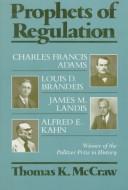
Thomas K. McCraw · 1984

A century of US regulation through four figures, from Charles Francis Adams to Kahn.

Marc Reisner · 1986

How rival federal agencies dammed the American West's rivers for water projects.
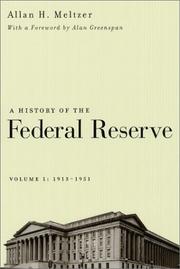
Allan H. Meltzer · 2003

The Fed from 1913 to 1951, told from its own minutes and internal memos.

Michael Pollan · 2006

Four meals traced to their sources, from fast food and organic to hunted and grown.

William Nordhaus · 2013

The economics of climate change, and why a universal carbon price works best.
Adam Tooze · 2018

The 2008 crash, the eurozone crisis and the politics after as one connected story.
Barry Eichengreen, Asmaa El-Ganainy, Rui Esteves, Kris James Mitchener · 2021

Sovereign borrowing from Italian city-states to the pandemic, and what it paid for.
Louis D. Brandeis · 1914

How bankers used depositors' money to control industry, from the Pujo inquiry.

“Brandeis for the knockout punch, the wonderful phrase he gave us in his 1914 book Other People’s Money—“the relentless rules of humble arithmetic.” — John C. Bogle

Source: The Joy of Writing — Books, Ideas, Advocacy, and Idealism, page 9

Recommended by: John C. Bogle, Michael Mauboussin
Ferdinand Pecora · 1939

The 1933 Senate hearings exposing bankers' practices that led to securities laws.

“The combination of banking and investment banking under the same roof received a good part of the blame for the Great Crash (see one of my favorite books, Wall Street Under Oath by Ferdinand Pecora, 1939).” — Howard Marks

Source: The Long View, page 12

Recommended by: Howard Marks

Robert H. Bork · 1978

Antitrust law should pursue one goal, consumer welfare, and drop the rest.
Steve Coll · 1986

How AT&T, the American telephone monopoly, was broken up.

Ben S. Bernanke, Thomas Laubach, Frederic S. Mishkin, Adam S. Posen · 1999

How inflation targeting worked in the first countries to adopt it.

A. Denny Ellerman, Paul L. Joskow, Richard Schmalensee, Juan-Pablo Montero, Elizabeth M. Bailey · 2000

How the 1990 US sulphur dioxide allowance trading programme worked in practice.
Adam B. Jaffe, Josh Lerner · 2004

How 1980s changes turned the US patent system from aid to obstacle for innovation.

Josh Lerner · 2009

Why most government efforts to build venture capital sectors fail.
Raghuram G. Rajan · 2010

The 2008 crisis grew from political and economic imbalances, not just banker greed.
Naomi Oreskes, Erik M. Conway · 2010

How a few scientists with ties to industry ran campaigns to deny settled science.

Recommended by: Nat Eliason, Elon Musk
E. R. Yescombe · 2010

How private firms finance, build and run public infrastructure under long contracts.
Tim Wu · 2010

Every US information industry moved from an open era to control by one firm.

Alan S. Blinder · 2013

The 2008 crisis, the policy response and the aftermath, for general readers.
Susan P. Crawford · 2013

How government decisions and monopolies left US internet access slow and costly.

Michael Moss · 2013

How processed-food makers engineer salt, sugar and fat to make people eat more.
Neil Irwin · 2013

The 2007 to 2012 crises through three central bankers: Bernanke, King and Trichet.
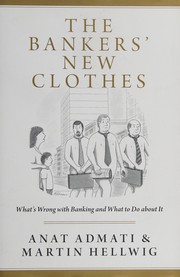
Anat Admati, Martin Hellwig · 2013

Why banks should fund themselves with far more equity, and why their objections fail.
Joseph R. Blasi, Richard B. Freeman, Douglas L. Kruse · 2013

Broad employee ownership as an American tradition, and the case for reviving it.

Charles W. Calomiris, Stephen H. Haber · 2014

Whether a nation's banks are stable or crisis-prone is decided by its politics.
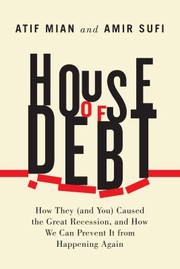
Atif Mian, Amir Sufi · 2014

County data showing household debt, not the banks, caused the Great Recession.
Eileen Appelbaum, Rosemary Batt · 2014

What private equity does to companies, workers and investor returns, critically.
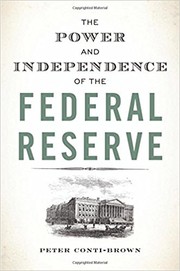
Peter Conti-Brown · 2016

What the Federal Reserve's independence is in law, against what people assume.
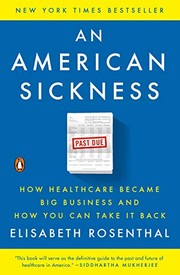
Elisabeth Rosenthal · 2017

How US healthcare became so costly and broken, and what patients can do.

Tim Wu · 2018

How antitrust shrank to a consumer price test, and the case for breaking up giants.

“Gustavo Grullon, Yelena Larkin, and Roni Michaely, “Are U.S. Industries Becoming More Concentrated?” Review of Finance, Vol. 23, No. 4, July 2019, 697-743 and Tim Wu, The Curse of Bigness: Antitrust in the New Gilded Age (New York: Columbia Global Reports, 2018)” — Michael Mauboussin

Source: Public to Private Equity in the United States: A Long-Term Look, page 60

Recommended by: Michael Mauboussin, Jeff Jordan
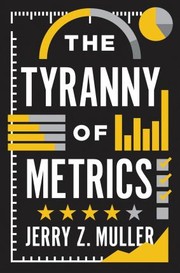
Jerry Z. Muller · 2018

How fixation on measured performance damages the work it is meant to improve.

Adele Ferguson · 2019

The Australian banking misconduct that led to the 2018 Royal Commission.

Katherine Eban · 2019

Fraud in data and manufacturing at offshore generic-drug plants.
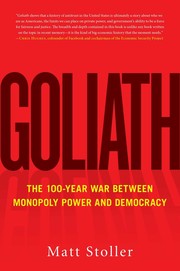
Matt Stoller · 2019

A political history of American monopoly and of the tradition that fought it.

“Matt Stoller, Goliath: The 100-Year War Between Monopoly Power and Democracy (New York: Simon & Schuster, 2019)” — Michael Mauboussin

Source: Market Share: Understanding Competitive Advantage Through Market Power, page 46

Recommended by: Michael Mauboussin, David Heinemeier Hansson
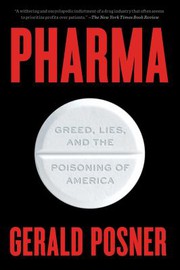
Gerald Posner · 2020

The US drug industry from patent medicines to the opioid epidemic and the Sacklers.
E. Richard Brown · 1979

How Rockefeller philanthropy reshaped American medicine.

Andrew Chetley · 1986

The fight over infant formula marketing and the boycott of Nestlé.
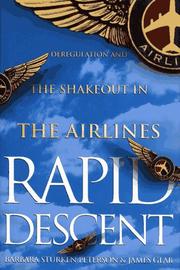
Barbara Sturken Peterson, James Glab · 1994

The American airline industry's upheaval in the years after deregulation.
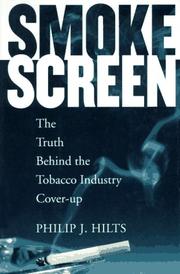
Philip J. Hilts · 1996

The truth behind the tobacco industry's cover-up.

Neil deMause, Joanna Cagan · 1998

How team owners extract public money for stadiums by threatening to move.

Marcia Angell · 2004

How drug companies turned from discovering drugs to marketing them.

James Bessen, Michael J. Meurer · 2008

Evidence that outside drugs and chemicals, patents fail to work as property.
Mitchell A. Orenstein · 2008

How Chile's private pension accounts spread to more than thirty countries.

Lloyd Constantine · 2009

The retailers' antitrust case against Visa and MasterCard's honour-all-cards rule.

Recommended by: Patrick Collison
Robert Glennon · 2009

Why America's water crisis comes from law, pricing and subsidy, not scarcity.
Dieter Helm · 2012

Why climate policy failed to cut emissions as coal use kept rising.

Marion Nestle · 2015

How soda makers built global brands, the health costs, and the push to tax soda.

Aaron Perzanowski, Jason Schultz · 2016

How licensing in place of sale strips buyers of control over what they paid for.

Chris McGreal · 2018

How drug makers, regulators and distributors let the US opioid epidemic grow.

Susan P. Crawford · 2018

Why America lags in fibre-optic broadband, and the case against the cable incumbents.
Brad Smith, Carol Ann Browne · 2019

The policy questions technology companies face, drawn from Microsoft's experience.

David Dayen · 2020

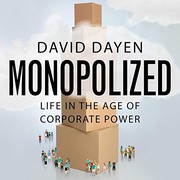
Market concentration in America, sector by sector, through the people it affects.

William Lazonick, Jang-Sup Shin · 2020

How share buybacks replaced reinvestment in American firms and held down wages.
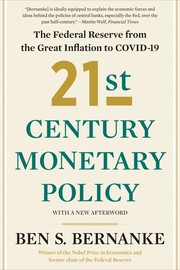
Ben S. Bernanke · 2022

How American monetary policy changed from the 1950s through quantitative easing.
Scott Higham, Sari Horwitz · 2022

The drug distributors behind the opioid epidemic and the lawsuits against them.
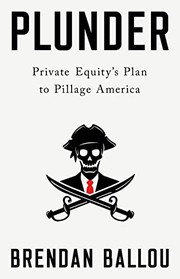
Brendan Ballou · 2023

A federal prosecutor's critique of private equity and the laws that let it profit.
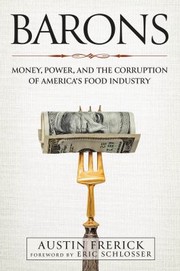
Austin Frerick · 2024

How ownership of American agriculture came to sit with a few families and firms.

John F. Witte · 1985

The history and politics of the American federal income tax.

Recommended by: Paul Graham
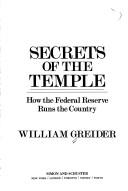
William Greider · 1987

The Federal Reserve under Paul Volcker and how it reshaped America's economy.

Recommended by: Mohnish Pabrai

Peter Huber · 1987

A report on competition in the telephone industry.

Recommended by: Mohnish Pabrai

Charles C. Euchner · 1993

How sports franchises press cities for new stadiums by threatening to move.
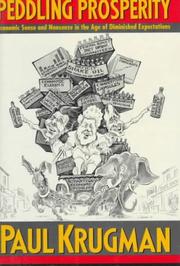
Paul Krugman · 1994

Twenty years of American economic debate, and which ideas made sense.

Recommended by: Eric Weinstein
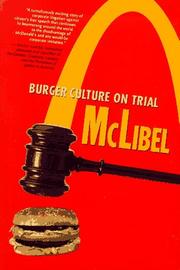
John Vidal · 1997

How a pamphlet against McDonald's led to the longest trial in British history.

Ken Auletta · 2001

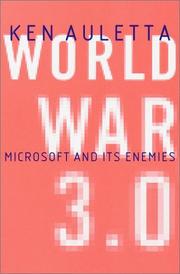
Microsoft's fight with its rivals and the government in the internet revolution.

Recommended by: Keith Rabois

Vaclav Smil · 2003

How the world can meet its growing energy demand and keep the biosphere intact.

Recommended by: Bill Gates

George C. Halvorson, George J. Isham · 2003

A primer on what drives American health care costs and how to curb them.

Recommended by: Mohnish Pabrai

Robert E. Rubin, Jacob Weisberg · 2003

A Treasury secretary's account of economic and fiscal policy in the Clinton years.

“Rubin, Robert E. and Jacob Weisberg, In an Uncertain World: Tough Choices from Wall Street to Washington (New York: Random House, 2004)” — Michael Mauboussin

Source: Long-Term Investing in a Short-Term World: How Psychology and Incentives Shape the Investment Industry, page 14

Recommended by: Michael Mauboussin, Mohnish Pabrai and 1 other
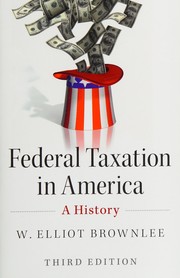
W. Elliot Brownlee · 2004

A history of federal taxation in the United States.

Recommended by: Paul Graham
Laurence J. Kotlikoff, Scott Burns · 2004

US fiscal promises far exceed future revenue, which official debt figures hide.

“A New Book by Kotlikoff and Burns I normally don't go in for doom and gloom, but The Coming Generational Storm by economist Larry Kotlikoff and finance writer Scott Burns should be on every citizen’s bookshelf.” — William J. Bernstein

Source: Efficient Frontier, issue 404 (2004)

Recommended by: William J. Bernstein
John C. Bogle · 2005

How managers and middlemen took value from the owners of American companies.

“Bogle, John C., The Battle for the Soul of Capitalism (New Haven: Yale University Press, 2005)” — Michael Mauboussin

Source: Long-Term Investing in a Short-Term World: How Psychology and Incentives Shape the Investment Industry, page 14

Recommended by: Michael Mauboussin, Mohnish Pabrai and 1 other
Al Gore · 2006

The young readers' edition of the case on global warming and the greenhouse effect.

Recommended by: Richard Branson
Michael E. Porter, Elizabeth Olmsted Teisberg · 2006

Why American health care competes on the wrong things, and value-based competition.

Hal Abelson, Ken Ledeen, Lewis, Harry, Wendy Seltzer · 2008

How the digital explosion changes privacy, freedom and daily life.

Recommended by: Patrick Collison
Robert B. Laughlin · 2008

How valuable information is becoming private property and dangerous to acquire.

Recommended by: Sam Altman
Roger Lowenstein · 2008

How defined-benefit pension promises became unpayable, through three cases.

Recommended by: Mohnish Pabrai
Arnaud Brohé, Nicholas Eyre, Nicholas Howarth · 2009

A guide to carbon markets: allowances, offsets, registries and schemes.
Ron Paul · 2009

The case for challenging, and ending, the Federal Reserve.

George C. Halvorson · 2009

Kaiser Permanente's chief executive on how American health care must be reformed.

Recommended by: Bill Gates
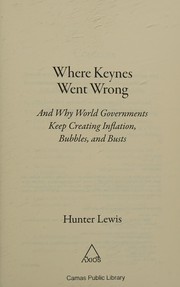
Hunter Lewis · 2009

A polemic against Keynesian policy from an Austrian-leaning investor.

“This is another timely classic given the present condition. The outline structure of the book is brilliant.” — Christopher Bloomstran

Source: Semper Augustus 2020 Letter to Clients, 'To Read or Not to Read', p. 57

Recommended by: Christopher Bloomstran

Steven Garber · 2010

A RAND study of third-party funding for lawsuits in the United States.
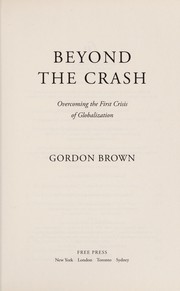
Gordon Brown · 2010

The financial crisis as the first of globalisation, and how leaders should respond.

Recommended by: Bill Gates
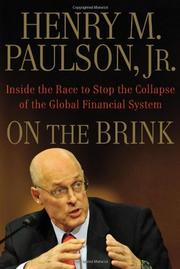
Henry M. Paulson · 2010

The financial crisis seen from inside the US Treasury by its secretary.

Recommended by: Mohnish Pabrai
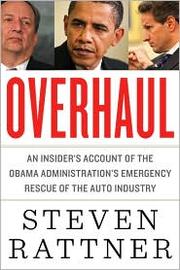
Steven Rattner · 2010

An inside account of the government rescue of the American car industry.

“And very soon after I started drilling down on GM, I started reading Overhaul by Steve Rattner. https://www.amazon.com/Overhaul-Insiders-Administrations-EmergencyIndustry/dp/0547443218/ref=tmm_hrd_swatch_0?_encoding=UTF8&qid=1468009551&sr=8-1 And soon after reading Rattner’s excellent book, my attention shifted to Fiat Chrysler. The pieces were coming together.” — Mohnish Pabrai

Source: Pabrai Investment Funds letter to partners (070116), page 14

Recommended by: Mohnish Pabrai

Richard C. Sauer · 2010

A former SEC lawyer on short sellers and the fights over naked shorting.

Recommended by: Mohnish Pabrai

Jonas Meckling · 2011

How business lobbies made emissions trading the chosen climate policy.
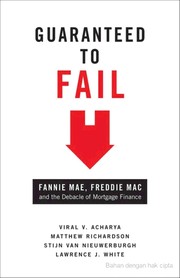
Viral V. Acharya, Matthew Richardson, Stijn van Nieuwerburgh, Lawrence J. White · 2011

How government policy made Fannie Mae and Freddie Mac fail in the mortgage crisis.

Recommended by: Mohnish Pabrai

Robert J. Shiller, Randall S. Kroszner · 2011

Lectures and commentary on reforming American financial regulation after the crisis.

Vishaan Chakrabarti · 2013

Why well-designed cities are the key to America's national challenges.

Recommended by: Patrick Collison

David Goldhill · 2013

Why American health care is failing, and why expanding insurance will not fix it.

“David Goldhill, in his enlightening book Catastrophic Care, declared:” — Bill Gurley

Source: “Customer First” Healthcare

Recommended by: Bill Gurley, Jim Collins
Cass R. Sunstein · 2013

How behavioural science can make government regulation simpler.

Recommended by: Daniel Kahneman

Ezekiel J. Emanuel · 2014

How American health care and insurance reform works.

Daniel Carpenter · 2014

How the FDA became the world's most powerful regulator through its reputation.

Recommended by: Balaji S. Srinivasan

Ellen Gustafson · 2014

How hunger and obesity are linked, and how food choices can change the food system.

Recommended by: Ev Williams
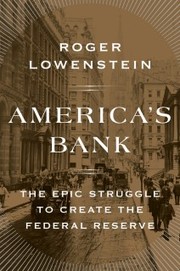
Roger Lowenstein · 2015

How the Federal Reserve was argued into existence, from the 1907 panic to 1913.

Recommended by: Seth Klarman
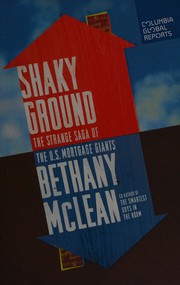
Bethany McLean · 2015

Fannie Mae and Freddie Mac, from profitable giants to years in conservatorship.

Sebastian Mallaby · 2016

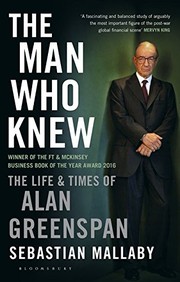
Alan Greenspan's life, and with it the making of modern finance from Nixon to Bush.

Janette Sadik-Khan, Seth Solomonow · 2017

How New York's transport chief remade its streets for pedestrians and cyclists.

Recommended by: Patrick Collison

Joel Greenblatt · 2020

A value investor applies his analysis to public policy on equality and growth.

Conor Dougherty · 2020

America's housing crisis, reported from its centre in the San Francisco Bay Area.

Recommended by: Marc Andreessen

Meredith Angwin · 2020

How deregulated wholesale power markets put the grid's reliability at risk.
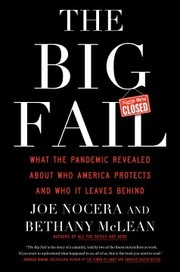
Bethany McLean, Joe Nocera · 2023

How the United States came to lead the world in deaths from COVID-19.

Richard Layard, Jan-Emmanuel De Neve · 2023

The science of wellbeing and how it can guide public policy.

Recommended by: Andrew Wilkinson
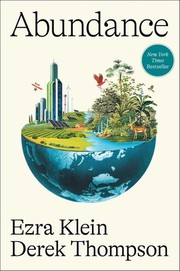
Ezra Klein, Derek Thompson · 2025

Why America lost the ability to build housing, energy and infrastructure.

Recommended by: Andrew Wilkinson, Bill Gates

More politics and government