Beyond the Crash
The financial crisis as the first of globalisation, and how leaders should respond.
Summary
Brown, British prime minister from 2007 to 2010 and earlier Chancellor of the Exchequer, argues that the 2008 financial crisis, which he calls the first crisis of globalisation, can be overcome fully only by further coordinated global action. He proposes a shared global compact on jobs and growth, with different regions contributing in different ways to rebalance the world economy, and he argues that the crisis came from ethical as well as technical failings. Markets, he says, need morals, and he calls for a banking constitution and better global oversight of the financial system.
Brown writes as a participant who was in the room for the decisions of 2008 and 2009, and the book includes first-hand accounts of the international collaboration of that period. It makes specific suggestions for how the world's nations and regions can secure growth, jobs and poverty reduction. He began writing at the end of May 2010, shortly after his government lost the general election, and finished it 14 weeks later while serving as a Member of Parliament.
Key takeaways 4
- Brown argues that a global crisis requires a global, coordinated response on growth and jobs.
- He blames the crisis on ethical failures in banking as well as technical ones.
- He calls for a banking constitution and stronger international oversight of finance.
- Rebalancing the world economy, in his plan, requires different contributions from surplus and deficit regions.
Who should read it
Readers who want an insider's account of the international response to 2008 from a head of government who led it.
Who recommended it 1
Similar books 6
Chosen by shared topics, the entries that hold them, and the people who recommended both.
The 2008 crash, the eurozone crisis and the politics after as one connected story.
Sovereign borrowing from Italian city-states to the pandemic, and what it paid for.
The 2008 crisis grew from political and economic imbalances, not just banker greed.
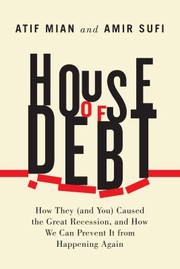
County data showing household debt, not the banks, caused the Great Recession.
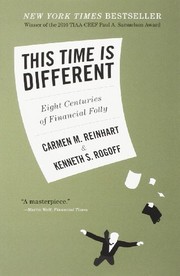
Eight centuries of defaults and banking crises show the same patterns recurring.
“Every one of these books changed my worldview, and I highly recommend them if you're looking for inspiring reading.” — Bill Gates
Source: My top reads of 2012 — Gates Notes
Recommended by: Bill Gates, Mohnish Pabrai and 2 others

How a Fed credit boom led to the Depression, and how policy prolonged it.
“It's a timeless and timely classic.” — Christopher Bloomstran
Source: Semper Augustus 2020 Letter to Clients, 'To Read or Not to Read', p. 57
Recommended by: Christopher Bloomstran, Mohnish Pabrai
Where it sits in the reference 1
Topics 4
As an Amazon Associate I earn from qualifying purchases.