Financial crises, debt and business cycles
Accounts of the Great Depression, the 2008 crisis and sovereign debt crises, and theories of how debt and business cycles drive booms and busts.
Start here
- The World in Depression, 1929-1939Charles P. Kindleberger, 1973
- Essays on the Great DepressionBen S. Bernanke, 2000
- Crisis EconomicsNouriel Roubini, Stephen Mihm, 2010
- Fault LinesRaghuram G. Rajan, 2010
- House of DebtAtif Mian, Amir Sufi, 2014
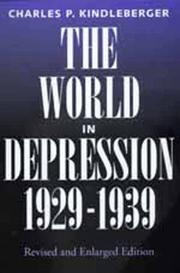
The Depression ran deep because no country would act as the world's stabiliser.

Papers on the Depression's causes, from the gold standard to failing banks.
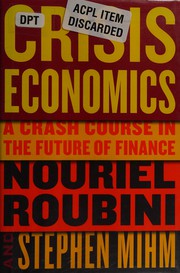
Financial crises are normal, not freak events, and the reforms they call for.
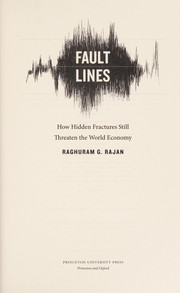
The 2008 crisis grew from political and economic imbalances, not just banker greed.

County data showing household debt, not the banks, caused the Great Recession.
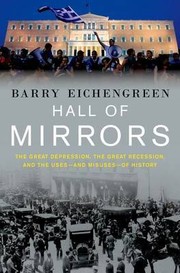
How 1930s lessons guided policy in 2008, averting a depression but adding errors.
A template for how big debt crises unfold, with detailed case studies.
The 2008 crash, the eurozone crisis and the politics after as one connected story.
Sovereign borrowing from Italian city-states to the pandemic, and what it paid for.

How a Fed credit boom led to the Depression, and how policy prolonged it.
“It's a timeless and timely classic.” — Christopher Bloomstran
Source: Semper Augustus 2020 Letter to Clients, 'To Read or Not to Read', p. 57
Recommended by: Christopher Bloomstran, Mohnish Pabrai
How innovation makes capitalism unstable, studied through history and statistics.
Recommended by: Jack Ma
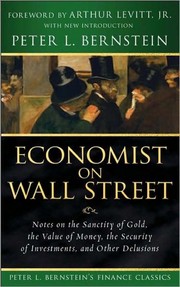
An economist's view of markets from running an investment counselling firm.
Financial crises follow a repeated sequence of boom, mania, panic and crash.
“Here’s how Kindleberger put it in the first edition of Manias, Panics, and Crashes: . . .” — Howard Marks
Source: On Bubble Watch
Recommended by: Howard Marks, Jason Zweig, Li Lu and 1 other

The history of business cycle theory and how credit cycles drive asset prices.
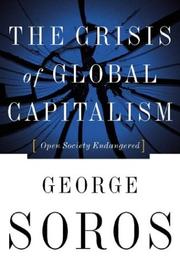
Why global markets are unstable, written after the Asian and Russian crises.

Five technological revolutions since 1771, and why each brings a financial bubble.
“As Thompson tells us: The definitive book on bubbles has long been Carlota Perez’s Technological Revolutions and Financial Capital.” — Howard Marks
Source: Is It a Bubble?
Recommended by: Howard Marks, Michael Mauboussin and 1 other
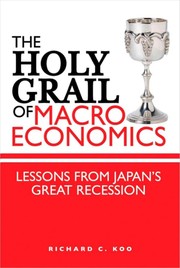
Balance-sheet recessions: firms repay debt instead of borrowing, so rate cuts fail.
Recommended by: Mohnish Pabrai
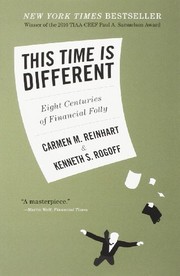
Eight centuries of defaults and banking crises show the same patterns recurring.
“Every one of these books changed my worldview, and I highly recommend them if you're looking for inspiring reading.” — Bill Gates
Source: My top reads of 2012 — Gates Notes
Recommended by: Bill Gates, Mohnish Pabrai and 2 others
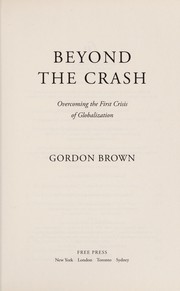
The financial crisis as the first of globalisation, and how leaders should respond.
Recommended by: Bill Gates
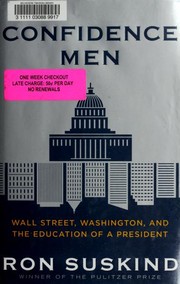
The financial meltdown and the Obama administration's response to it.
Recommended by: Nir Eyal
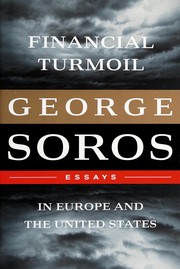
Essays written through the financial crisis and the euro crisis as they unfolded.
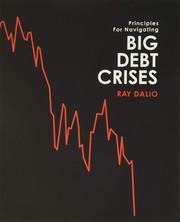
A template for how big debt crises unfold, tested on 48 cases.
Recommended by: Ray Dalio
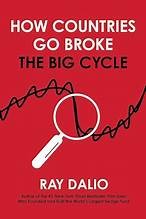
The long debt cycle applied to countries, and how governments go broke.
Why large growth stocks would lag for twenty years, and what to hold instead.
Recommended by: Mohnish Pabrai
 Ray Daliowrote 3 books here
 Barry Eichengreenwrote 2 books here
 George Soroswrote 2 books here
 James P. O'Shaughnessywrote 1 book here
 Mohnish Pabrairecommends 4 books here
 Howard Marksrecommends 2 books here
 Bill Gatesrecommends 2 books here
 Marc Andreessenrecommends 1 book here
 Michael Mauboussinrecommends 1 book hereRay Daliorecommends 1 book here
 Jason Zweigrecommends 1 book here
 Jack Marecommends 1 book here
 Nir Eyalrecommends 1 book here
 Patrick Collisonrecommends 1 book here