
Manias, Panics and Crashes
Financial crises follow a repeated sequence of boom, mania, panic and crash.
The standard anatomy of currency and credit crises.
Summary
Kindleberger, an economic historian at MIT, builds a general model of financial crises using Hyman Minsky's framework and tests it against several centuries of episodes. His argument is that crises follow a repeatable sequence rather than occurring randomly, and that each generation reconstructs the same conditions while believing its circumstances are new.
The Minsky model he adopts runs through displacement, meaning an exogenous shock that changes profit opportunities in some sector; credit expansion that funds the resulting investment; euphoria, in which asset prices rise and participants who have no knowledge of the sector enter; financial distress, when insiders begin to sell; and revulsion, when credit contracts and prices collapse. He adds Minsky's classification of financing as hedge, speculative and Ponzi, in which the last requires asset appreciation to service the debt.
The historical material covers tulips, the South Sea and Mississippi schemes, the crises of 1873 and 1929, the Latin American debt crisis, Japan's asset bubble and, in later editions updated by Robert Aliber, the dot-com bubble and the 2008 crisis.
Kindleberger's most contested argument concerns the lender of last resort. He holds that a crisis requires an authority willing to lend freely against good collateral, that the identity and willingness of that lender should be ambiguous in advance to limit moral hazard, and that the absence of an international lender of last resort worsened the 1930s. The book is academic in register and the theoretical chapters are demanding. The Minsky framework is descriptive rather than predictive and cannot time anything. Later editions vary considerably in quality since Aliber's additions have a different emphasis.
Key takeaways 8
- Financial crises follow a repeatable sequence of displacement, credit expansion, euphoria, distress and collapse rather than occurring randomly.
- A crisis requires credit expansion, since rising asset prices cannot be sustained without a growing supply of money to fund purchases.
- Financing structures degrade from hedge, where income covers interest and principal, to speculative, where it covers only interest, to Ponzi, where it covers neither and depends on appreciation.
- Each generation believes its circumstances are novel, which is why the same sequence recurs despite being extensively documented.
- Insiders begin to sell during the distress phase while public participation continues, which is the point at which the transfer of losses occurs.
- A lender of last resort is required to end a panic, and it must lend freely against good collateral at a penalty rate.
- The identity and willingness of the lender of last resort should be ambiguous in advance, or the expectation of rescue produces the behaviour that requires it.
- The framework describes the sequence accurately and cannot time any stage of it, which limits its use for positioning.
Who should read it
Investors and policymakers who want the standard academic model of financial crises and its historical testing, prepared for a demanding register.
About Charles P. Kindleberger
Professor of economics at MIT and a State Department economist who helped draft the Marshall Plan; died in 2003.
Manias, Panics and Crashes turns Hyman Minsky's financial instability hypothesis into a repeatable sequence - displacement, credit expansion, euphoria, distress, revulsion - and tests it against four centuries of episodes, which is why later crisis writing keeps returning to it. The World in Depression advances the argument that the 1930s slump deepened because no state would act as lender of last resort.
Who recommended it 4 · 3 direct
“Here’s how Kindleberger put it in the first edition of Manias, Panics, and Crashes: . . .”
Similar books 6
Chosen by shared topics, the entries that hold them, and the people who recommended both.

Speculation from ancient Rome and tulip mania to the 1990s, and its recurring traits.
“The book "Devil Take the Hindmost" by Edward Chancellor does an excellent job of chronicling the history of financial speculation.” — Howard Marks
Source: bubble.com, page 1
Recommended by: Howard Marks, Jeremy Grantham, John C. Bogle and 3 others
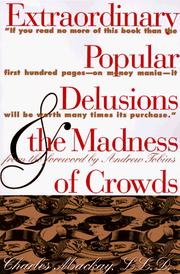
Crowd manias from the Mississippi scheme and South Sea Bubble to witch trials.
“We find whole communities suddenly fix their minds upon one object, and go mad in its pursuit,” wrote Charles Mackay in Extraordinary Popular Delusions and the Madness of Crowds (1841), which contains descriptions of early speculative manias.” — Jeremy Grantham
Source: Valuing AI: Extreme Bubble, New Golden Era - or Both?, page 6
Recommended by: Barton Biggs, Bernard Baruch and 6 others

The history of business cycle theory and how credit cycles drive asset prices.
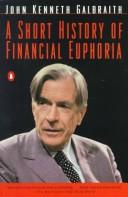
The recurring features of speculative booms, and why short memories bring them back.
“This quote, however, is from his invaluable book, “A Short History of Financial Euphoria.” — Howard Marks
Source: The Race to the Bottom, page 9
Recommended by: Howard Marks and 2 others

Five technological revolutions since 1771, and why each brings a financial bubble.
“As Thompson tells us: The definitive book on bubbles has long been Carlota Perez’s Technological Revolutions and Financial Capital.” — Howard Marks
Source: Is It a Bubble?
Recommended by: Howard Marks, Michael Mauboussin and 1 other
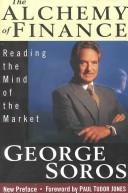
Reflexivity, where beliefs move prices and prices move facts, tested in a live diary.
Recommended by: Guy Spier, Li Lu, Paul Tudor Jones and 3 others
Where it sits in the reference 7
Topics 2
As an Amazon Associate I earn from qualifying purchases.