Manias, panics and crashes across history
Histories and theories of speculation, crowds and debt crises that span several episodes, from Mackay and Kindleberger to Reinhart and Rogoff and Dalio.
Start here
- The MuqaddimahIbn Khaldun, 1858
- The Crowd: A Study of the Popular MindGustave Le Bon, 1895
- The True BelieverEric Hoffer, 1951
- This Time Is DifferentCarmen M. Reinhart, Kenneth S. Rogoff, 2009
- Why Don't We Learn from History?B. H. Liddell Hart, 1944

Why states rise and fall, explained through asabiyyah, the cohesion of a group.
Recommended by: Mohnish Pabrai, Mark Zuckerberg

How individuals lose judgement in a crowd and how leaders sway crowds.
Recommended by: Frank Martin, Mohnish Pabrai, Peter Cundill and 1 other

Why mass movements of every kind draw the same frustrated people and use one method.
“And here the best book is called the True Believer, which is the Eric Hoffer book.” — Marc Andreessen
Recommended by: Joe Rosenberg, Marc Andreessen and 6 others
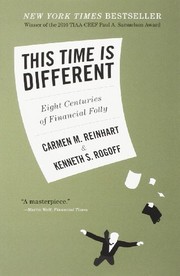
Eight centuries of defaults and banking crises show the same patterns recurring.
“Every one of these books changed my worldview, and I highly recommend them if you're looking for inspiring reading.” — Bill Gates
Source: My top reads of 2012 — Gates Notes
Recommended by: Bill Gates, Mohnish Pabrai and 2 others

A military historian's reflections on what history teaches and why we ignore it.
Recommended by: Morgan Housel, Nat Eliason, Shane Parrish

Recurring patterns drawn from world history: biology, morals, religion, economics.
“…books I've recommended, highlighted to death, or forced on friends.” — Andrew Wilkinson
Source: Andrew Wilkinson's Bookshelf, neverenough.com
Recommended by: Andrew Wilkinson, Balaji S. Srinivasan and 14 others

Preference falsification: why people hide their views and how that hides change.
“So this is one of the all time great books. Incredible.” — Marc Andreessen
Source: Lex Fridman Podcast #458 transcript — Marc Andreessen
Recommended by: Marc Andreessen
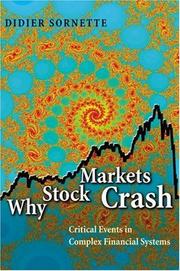
Why big crashes build up inside markets rather than follow the news.
“In an important and fascinating book, Why Stock Markets Crash, geophysicist Didier Sornette argues that stock market distributions comprise two different populations, the body (which you can model with standard theory) and the tail (which relies on completely different mechanisms).” — Michael Mauboussin
Source: Integrating the Outliers: Two Lessons from the St. Petersburg Paradox, page 3
Recommended by: Michael Mauboussin, Nassim Nicholas Taleb
A template for how big debt crises unfold, with detailed case studies.
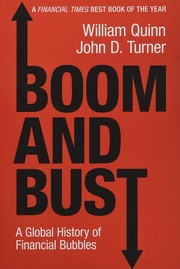
Three centuries of bubbles and the bubble triangle of conditions that sets them off.
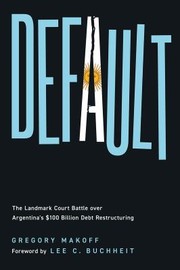
Argentina's 2001 default and the fifteen years of lawsuits and talks that followed.

Short accounts of manias, frauds and disasters, from tulips to the South Sea Bubble.
Recommended by: Morgan Housel
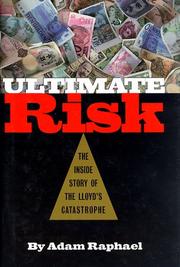
The crisis that nearly destroyed Lloyd's of London and ruined many of its Names.
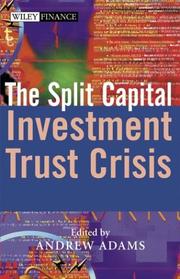
The collapse of Britain's split capital investment trusts and its cost to savers.
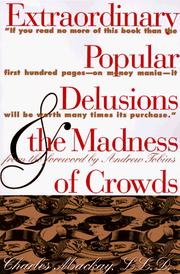
Crowd manias from the Mississippi scheme and South Sea Bubble to witch trials.
“We find whole communities suddenly fix their minds upon one object, and go mad in its pursuit,” wrote Charles Mackay in Extraordinary Popular Delusions and the Madness of Crowds (1841), which contains descriptions of early speculative manias.” — Jeremy Grantham
Source: Valuing AI: Extreme Bubble, New Golden Era - or Both?, page 6
Recommended by: Barton Biggs, Bernard Baruch and 6 others
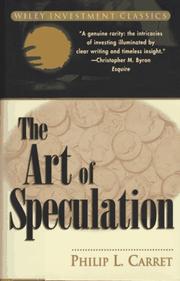
Buying securities to profit from changes in value, with twelve commandments.
Recommended by: Francois Rochon, Mohnish Pabrai

The recurring features of speculative booms, and why short memories bring them back.
“This quote, however, is from his invaluable book, “A Short History of Financial Euphoria.” — Howard Marks
Source: The Race to the Bottom, page 9
Recommended by: Howard Marks and 2 others

Financial crises follow a repeated sequence of boom, mania, panic and crash.
“Here’s how Kindleberger put it in the first edition of Manias, Panics, and Crashes: . . .” — Howard Marks
Source: On Bubble Watch
Recommended by: Howard Marks, Jason Zweig, Li Lu and 1 other

The history of business cycle theory and how credit cycles drive asset prices.

Speculation from ancient Rome and tulip mania to the 1990s, and its recurring traits.
“The book "Devil Take the Hindmost" by Edward Chancellor does an excellent job of chronicling the history of financial speculation.” — Howard Marks
Source: bubble.com, page 1
Recommended by: Howard Marks, Jeremy Grantham, John C. Bogle and 3 others

Five technological revolutions since 1771, and why each brings a financial bubble.
“As Thompson tells us: The definitive book on bubbles has long been Carlota Perez’s Technological Revolutions and Financial Capital.” — Howard Marks
Source: Is It a Bubble?
Recommended by: Howard Marks, Michael Mauboussin and 1 other
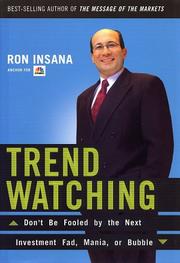
How to spot investment fads, manias and bubbles on Wall Street before they burst.
Recommended by: Mohnish Pabrai

Client letters that tracked the dot-com bubble as it inflated and burst.
Recommended by: Mohnish Pabrai, Seth Klarman, Warren Buffett
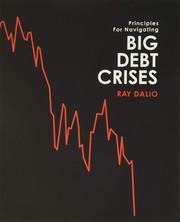
A template for how big debt crises unfold, tested on 48 cases.
Recommended by: Ray Dalio
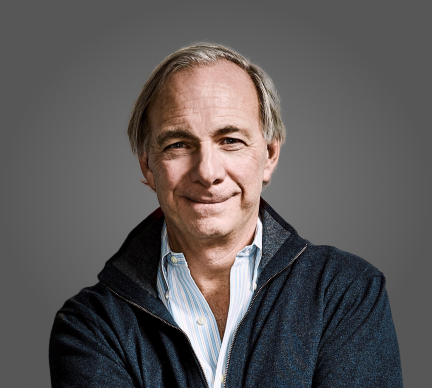 Ray Daliowrote 2 books here
 John Kenneth Galbraithwrote 1 book here
 Edward Chancellorwrote 1 book here
 Mohnish Pabrairecommends 9 books here
 Howard Marksrecommends 4 books here
 Marc Andreessenrecommends 4 books here
 John C. Boglerecommends 2 books here
 Michael Mauboussinrecommends 2 books hereRay Daliorecommends 2 books here
 Jeremy Granthamrecommends 2 books here
 Morgan Houselrecommends 2 books here
Show all 45
 Nat Eliasonrecommends 2 books here
 Nassim Nicholas Talebrecommends 1 book here
 Warren Buffettrecommends 1 book here
 Jason Zweigrecommends 1 book here
 Prem Watsarecommends 1 book here
 Reid Hoffmanrecommends 1 book here
 Seth Klarmanrecommends 1 book here
 Francois Rochonrecommends 1 book here
 Antonio García Martínezrecommends 1 book here
 Balaji S. Srinivasanrecommends 1 book here
 Bernard Baruchrecommends 1 book here
 Bill Gatesrecommends 1 book here
 Craig Blairrecommends 1 book here
 Derek Siversrecommends 1 book here
 Eric Weinsteinrecommends 1 book here
 Kevin Systromrecommends 1 book here
 Mark Zuckerbergrecommends 1 book here
 Naval Ravikantrecommends 1 book here
 Patrick Collisonrecommends 1 book here
 Raoul Palrecommends 1 book here
 Susan J. Fowlerrecommends 1 book here
 Tim Ferrissrecommends 1 book here