
Reflexivity
Soros's observation that prices are participants rather than scorekeepers: a rising stock cheapens a company's capital, fattens its collateral and attracts its talent, improving the fundamentals the price supposedly measures. The practical move is to ask not only whether the price is wrong but whether the price is changing the answer. Self-feeding trends are regimes to respect, not mispricings to fade early.
Start here
- Soros on SorosGeorge Soros, 1995
- The Alchemy of FinanceGeorge Soros, 1987
- An Engine, Not a CameraDonald MacKenzie, 2006

Financial crises follow a repeated sequence of boom, mania, panic and crash.
“Here’s how Kindleberger put it in the first edition of Manias, Panics, and Crashes: . . .” — Howard Marks
Source: On Bubble Watch
Recommended by: Howard Marks, Jason Zweig, Li Lu and 1 other
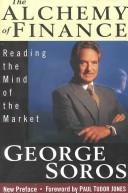
Reflexivity, where beliefs move prices and prices move facts, tested in a live diary.
Recommended by: Guy Spier, Li Lu, Paul Tudor Jones and 3 others
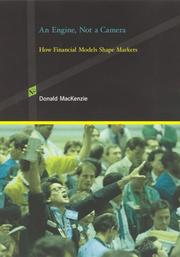
How financial economics changed the markets it set out to describe.
“There’s a wonderful chapter about LTCM in “An Engine, Not a Camera: How Financial Models Shape Markets” by Donald MacKenzie, a professor of sociology at the University of Edinburgh.15 The most recent issue of a bond is called on-the-run.” — Michael Mauboussin
Source: Animating Mr. Market: Adopting a Proper Psychological Attitude, page 6
Recommended by: Michael Mauboussin

Long interviews on his life, his investing philosophy and his political views.
“George Soros, Soros on Soros (New York: John Wiley & Sons, 1995), 17” — Michael Mauboussin
Source: A Tail of Two Worlds: Fat Tails and Investing, page 4
Recommended by: Michael Mauboussin, Li Lu
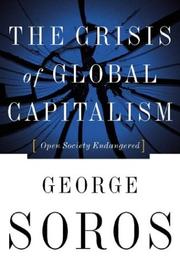
Why global markets are unstable, written after the Asian and Russian crises.

 Michael Mauboussinrecommends 2 books here
 Howard Marksrecommends 1 book here
 Marc Andreessenrecommends 1 book here
 Jason Zweigrecommends 1 book here
 Paul Tudor Jonesrecommends 1 book here
 Guy Spierrecommends 1 book here
 Garry Tanrecommends 1 book here
- Who Is On the Other Side?Michael J. Mauboussin · paper · A framework for locating your actual source of edge.
- Easy MoneyHoward Marks · memo · What cheap capital does to discipline and returns.
- SpeculationMorgan Housel · essay · When price becomes its own justification.
- Feedback LoopsShane Parrish · essay · Balancing versus reinforcing loops, and how to tell.