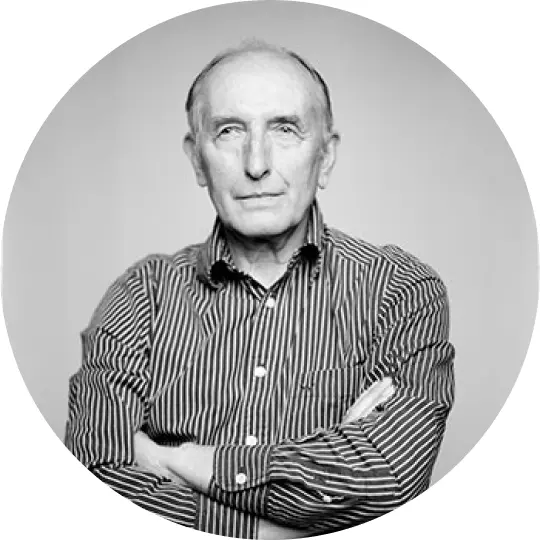
Vaclav Smil
Czech-Canadian scientist and policy analyst whose research spans energy, environment, food, population, economics and history, including China's energy and food affairs. Each book counts the physical inputs an economy consumes - joules, tonnes of steel, ammonia, cement - and establishes the historical rates at which past energy transitions actually moved. Those numbers let an investor size decarbonisation timelines and test claims about how fast an energy system can be rebuilt.
 University of Manitoba
Start here
- Energy and CivilizationVaclav Smil, 2017
- How the World Really WorksVaclav Smil, 2022
- Energy TransitionsVaclav Smil, 2010
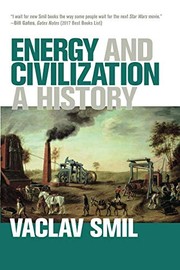
History told through energy, from muscle and fire to coal, oil and electricity.
Recommended by: Balaji S. Srinivasan, Bill Gates and 1 other
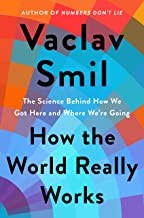
The physical basics of modern life: energy, food, materials and globalisation.
Recommended by: Bill Gates
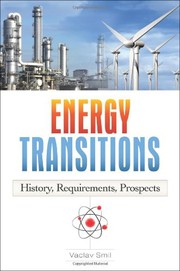
Each shift from wood to coal to oil took 50 to 70 years; new ones will be slow too.
Recommended by: Bill Gates
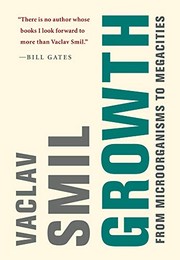
How organisms, populations, machines, economies and civilisations grow, and stop.
“and Vaclav Smil, Growth: From Microorganisms to Megacities (Cambridge, MA: MIT Press, 2019)” — Michael Mauboussin
Source: Underestimating the Red Queen: Measuring Growth and Maintenance Investments, page 18
Recommended by: Bill Gates, Michael Mauboussin
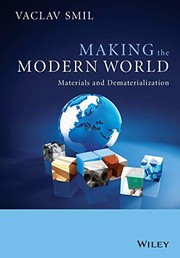
How much steel, cement and plastic the world uses, and whether growth needs less.
Recommended by: Bill Gates, Mohnish Pabrai, Mark Zuckerberg
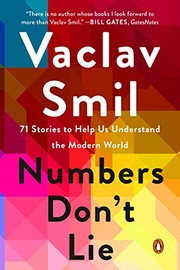
Seventy-one short pieces that correct common impressions with plain arithmetic.
Recommended by: Bill Gates, Mark Zuckerberg and 1 other
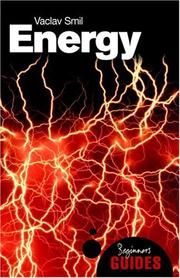
A short primer on energy: its forms, units and role in nature and economies.
Recommended by: Nat Eliason, Bill Gates, Mark Zuckerberg
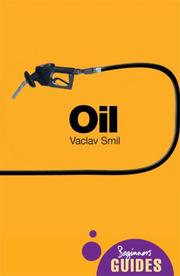
A short technical primer on oil: geology, extraction, refining, uses and reserves.
Recommended by: Mohnish Pabrai
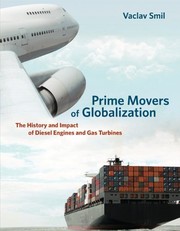
How the diesel engine and the gas turbine made modern global trade possible.
Recommended by: Bill Gates, Mohnish Pabrai
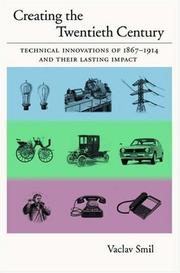
How inventions of 1867 to 1914, from electricity to cars, made the modern world.
“My favorite Smil book, Creating the Twentieth Century (and its companion, Transforming the Twentieth Century) chronicles the inventions of the last 150 years.” — Bill Gates
Source: Vaclav Smil on how energy makes life possible — Gates Notes
Recommended by: Bill Gates, Mohnish Pabrai, Li Lu
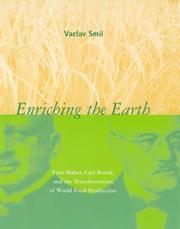
How Haber and Bosch's ammonia synthesis transformed world food production.
“The Vaclav Smil book Enriching the Earth: Fritz Haber, Carl Bosch and the Transformation of World Food Production tells this incredible story in great depth.” — Bill Gates
Source: My review of Vaclav Smil's new book — Gates Notes
Recommended by: Bill Gates, Mohnish Pabrai
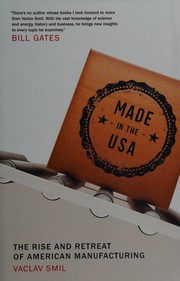
How American manufacturing rose to lead the world, and why its share then fell.
Recommended by: Mohnish Pabrai, Bill Gates
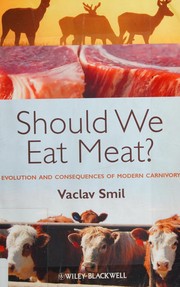
Meat in human evolution and modern farming, and the costs of heavy meat-eating.
Recommended by: Bill Gates, Mohnish Pabrai

Tests the popular comparison of America with ancient Rome and finds deep differences.
Recommended by: Bill Gates, Mohnish Pabrai
How energy is transformed to power the biosphere and human society.
Recommended by: Bill Gates
How the world can meet its growing energy demand and keep the biosphere intact.
Recommended by: Bill Gates
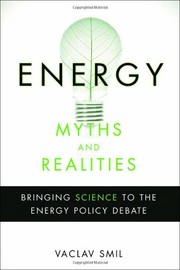
Common claims about energy tested against the record of past energy transitions.
Recommended by: Bill Gates
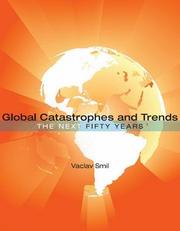
How the world changes through sudden catastrophes and through slow trends.
Recommended by: Bill Gates
How much of the biosphere's living matter people have taken, measured.
Recommended by: Bill Gates
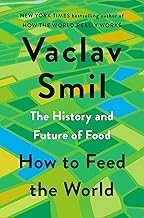
The main questions about the world's food system, answered with numbers.
Recommended by: Bill Gates
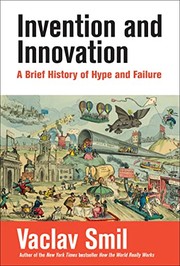
A history of human invention, and a corrective to the hype around innovation.
Recommended by: Bill Gates
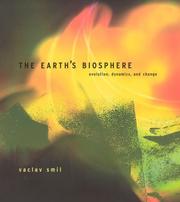
The Earth's biosphere from its origins to its future: physics, chemistry and biology.
Recommended by: Bill Gates
 Energy and Civilization | History told through energy, from muscle and fire to coal, oil and electricity. | 2017 | T1 | Balaji S. Srinivasan, Bill Gates, Nat Eliason |
 How the World Really Works | The physical basics of modern life: energy, food, materials and globalisation. | 2022 | T1 | Bill Gates |
 Energy Transitions | Each shift from wood to coal to oil took 50 to 70 years; new ones will be slow too. | 2010 | T1 | Bill Gates |
 Growth | How organisms, populations, machines, economies and civilisations grow, and stop. | 2019 | T1 | Bill Gates, Michael Mauboussin |
 Making the Modern World: Materials and Dematerialization | How much steel, cement and plastic the world uses, and whether growth needs less. | 2013 | T1 | Bill Gates, Mohnish Pabrai, Mark Zuckerberg |
 Numbers Don't Lie | Seventy-one short pieces that correct common impressions with plain arithmetic. | 2020 | T1 | Bill Gates, Mark Zuckerberg, Terrance McArthur |
 Energy: A Beginner's Guide | A short primer on energy: its forms, units and role in nature and economies. | 2006 | T1 | Nat Eliason, Bill Gates, Mark Zuckerberg |
 Oil: A Beginner's Guide | A short technical primer on oil: geology, extraction, refining, uses and reserves. | 2008 | T1 | Mohnish Pabrai |
 Prime Movers of Globalization | How the diesel engine and the gas turbine made modern global trade possible. | 2010 | T1 | Bill Gates, Mohnish Pabrai |
 Creating the Twentieth Century | How inventions of 1867 to 1914, from electricity to cars, made the modern world. | 2004 | T1 | Bill Gates, Mohnish Pabrai, Li Lu |
 Enriching the Earth | How Haber and Bosch's ammonia synthesis transformed world food production. | 2001 | T1 | Bill Gates, Mohnish Pabrai |
 Made in the USA: The Rise and Retreat of American Manufacturing | How American manufacturing rose to lead the world, and why its share then fell. | 2013 | T1 | Mohnish Pabrai, Bill Gates |
 Should We Eat Meat? | Meat in human evolution and modern farming, and the costs of heavy meat-eating. | 2013 | T1 | Bill Gates, Mohnish Pabrai |
 Why America Is Not a New Rome | Tests the popular comparison of America with ancient Rome and finds deep differences. | 2010 | T1 | Bill Gates, Mohnish Pabrai |
 Energies | How energy is transformed to power the biosphere and human society. | 1998 | Bill Gates | |
 Energy at the Crossroads | How the world can meet its growing energy demand and keep the biosphere intact. | 2003 | Bill Gates | |
 Energy Myths and Realities | Common claims about energy tested against the record of past energy transitions. | 2010 | Bill Gates | |
 Global Catastrophes and Trends | How the world changes through sudden catastrophes and through slow trends. | 2008 | Bill Gates | |
| Harvesting the Biosphere | How much of the biosphere's living matter people have taken, measured. | 2013 | Bill Gates | |
 How to Feed the World | The main questions about the world's food system, answered with numbers. | 2025 | Bill Gates | |
 Invention and Innovation | A history of human invention, and a corrective to the hype around innovation. | 2023 | Bill Gates | |
 The Earth's Biosphere | The Earth's biosphere from its origins to its future: physics, chemistry and biology. | 2002 | Bill Gates | |
| China's past, China's future | – | 2003 | – | |
| Energy in world history | – | 1994 | – | |
| The bad earth | – | 1984 | – | |
| Global ecology | – | 1993 | – | |
| China's environmental crisis | – | 1993 | – | |
| Energy in Nature and Society | – | 2007 | – | |
| Size | – | 2023 | – | |
| Energy in China's modernization | – | 1988 | – | |
| Harvesting The Biosphere What We Have Taken From Nature | – | 2012 | – | |
| Carbon nitrogen sulfur | – | 1985 | – | |
| Japan's dietary transition and its impacts | – | 2012 | – | |
| Energy in the Developing World | – | 1980 | – | |
| Transforming the twentieth century | – | 2006 | – | |
| Feeding the World | – | 2000 | – | |
| Cycles of life | – | 1997 | – | |
| Power Density | – | 2015 | – | |
| Natural Gas | – | 2015 | – | |
| Biomass energies | – | 1983 | – | |
| Energy and the environment | – | 1974 | – | |
| Grand Transitions | – | 2021 | – | |
| China's energy | – | 1976 | – | |
| Still the Iron Age | – | 2016 | – | |
| General energetics | – | 1991 | – | |
| Energy analysis and agriculture | – | 1982 | – | |
| Energy, food, environment | – | 1987 | – | |
| The economic costs of China's environmental degradation | – | 1998 | – |
| VW-18 Size - Vaclav Smil - How it explains the World | WL - We Learn | 2026-02-26 | 35 min | VW-18 Size - Vaclav Smil How it explains the World 2025/6 Winter Selection |
| Bonus: Vaclav Smil, author of How the World Really Works, on the Reality of the Energy Transition | A Sustainable Future | 2022-12-22 | 29 min | What does the data say about our net zero ambitions? Listen to Jason Mitchell discuss with Vaclav Smil, academic and author of the New York Times bestseller How the World Really Works , what the energy transition by 2050 realistically means; how energy transitions have evolved historically; and what are the real implications when people talk of a climate ‘earthshot’. Vaclav Smil Vaclav is Distinguished Professor Emeritus at the University of Manitoba. Regarded as being among the most important thought leaders of our time, he’s the author of forty-five books and over 500 papers, including the New York Times bestsellers How the World Really Works and Energy and Civilization: A History . One of Bill Gates’ favourite authors, Vaclav has spent his career exploring new ground in the fields of energy, environmental and population change, food production and nutrition, technical innovation, risk assessment and public policy. He’s been named by Foreign Policy as one of the Top 100 Global Thinkers. |
| Growth and the Energy Transition with Vaclav Smil | Azeem Azhar's Exponential View | 2019-11-27 | 36 min | For the first time in history, we have to tackle a truly global problem: climate breakdown. Energy transition away from fossil fuels is imperative, but there is no consensus on how to achieve this. The preeminent expert on energy history and development, Vaclav Smil , joins Azeem Azhar to explore the limits of renewables, the consequences of megacities, and why waste reduction is a game-changer. In this podcast, they also discuss: Whether the massive amounts of information we gather today has purpose. What possibilities Moore’s Law predicts for biology and chemistry. The limits of nuclear power. Further reading: “ What I See When I See a Wind Turbine ” (IEEE Spectrum, Vaclav Smil, March 2, 2016) “ Thank Maxwell for Cellphones ” (IEEE Spectrum, Vaclav Smil, Feb. 28, 2017) Inside Bill’s Brain (Netflix, 2019) @azeem @exponentialview VaclavSmil.com Exponential View newsletter About Exponential View: Welcome to Exponential View, where Azeem Azhar examines how exponential technologies such as AI are reshaping the future. Each week, Azeem shares his analysis or speaks with an expert guest to shed light on frontier shifts across technology, business and society. |
| The surprising math of feeding the world | Bill Gates | |||
| Webinar «The energy sector in the world. Perspectives» with Vaclav Smil | Naturgy | |||
| Reconciling Slow Transition & Fast Climate Change | Vaclav Smil | Policy-Relevant Science & Technology | |||
| #FutureTalks: Global energy in 2022 with Vaclav Smil | Fundación Innovación Bankinter | |||
| Vaclav Smil on 'Harvesting the Biosphere' and Thinking Large | Andrew Revkin | |||
| Energy Systems: Transition & Innovation | Vaclav Smil | Policy-Relevant Science & Technology | |||
| "Energy Revolution? More like a Crawl" - Dr. Vaclav Smil | Trottier Institute for Sustainability in Engineering and Design | |||
| Vaclav Smil - Drivers of environmental change: focus on energy transitions | The University of British Columbia | |||
| Energy Transitions – Vaclav Smil, Energy 2030 | wgsisummit | |||
| Vaclav Smil - Scientist Is A Wealth of Information While Covering Several Unique Subjects | ideacity | |||
| Vaclav Smil - Scientist Discusses A Vast Array of Topics | ideacity | |||
| Vaclav Smil: el futuro energético global - 20 aniversario Fundación Innovación Bankinter | Fundación Innovación Bankinter | |||
| Energy Transitions : Global & National Perspectives | Vaclav Smil | Policy-Relevant Science & Technology |
 WVW-18 Size - Vaclav Smil - How it explains the WorldWL - We Learn · 2026-02-26
 ABonus: Vaclav Smil, author of How the World Really Works, on the Reality of the Energy TransitionA Sustainable Future · 2022-12-22
 AGrowth and the Energy Transition with Vaclav SmilAzeem Azhar's Exponential View · 2019-11-27
 BThe surprising math of feeding the worldBill Gates
 NWebinar «The energy sector in the world. Perspectives» with Vaclav SmilNaturgy
 PReconciling Slow Transition & Fast Climate Change | Vaclav SmilPolicy-Relevant Science & Technology
 F#FutureTalks: Global energy in 2022 with Vaclav SmilFundación Innovación Bankinter
 AVaclav Smil on 'Harvesting the Biosphere' and Thinking LargeAndrew Revkin
 PEnergy Systems: Transition & Innovation | Vaclav SmilPolicy-Relevant Science & Technology
 T"Energy Revolution? More like a Crawl" - Dr. Vaclav SmilTrottier Institute for Sustainability in Engineering and Design
 TVaclav Smil - Drivers of environmental change: focus on energy transitionsThe University of British Columbia
 wEnergy Transitions – Vaclav Smil, Energy 2030wgsisummit
 iVaclav Smil - Scientist Is A Wealth of Information While Covering Several Unique Subjectsideacity
 iVaclav Smil - Scientist Discusses A Vast Array of Topicsideacity
 FVaclav Smil: el futuro energético global - 20 aniversario Fundación Innovación BankinterFundación Innovación Bankinter
 PEnergy Transitions : Global & National Perspectives | Vaclav SmilPolicy-Relevant Science & Technology