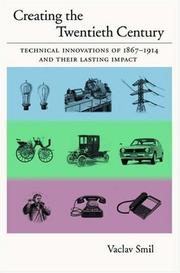
Creating the Twentieth Century
How inventions of 1867 to 1914, from electricity to cars, made the modern world.
Summary
Smil argues that the years from 1867 to 1914 were the greatest watershed in human history since the emergence of settled farming, because they produced a civilisation built on the combination of fuels, science and technical innovation. The 1870s brought dynamite, the telephone, photographic film and the first light bulbs. The peak decade, the 1880s, brought electricity-generating plants, electric motors, steam turbines, the gramophone, cars, aluminium production, pneumatic rubber tyres and prestressed concrete. After 1900 came the first aeroplanes, tractors, radio signals, plastics, neon lights and assembly-line production.
The book is a systematic, interdisciplinary history of this outpouring of European and American invention and of its consequences. Smil treats the inventions as products of one civilisation, joined by the synergy between new fuels, scientific knowledge and technical skill, and he argues that their consequences were epochal: the technical base they created in less than fifty years still underlies the modern world.
Key takeaways 4
- Most of the technical foundations of modern life were invented in the 47 years between 1867 and 1914.
- The 1880s alone produced electric power plants, electric motors, steam turbines, cars and aluminium production.
- The period's inventions reinforced one another, so electricity, new materials and engines advanced together.
- The age that began in 1867 joined fuels, science and technical innovation into one system, and that system still supports modern civilisation.
Who should read it
Investors and analysts who want a quantitative history of where modern technology came from, as a base for judging claims about today's innovation.
About Vaclav Smil
Distinguished professor emeritus at the University of Manitoba; writes quantitative histories of energy, food, materials and technical change.
Each book counts the physical inputs an economy consumes - joules, tonnes of steel, ammonia, cement - and establishes the historical rates at which past energy transitions actually moved. Those numbers let an investor size decarbonisation timelines and test claims about how fast an energy system can be rebuilt.
Who recommended it 3 · 2 direct
“My favorite Smil book, Creating the Twentieth Century (and its companion, Transforming the Twentieth Century) chronicles the inventions of the last 150 years.”
Similar books 6
Chosen by shared topics, the entries that hold them, and the people who recommended both.
How American manufacturing rose to lead the world, and why its share then fell.
Recommended by: Mohnish Pabrai, Bill Gates
How much steel, cement and plastic the world uses, and whether growth needs less.
Recommended by: Bill Gates, Mohnish Pabrai, Mark Zuckerberg
How the diesel engine and the gas turbine made modern global trade possible.
Recommended by: Bill Gates, Mohnish Pabrai
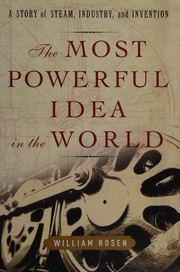
The men behind the steam engine, the machine that drove the Industrial Revolution.
Recommended by: Bill Gates, Mohnish Pabrai, Nick Szabo
The building of the Panama Canal, from France's failed attempt to US completion.
“I read this to prepare for a family vacation to Panama. It's pure McCullough: epic drama, political intrigue, heartbreaking defeats, and eventual triumph.” — Bill Gates
Recommended by: Mohnish Pabrai, Bill Gates, Marc Andreessen
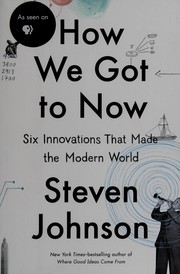
Six innovations, from refrigeration to clocks and lenses, that made modern life.
“I really enjoyed Steven Johnson's How We Got To Now. I read a lot of history and science books, but this book stood out because 1) the anecdotes were entertaining and relevant, and 2) it got the process of innovation right.” — Chris Dixon
Source: How We Got To Now — cdixon
Recommended by: Chris Dixon, Mohnish Pabrai