Global Catastrophes and Trends
How the world changes through sudden catastrophes and through slow trends.
Summary
Vaclav Smil, a scientist, holds that deep change usually takes one of two forms. It can arrive as a "fatal discontinuity", a sudden disaster with the power to alter the world, such as a volcanic eruption, a viral pandemic, a war or a terrorist attack on a large scale. Or it can come as a steady, slow trend in population, environment, economy or politics. Smil looks across disciplines at what the next fifty years may hold. He offers no forecasts or scenarios; his aim is to make readers plan for events that seem unpredictable and for where long-run trends finally lead.
He starts with rare but catastrophic events, some natural and some caused by people. He then turns to trends of global weight: the shift away from fossil fuels; demographic and political change in China, Europe, Islamic nations, Japan, Russia and the United States; the contest for global primacy; and widening economic and social inequality. He treats environmental change as part sudden and part gradual, and he sets out the complexities of global warming, which he says are often misunderstood. Smil takes the side of neither doom nor techno-euphoria. Drawing on long historical perspective, he argues that people who understand change can reverse bad trends and cut the risk of catastrophe.
Key takeaways 4
- Change arrives either as sudden catastrophe or as slow, persistent trends.
- Pandemics, eruptions and wars cannot be predicted but can be planned for.
- The energy transition, demographic shifts, the contest for primacy and inequality are the trends Smil weighs most.
- Smil rejects both doom and techno-euphoria and argues from long historical perspective.
Who should read it
Policy readers, investors and students of global affairs who want a sober assessment of long-term risks.
About Vaclav Smil
Distinguished professor emeritus at the University of Manitoba; writes quantitative histories of energy, food, materials and technical change.
Each book counts the physical inputs an economy consumes - joules, tonnes of steel, ammonia, cement - and establishes the historical rates at which past energy transitions actually moved. Those numbers let an investor size decarbonisation timelines and test claims about how fast an energy system can be rebuilt.
Who recommended it 1
Similar books 6
Chosen by shared topics, the entries that hold them, and the people who recommended both.
A data-driven look at emissions and what reduces them.
Recommended by: Bill Gates
A complete briefing on global warming and climate change.
Recommended by: Bill Gates
Data showing progress on environmental problems, enough to reach true sustainability.
Recommended by: Bill Gates

People trying to fix the damage humans have done to nature with new technology.
Recommended by: Bill Gates
How weather data and computer models built our knowledge of global climate change.
Recommended by: Patrick Collison
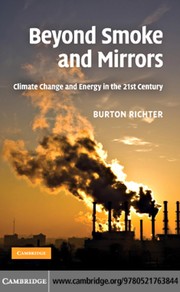
An assessment of the proposals for averting climate change, and the energy options.
Recommended by: Mohnish Pabrai