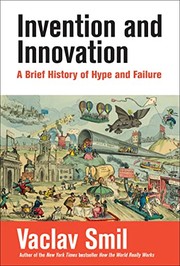
Invention and Innovation
A history of human invention, and a corrective to the hype around innovation.
Summary
Vaclav Smil offers a fact-filled history of human invention and a corrective to the hype that accompanies innovation, from promised cures for disease to artificial intelligence. He reminds readers that even far along the path from invention to development to application, a technology may never yield anything usable, and that an invention that is introduced may still underperform, disappoint, die out or cause harm.
Smil first explains the difference between invention and innovation. He then examines three kinds of invention: those that failed to dominate as promised, those that turned out disastrous, and those long promised that would be highly beneficial but have not arrived. He ends with a wish list of inventions most urgently needed to meet the challenges of the twenty-first century. The publisher calls the book his most readable, a sobering account of the folly that often attends human ingenuity and of the need to align expectations with reality.
Key takeaways 4
- Invention and innovation are different stages, and many ideas fail between them.
- Some celebrated inventions failed to dominate as promised.
- Some inventions proved disastrous after adoption.
- Expectations of new technology should be matched to evidence.
Who should read it
Readers sceptical of technology hype who want a historical, data-driven view of innovation.
About Vaclav Smil
Distinguished professor emeritus at the University of Manitoba; writes quantitative histories of energy, food, materials and technical change.
Each book counts the physical inputs an economy consumes - joules, tonnes of steel, ammonia, cement - and establishes the historical rates at which past energy transitions actually moved. Those numbers let an investor size decarbonisation timelines and test claims about how fast an energy system can be rebuilt.
Who recommended it 1 · 1 direct
Similar books 6
Chosen by shared topics, the entries that hold them, and the people who recommended both.
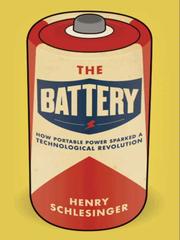
A popular history of the battery, from a twitching frog's leg to modern devices.
Recommended by: Mohnish Pabrai
How the Bell Labs team of Shockley, Bardeen and Brattain invented the transistor.
Recommended by: Patrick Collison
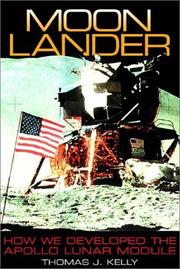
The chief engineer on designing, building, testing and flying the lunar module.
Recommended by: Patrick Collison
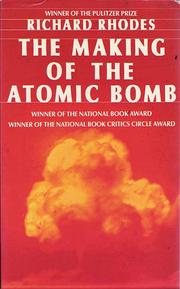
How the bomb was built, from the discovery of atomic energy to Hiroshima.
Recommended by: Jim Collins, Chris Dixon, Elon Musk and 2 others
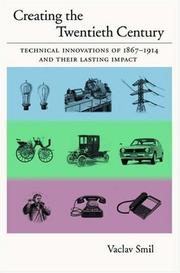
How inventions of 1867 to 1914, from electricity to cars, made the modern world.
“My favorite Smil book, Creating the Twentieth Century (and its companion, Transforming the Twentieth Century) chronicles the inventions of the last 150 years.” — Bill Gates
Source: Vaclav Smil on how energy makes life possible — Gates Notes
Recommended by: Bill Gates, Mohnish Pabrai, Li Lu