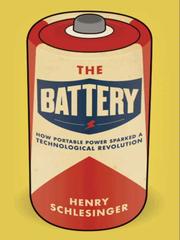
The Battery: How Portable Power Sparked a Technological Revolution
A popular history of the battery, from a twitching frog's leg to modern devices.
Summary
Henry Schlesinger, a science journalist, writes what the publisher calls the first popular history of the battery. The story begins with a long dispute in biology over a dead frog's twitching leg, a scalpel and a metal plate, and with Alessandro Volta's copper-and-zinc battery of 1800, which settled the question.
Volta's invention opened a field of research that led to the discovery of new elements and to inventions including Samuel Morse's telegraph, Alexander Graham Bell's telephone and Thomas Edison's incandescent light bulb. Schlesinger carries the history through to twenty-first-century developments such as nanotechnology and shows how portable power shaped the scientific and technological advances of the modern age. The publisher places the book alongside Mark Kurlansky's Cod and David Bodanis's E=mc2 as a single-subject history of science, and reviewers praised its research.
Key takeaways 4
- The battery grew out of an argument about electricity in a frog's leg.
- Volta's 1800 battery made sustained electric current available for experiment.
- The telegraph, telephone and electric light all depended on stored power.
- A single technology can carry a history of modern science.
Who should read it
Readers of popular science and the history of technology.
Who recommended it 1 · 1 direct
Similar books 6
Chosen by shared topics, the entries that hold them, and the people who recommended both.
A history of human invention, and a corrective to the hype around innovation.
Recommended by: Bill Gates
How the Bell Labs team of Shockley, Bardeen and Brattain invented the transistor.
Recommended by: Patrick Collison
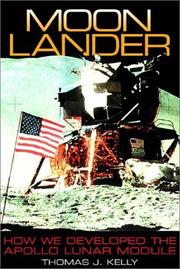
The chief engineer on designing, building, testing and flying the lunar module.
Recommended by: Patrick Collison

How the bomb was built, from the discovery of atomic energy to Hiroshima.
Recommended by: Jim Collins, Chris Dixon, Elon Musk and 2 others
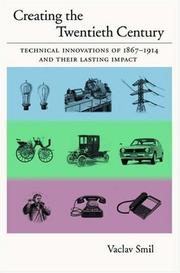
How inventions of 1867 to 1914, from electricity to cars, made the modern world.
“My favorite Smil book, Creating the Twentieth Century (and its companion, Transforming the Twentieth Century) chronicles the inventions of the last 150 years.” — Bill Gates
Source: Vaclav Smil on how energy makes life possible — Gates Notes
Recommended by: Bill Gates, Mohnish Pabrai, Li Lu