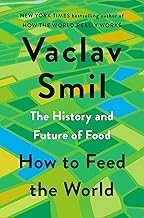
How to Feed the World
The main questions about the world's food system, answered with numbers.
Summary
Vaclav Smil investigates the main questions about the world's food system. Why are some of the world's biggest food producers also the countries with the most undernourished people? Why does food waste amount to about 1,000 kilocalories per person each day, and what can be done about it? Could everyone go vegan and stay healthy, and should they? How can a growing population be fed without destroying the planet?
The publisher describes the book as myth-busting and data-based. It shows how people misunderstand where their food comes from and what their diets require, and why this matters so much for the planet, and it explains how humanity can survive and thrive long into the future. Hannah Ritchie, author of Not the End of the World, calls it a fact-based tour of the food system past and present that opens debates on feeding ten billion people without wrecking the planet.
Key takeaways 4
- Some major food producers still have large undernourished populations.
- Food waste is about 1,000 kilocalories per person per day.
- Smil questions whether universal veganism is healthy or necessary.
- Feeding ten billion people requires facts rather than myths.
Who should read it
Readers interested in agriculture, nutrition and the environmental cost of food.
About Vaclav Smil
Distinguished professor emeritus at the University of Manitoba; writes quantitative histories of energy, food, materials and technical change.
Each book counts the physical inputs an economy consumes - joules, tonnes of steel, ammonia, cement - and establishes the historical rates at which past energy transitions actually moved. Those numbers let an investor size decarbonisation timelines and test claims about how fast an energy system can be rebuilt.
Who recommended it 1 · 1 direct
Similar books 6
Chosen by shared topics, the entries that hold them, and the people who recommended both.
How Haber and Bosch's ammonia synthesis transformed world food production.
“The Vaclav Smil book Enriching the Earth: Fritz Haber, Carl Bosch and the Transformation of World Food Production tells this incredible story in great depth.” — Bill Gates
Source: My review of Vaclav Smil's new book — Gates Notes
Recommended by: Bill Gates, Mohnish Pabrai
The career of Norman Borlaug, the plant scientist who won the Nobel Peace Prize.
Recommended by: Bill Gates, Mohnish Pabrai
Organic farming and genetically engineered crops as ways to feed the world.
Recommended by: Bill Gates
Water as an economic problem, and why the era of cheap, plentiful water is ending.
A data-driven look at emissions and what reduces them.
Recommended by: Bill Gates
How energy is transformed to power the biosphere and human society.
Recommended by: Bill Gates