Economic history and long-run growth
Histories of how economies grew rich over centuries, from the Dutch Republic and the Industrial Revolution to American growth and the long-run gains in human welfare.
Start here
- The First Modern EconomyJan de Vries, Ad van der Woude, 1997
- Empire of CottonSven Beckert, 2014
- Enlightenment NowSteven Pinker
- Factfulness: Ten Reasons We're Wrong About the WorldHans Rosling
- The Rational Optimist: How Prosperity EvolvesMatt Ridley
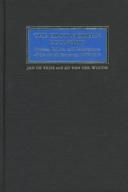
Why the Dutch Republic of 1500 to 1815 was the first modern economy.
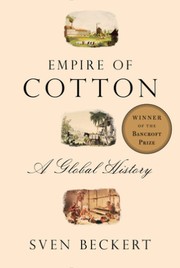
A global history of cotton used to trace how capitalism developed.
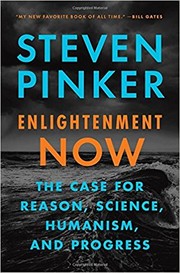
Data on how human wellbeing has improved, credited to reason, science and humanism.
Recommended by: Bill Gates, Andrew Wilkinson, Daniel Petre and 3 others
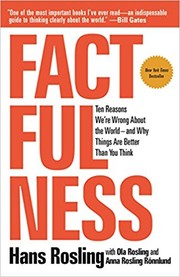
Global development data showing the world has improved more than people believe.
“What a great man. Empathy and charity embodied. I love his worldview. Written as he was dying. Its main message is to help us see the world more accurately - to see how much it’s improved. Shows why we tend towards us-versus-them stories, the difference between frightening versus dangerous, focusing on the system.” — Derek Sivers
Source: Derek Sivers book notes (primary, rated list) · Rating: 8/10
Recommended by: Bill Gates, Derek Sivers and 6 others
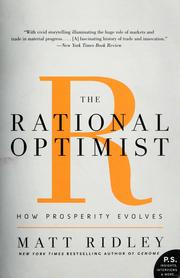
Prosperity grows as trade and specialisation let ideas meet and combine.
“…books I've recommended, highlighted to death, or forced on friends.” — Andrew Wilkinson
Source: Andrew Wilkinson's Bookshelf, neverenough.com
Recommended by: Andrew Wilkinson, Bill Gates, Frank Martin and 12 others

How modern invention and enterprise changed the production and sharing of wealth.
Recommended by: Patrick Collison
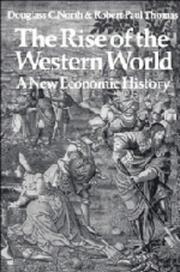
A new economic history of how Western Europe grew rich.
“Douglass C. North and Robert P. Thomas, The Rise of the Western World (Cambridge: Cambridge University Press, 1981), 102’119” — William J. Bernstein
Source: Efficient Frontier, issue 404 (2004)
Recommended by: Mohnish Pabrai, William J. Bernstein
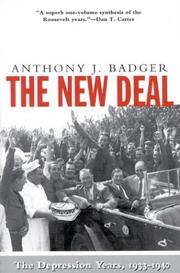
An interpretation of the New Deal and of the historians who have written on it.
“Badger, Anthony. The New Deal. Hill and Wang, 1989.” — Paul Graham
Source: The Refragmentation — Paul Graham (bibliography)
Recommended by: Paul Graham
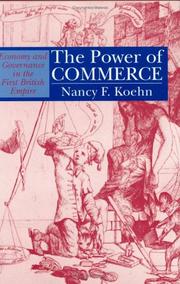
Why Britain's empire after the Seven Years War struggled with the costs of power.
Recommended by: Mohnish Pabrai
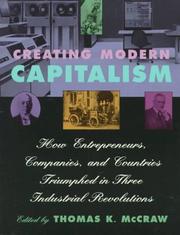
How Britain, Germany, Japan and the US each built their own form of capitalism.
Recommended by: Mohnish Pabrai
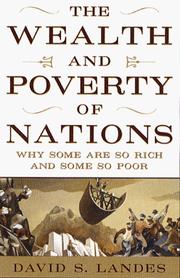
Why some nations grew rich over 500 years, with culture as the deciding factor.
Recommended by: Charlie Munger, Li Lu, Mohnish Pabrai and 1 other
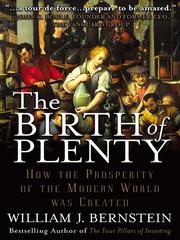
The four institutions modern growth needed, from property rights to capital markets.
“This is morally and ethically unacceptable,” the essay concluded, “but also a corruption of capitalism itself.” 3 For a marvelous exposition of this great era—as well as a compelling and delightful experience—I urge you to read William Bernstein’s fine new book, The Birth of Plenty. 3” — John C. Bogle
Source: Creating Sound Governance: The Shareholder’s Perspective, page 3
Recommended by: John C. Bogle, Mohnish Pabrai, Morgan Housel
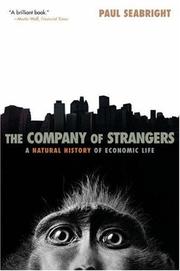
A natural history of how strangers came to cooperate in economic life.
Recommended by: Mohnish Pabrai, Patrick Collison

Why living standards stayed flat in a Malthusian trap until the industrial era.
Recommended by: Patrick Collison

How states control violence, and how that shapes the social order.
Recommended by: Emmett Shear
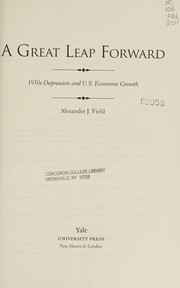
The American economy through the Depression and the economic policy of the time.
Recommended by: Patrick Collison, Raoul Pal

How Knudsen and Kaiser led America's industrial build-up for the Second World War.
“One of the best books I've read, it's a great story of industrial production and heroes.” — Christopher Bloomstran
Source: Semper Augustus 2020 Letter to Clients, 'To Read or Not to Read', p. 57
Recommended by: Christopher Bloomstran, Patrick Collison
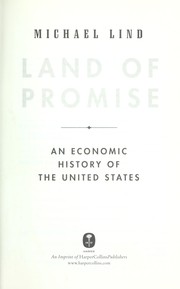
Two centuries of American growth, and how economics, technology and politics relate.
Recommended by: Paul Graham
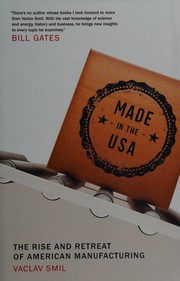
How American manufacturing rose to lead the world, and why its share then fell.
Recommended by: Mohnish Pabrai, Bill Gates
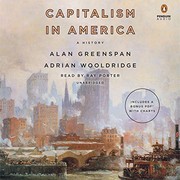
American economic growth from colonial times to now, driven by creative destruction.
Recommended by: Li Lu
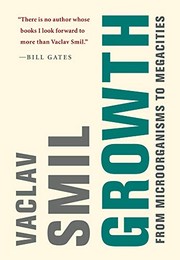
How organisms, populations, machines, economies and civilisations grow, and stop.
“and Vaclav Smil, Growth: From Microorganisms to Megacities (Cambridge, MA: MIT Press, 2019)” — Michael Mauboussin
Source: Underestimating the Red Queen: Measuring Growth and Maintenance Investments, page 18
Recommended by: Bill Gates, Michael Mauboussin
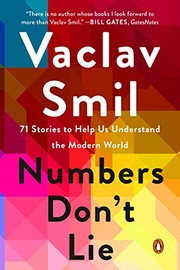
Seventy-one short pieces that correct common impressions with plain arithmetic.
Recommended by: Bill Gates, Mark Zuckerberg and 1 other

European society and economy in the seven centuries before industrialization.
Recommended by: Ryan Peterson
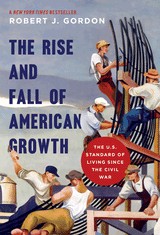
Why the inventions of 1870 to 1970 raised living standards as nothing since has.
“This is a heavyweight (literally) masterpiece... It's a data-rich textbook as well as a phenomenal read.” — Christopher Bloomstran
Source: Semper Augustus 2020 Letter to Clients, 'To Read or Not to Read', p. 57
Recommended by: Bill Gates, Christopher Bloomstran and 2 others
 Vaclav Smilwrote 3 books here
 Matt Ridleywrote 1 book here
 Alan Greenspanwrote 1 book here
 Mohnish Pabrairecommends 8 books here
 Bill Gatesrecommends 7 books here
 Patrick Collisonrecommends 6 books here
 Michael Mauboussinrecommends 3 books here
 Paul Grahamrecommends 2 books here
 Alfred Linrecommends 2 books here
 Daniel Petrerecommends 2 books here
 Mark Zuckerbergrecommends 2 books here
 Naval Ravikantrecommends 2 books here
Show all 34
 Charlie Mungerrecommends 1 book here
 Howard Marksrecommends 1 book here
 John C. Boglerecommends 1 book here
 Marc Andreessenrecommends 1 book here
 Morgan Houselrecommends 1 book here
 Anthony Pomplianorecommends 1 book here
 Derek Siversrecommends 1 book here
 Emmett Shearrecommends 1 book here
 Jamie Dimonrecommends 1 book here
 John Arnoldrecommends 1 book here
 Melinda Gatesrecommends 1 book here
 Nat Eliasonrecommends 1 book here
 Raoul Palrecommends 1 book here
 Ryan Petersenrecommends 1 book here
 Satya Nadellarecommends 1 book here
 Terrance McArthurrecommends 1 book here
 Trevor Ncuberecommends 1 book here