
A Farewell to Alms: A Brief Economic History of the World
Why living standards stayed flat in a Malthusian trap until the industrial era.
Summary
Clark argues that before about 1790 every society lived in a Malthusian trap: new technology raised output, but population growth absorbed the gain and living standards stayed flat. Britain escaped first, he claims, because of a long process of downward social mobility. Disease and poverty killed off the poorer members of society faster, and the descendants of the wealthy took their places, spreading less violent, more literate, harder-working middle-class habits through the population, by culture and by inheritance.
He uses this to explain the Industrial Revolution and the divide between rich and poor nations, which he sees as a process still running today. Princeton University Press published the book in 2007. Reviewers split. Tyler Cowen and Benjamin Friedman praised its ideas; a Cato Institute reviewer found the account ad hoc for recent decades; Deirdre McCloskey attacked its genetic argument; and Christof Dejung faulted it for leaving out the effects of colonialism.
Key takeaways 4
- For most of history, gains in productivity turned into more people rather than higher incomes.
- Clark attributes Britain's breakout to the faster reproduction of the wealthy, which spread middle-class behaviour downward.
- He treats differences in work habits and culture, not institutions alone, as the cause of the gap between rich and poor nations.
- His claims about inherited behaviour drew strong criticism from economic historians such as Deirdre McCloskey.
Who should read it
Readers of economic history who want a strong, disputed thesis on why the Industrial Revolution began in Britain and why some nations stay poor.
Who recommended it 1 · 1 direct
Similar books 6
Chosen by shared topics, the entries that hold them, and the people who recommended both.
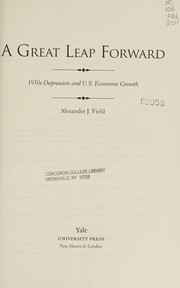
The American economy through the Depression and the economic policy of the time.
Recommended by: Patrick Collison, Raoul Pal

How modern invention and enterprise changed the production and sharing of wealth.
Recommended by: Patrick Collison
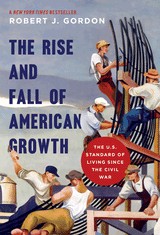
Why the inventions of 1870 to 1970 raised living standards as nothing since has.
“This is a heavyweight (literally) masterpiece... It's a data-rich textbook as well as a phenomenal read.” — Christopher Bloomstran
Source: Semper Augustus 2020 Letter to Clients, 'To Read or Not to Read', p. 57
Recommended by: Bill Gates, Christopher Bloomstran and 2 others

European society and economy in the seven centuries before industrialization.
Recommended by: Ryan Peterson
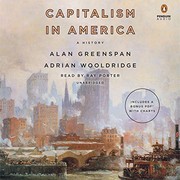
American economic growth from colonial times to now, driven by creative destruction.
Recommended by: Li Lu
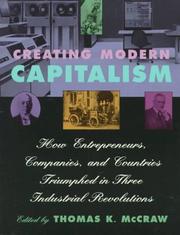
How Britain, Germany, Japan and the US each built their own form of capitalism.
Recommended by: Mohnish Pabrai
Where it sits in the reference 1
Topics 3
As an Amazon Associate I earn from qualifying purchases.