Updates

  1. 137 new fund letters and reports, each with its own page: Kayne Anderson Rudnick (48 market briefings, KayneCast episodes and TV commentaries), Shelton Capital Management (48 shareholder reports and a commentary), Lakehouse Capital (10 Small Companies Fund letters), Smead (5 newsletters), RIT Capital Partners (5 monthly commentaries), Kovitz, Legal & General, Generation, Hosking, Marram, Munro, Oldfield and others.
  2. 200 new fund letters and reports, each with its own page: Spheria (41 monthly reports), Peapack Private (41 weekly recaps and planning newsletters), Fort Washington (23), Polen Capital (15), Aristotle Pacific (14), Riverwater (13), Chou (10), Apollo Asia Fund (8, back to 1998), Personal Asset Trust, Rockwood Strategic, J Capital Research, I/O Fund, Penn Davis McFarland, Pomona and others.
  3. Investor pages have one Investments tab with shares, changes, % owned, class, market cap and Market cap and Status filters, a Funds tab listing each fund the firm runs, and assets under management from Form ADV. The Investors table shows AUM and current investments, and its search finds investors by what they hold.
  4. Filters, search and sort stay as you left them when you come back to a section. Person cards look like book cards. Company pages name their Investors tab Ownership. Kind and Sector filters use four kinds and GICS sectors with industries. Dead links left the Links tabs.
  5. 190 more investors from fiscal.ai's list, with their sites, letters, partners and 13F holdings; 556 more partner descriptions. Experts now lists only people.
  6. Fund letters lists 144 new documents from 23 firms, each with its own page: a summary, key insights and quotes. Among them: 37 BlackRock articles, 21 Value Partners monthly notes, eight Baron Capital letters, six Stone Sentinel letters to partners, seven Value Line portfolio manager Q&As, BNY's 2026 earnings releases and Starboard Value's 2026 conference presentations.
  7. 584 more investors, with their websites, 6,776 letters from their own sites, 1,385 partners with pages and the 13F holdings of 213 firms. New letters arrive daily from 290 more archives.
  8. Media and Companies filter by GICS sector and industry group, taken from the companies an episode or page names. 1,860 more company pages show a logo, the SEC's list included.
  9. The home page counts what the platform holds and lists features such as the document reader, the player and saved marks. Settings sits at the foot of the rail. Book cards are a quarter wider, so rows hold fewer. Companies drops the Named in filter, and the Role list in your account runs A to Z.
  10. Investor pages of 13 firms show their newsroom's latest posts. New 13F filings are read as the SEC publishes them.
  11. Investor pages have an Investments tab: 13,975 holdings for 105 investors, from their 13F filings with the SEC and their own portfolio pages, with status and sector. 7,338 more companies have a page of their own.
  12. A podcast or YouTube episode keeps playing while you move around the site, in a bar with skip, speed and volume. Media tables show each episode's length and description.
  13. Press releases come from each company's own newsroom (167 companies); SEC filings sit on the Filings tab. Tickers name their exchange, and a company's Experts tab includes guests whose episode description names it.
  14. Letter types now include Market commentary, Fact sheet, Interim report, Annual report, Proxy circular and Governance document. The reader opens over the whole window.
  15. Partners of investment firms have 2,836 appearances and 580 pieces of writing on their pages; Derek Sivers's page lists every book he rates, with his rating.
  16. Fund letters lists three Akre Focus shareholder reports: the ETF's annual report for the year to July 2026, its semi-annual report to January 2026 and the fund's semi-annual report to January 2025, each with its own page: a summary, key insights and quotes.
  17. 837 partners of 73 investment firms now have their own pages, with title, description, photograph and social accounts; Andreessen Horowitz partners' pages also list their writing on a16z.com.
  18. Company pages have a Press releases tab: 8,229 releases for 203 companies, from SEC filings and company newsrooms. Companies filter by For-profit or Non-profit. Own media is a table with filters. Media filters by sector and industry. Publication pages link their publisher in the description.
  19. The Unilever page's Letters tab shows what each fund letter says about Unilever, word for word with its page, and whether the letter is bullish, bearish, mixed or neutral. Filter by sentiment, and see 10 letters at a time.
  20. 492 more fund letters and 3,183 more articles show the day they were published, read from each letter's first page or each article's own page.
  21. The PDF reader has a search box: type words to see every match in the document and step through them. About 540 letters that were web pages, among them Oakmark's commentaries, Bill Miller's letters and Howard Marks's memos, now open in the reader.
  22. Person pages: recommendations open with tier 1 books; one button per organisation; transcripts sit on their episodes; the books on 129 reading lists joined the Recommends tabs.
  23. Companies lists every company with a ticker on the SEC's list, with a Source filter. A quote on a company page opens the letter at that page with the words marked. A company's Media tab lists only episodes that name it, and a new Own media tab lists its podcasts, publications and YouTube channel. Show pages link their publisher. A page opened from a table no longer shows that table's filters beside it.
  24. Company, investor and person pages show more of their social accounts: Facebook, TikTok, Bluesky, Medium, GitHub, Discord and podcast shows. Investor pages list every partner the firm's own team page names: 965 people across 73 investors, 98 for Andreessen Horowitz.
  25. About 170 more letters and papers open in the reader: Mohnish Pabrai's letters and transcripts from his site's new folder, and free copies of papers by Asness, Harvey, Altman, Lo and others from their own or their schools' sites.
  26. Every company a fund letter names has a page, with the letters and quotes that name it: 47 new pages, among them Atom Computing, Hugging Face, Rolls-Royce Holdings and Westinghouse Electric. Company pages have a Quotes tab.
  27. A person's Writing tab has a Type column and filter (Article, Essay, Transcript, Speech, Foreword, Interview and the rest), and Publication names only the publication that published each piece.
  28. Fund letters opens on the newest published letter, and a letter or paper found by search opens its own page here instead of the publisher's site.
  29. A letter or paper with a copy on the site opens its PDF over its page, with a button to open it in a new tab. Select text to highlight or underline it; signed-in readers keep their marks in their account. Each quote opens the PDF at its page with its words marked, and a Source link leads to the publisher's original.
  30. Fund letters lists 61 more documents, each with its own page: Fairfax's 2025 and 2026 interim reports, proxy circulars and 2025 annual report (with their French editions), 26 Charlie Munger meeting transcripts, talks and essays, Third Point's 2026 monthly reports and Malibu Life's interim results, and a Seth Klarman interview. Papers adds Richard Thaler's two 2020 editorials on nudges.
  31. Fund letters lists Lux Capital's letters for Q2 and Q3 2026, by Josh Wolfe, each with its own page: a summary, key insights and quotes.
  32. Fund letters lists Brookfield's letter to shareholders for Q3 2026, by Bruce Flatt, with its own page: a summary, key insights and quotes.
  33. Fund letters lists Howard Marks's memo of 11 November 2026, A Layman Thinks About AI, with its own page: a summary, key insights and quotes.
  34. Fund letters lists 118 more letters, each with its own page: 44 weekly commentaries by Jeremy Siegel from 2026, 31 issues of Van Tharp's newsletter from 2018, 23 Pabrai Investment Funds letters from 2021 to Q3 2026, 13 Efficient Frontier essays by William Bernstein, Oakmark's three 3Q 2026 commentaries, two Lindsell Train reports, a John Hussman comment and Third Point's Q3 2026 letter.
  35. 2,027 more books carry a one-line description in the Books table and on their pages; 7,067 of 7,715 have one, every tier 1, 2 and 3 book among them.
  36. Fund letters lists 187 more letters from 19 firms, among them Permanent Equity, Social Capital, Lux Capital, Square Peg, Bestinver, Cobas, Sequoia Fund, Marketfield and EquityCompass; each shows on its investor's page and has a page of its own.
  37. 2,928 more books carry a one-line description in the Books table and on their pages, so every tier 1, 2 and 3 book has one; 5,040 in all.
  38. Every publication on Newsletters has its own page: its writing, its writers, its staff and who recommends it. Investor pages have a Management tab; a company's Experts tab now leaves out its own people, who list under Management. Tabs on a phone move sideways only.
  39. Every fund letter and research paper has its own page: the thesis, the PDF, the companies and books it names, and for 176 letters and 24 papers so far a summary, key insights and quotes with their page.
  40. 99 books that no page listed now sit under their topics in Books, among them Caste, American Prometheus and Pale Blue Dot.
  41. Newsletters lists every newspaper, magazine, investment newsletter, journal and blog the reference holds, 442 in all, with the people who write there. The search box keeps your last 20 searches. You can create an account.
  42. 283 books that fund managers recommend in their letters are on the shelf, each with the letter's own words and page; investor pages have a Recommends tab.
  43. Person, company, investor and show pages link their own accounts on X, Threads, Instagram, LinkedIn, YouTube and Substack: 275 people, 552 companies and organisations, 88 investors and 478 shows.
  44. 716 more book recommendations name their source: the person's own reading list, letter, blog post, speech or interview, or an article that reports it. 232 of them quote the person's own words about the book, on the book card and on the book's page.
  45. Every US-listed company has a page with its SEC filings. Company pages list their experts and their management, past and present. Fund managers sit under Investors. Each show has a page of its episodes, and an episode page names its guests and hosts. Biographies lists groups, then people. Breadcrumbs show where a page sits.
  46. Media lists every podcast episode, video, interview and talk, over 10,000, by person, company, publisher and event; each filter searches its own choices. Books opens on its table, then Browse, then Authors and Recommenders. A filter's count no longer covers its arrow.
  47. A book that no company, country or subject page lists shows its topics under Where it sits in the reference. On a phone, a page's tabs scroll sideways only. Descriptions read the same on every page. See them in the Experts tab lists every expert the page names.
  48. Every podcast episode, video and interview has its own page with a video or audio player and a link to the source. Investor pages show each company's sector and market cap; firms such as Berkshire Hathaway have one page that holds their letters and their company tabs. Letters tabs filter by company and search the theses. Companies filter by Public, Private and Defunct and link each company's website.
  49. Every tab, view and search has its own address, such as /books/table/asset or /letters/companies, so Back works and a link opens the same place. Page addresses no longer end in .html. Fund letters, Investors, Companies and Papers load about a fifth of the data they did.
  50. Fund letters has a Companies tab: every company the letters name, with its market cap, sector, country, and how many letters and investors name it. Investor pages link each investor's website. Lists in table cells end with “… and N more” at every width.
  51. 1,120 more book summaries; descriptions for 373 papers; pages for 137 more companies, each with the fund letters that discuss it; 215 official photographs; search has its own page.
  52. 411 more books have a summary; person pages list 930 more of the books they wrote; 147 people show their official photograph.
  53. Every investor has a page with its letters and the companies they discuss; company pages list the investors whose letters name them.
  54. A Companies section at the top of the rail lists every company the books, experts and fund letters name.
  55. Person pages list letters, writing, profiles and links as sortable tables with filters, and show each person's companies as links; Fund letters show each letter's description in its own column.
  56. Experts show a checked job title and a short description of each person; 30 more people have photographs.
  57. Every company, fund, university and publication the experts work for has a page listing the people there.
  58. Fund letters show each letter's thesis and filter by it; 225 person pages list the essays, columns and newsletter issues the person wrote.
  59. Person pages list every essay and newsletter issue a person wrote, and their own books as a table in List view.
  60. Recommends shows the five largest kinds of book and the rest under More; browse pictures load sooner.
  61. Podcasts and talks link the original episode, filter by Audio and video or Press, and list each publisher once.
  62. Pages are wider, Recommends has List and Grid, and a filter clicked again turns off.
  63. Book cards sit in a ruled grid with Open Library and Goodreads links and each book's one-line note.
  64. Funds is now Investors; each investor's styles are buttons that filter the table.
  65. Podcasts and talks on a person's page filter by year and publisher and show as a list or a grid of pictures.
  66. Quotes show only people's own words: 472 summaries written by list sites are gone.
  67. Country pages open from Browse again, and every link on the shelf lands on a page.
  68. Subject and person pages show their sections as tabs, and each book appears once on a person's page.
  69. Book cards show the quote, who said it and the source; grids show five cards to a row.
  70. On a phone, a menu holds the sections, search, Updates, Feedback and dark mode.
  71. Feedback takes a screenshot of the page with no browser prompt, opens a screenshot full size when you click it, and clears itself once sent.
  72. Book cards are centred, search names the topic each book sits in, and any text cut short shows whole on hover.
  73. Search groups its results by kind: people, companies, geographies, subjects, topics, books, funds, fund letters and papers.
  74. The Books table lists who recommended each book by name, and the browser tab names the section you are in.
  75. Feedback can take a screenshot of the page, or one you paste or choose, and opens in the corner beside Updates.
  76. Each rail button reopens its section where you left it, and Browse, Table and People show on every book and subject page.
  77. Filters grey out choices that hold nothing instead of hiding them, and Books › People filters by authors or recommenders.
  78. Feedback takes a subject line and up to three screenshots.
  79. Biographies are grouped by the person they are about: 41 new pages, from Abraham Lincoln to Lee Kuan Yew.
  80. Sport splits into 23 sports, and Religion into one topic per faith.
  81. Book lists show as cards: the cover, one recommendation quote and every recommender by name.
  82. Seventeen subjects that had two or three pages under different names now have one page each.
  83. Every page lists its Experts as authors and recommenders, with a link to them on the Experts tab.
  84. Economics, Financial history, Financial panics and Accounting are subjects of their own, with one page per financial crisis.
  85. Book, person and subject pages open inside the app, so the tabs stay in view.
  86. 996 more book covers, and photographs or logos for 227 more people and companies.
  87. Books › Browse shows every subject as cards, and the rail holds Fund letters, Papers, Experts, Books and Funds.
  88. Every topic over 150 books splits into narrower topics, each with a page of its own.

Send feedback

What is it?
Screenshots, up to 3 (optional)
or paste one with Ctrl+V

We use your email only to reply to you.

EA

Economic and Business History

Holds histories of economic growth, trade, commodities, industrialisation, corporations and the tycoons who built them.

Start here

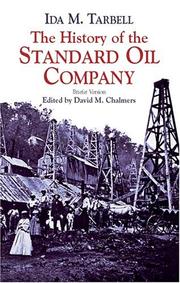
  1. The History of the Standard Oil CompanyIda M. Tarbell, 1904
  2. Strategy and StructureAlfred D. Chandler Jr., 1962
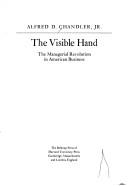
  3. The Visible HandAlfred D. Chandler Jr., 1977
  4. Prophets of RegulationThomas K. McCraw, 1984
  5. The ReckoningDavid Halberstam, 1986
Ida M. Tarbell · 1904

How Standard Oil used railroad rebates to crush rival refiners, case by case.

Alfred D. Chandler Jr. · 1962

How DuPont, GM, Standard Oil and Sears built the multidivisional firm.
Alfred D. Chandler Jr. · 1977

How salaried managers replaced markets in coordinating US business, 1840 to 1920.

“Chandler, Alfred. The Visible Hand. Harvard, 1977.” — Paul Graham

Source: The Refragmentation — Paul Graham (bibliography)

Recommended by: Paul Graham
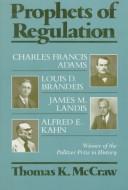
Thomas K. McCraw · 1984

A century of US regulation through four figures, from Charles Francis Adams to Kahn.
David Halberstam · 1986

Ford and Nissan side by side, showing why US carmakers lost to Japan.
H. Thomas Johnson, Robert S. Kaplan · 1987

How cost accounting served managers until financial reporting took it over.
Alfred D. Chandler Jr. · 1990

Why big industrial firms in the US, Britain and Germany rose or lagged, 1880 to 1940.
Daniel Yergin · 1991

The history of oil from the first Pennsylvania well to the Gulf War.

“He's also an extremely articulate writer, as evidenced by his Pulitzer prize for his early work on oil, The Prize.” — Bill Gates

Source: The Quest — Gates Notes

Recommended by: Bill Gates, Jim Collins, Mohnish Pabrai and 4 others

Richard Kluger · 1996

A century of the American cigarette industry, from mass marketing to 1990s lawsuits.
David S. Landes · 1998

Why some nations grew rich over 500 years, with culture as the deciding factor.

Edwin Black · 2001

How IBM and its German subsidiary worked with Nazi Germany from 1933 through the war.

Marc Levinson · 2006

How the shipping container cut freight costs and remade global trade.

“History of the shipping container, and how it affected the world economy. Also for ambitious entrepreneurs, Malcom McLean is a damn good role model. Great read.” — Derek Sivers

Source: Derek Sivers book notes (primary, rated list) · Rating: 6/10

Recommended by: Bill Gates, Derek Sivers, Mohnish Pabrai and 2 others
Greg Grandin · 2009

Henry Ford's failed attempt to build a small American town in the Amazon.

Richard White · 2011

How the transcontinental railroads, the first corporate giants, reshaped America.
Vaclav Smil · 2013

How American manufacturing rose to lead the world, and why its share then fell.

Recommended by: Mohnish Pabrai, Bill Gates
Tim Wu · 2016

How media from the penny press to social media capture attention and resell it.

Recommended by: David Perell
Robert J. Gordon · 2016

Why the inventions of 1870 to 1970 raised living standards as nothing since has.

“This is a heavyweight (literally) masterpiece... It's a data-rich textbook as well as a phenomenal read.” — Christopher Bloomstran

Source: Semper Augustus 2020 Letter to Clients, 'To Read or Not to Read', p. 57

Recommended by: Bill Gates, Christopher Bloomstran and 2 others
Patrick Radden Keefe · 2021

Three generations of the Sackler family and how Purdue Pharma sold OxyContin.
Matthew Josephson · 1934

How Vanderbilt, Gould, Rockefeller, Morgan and others built 19th-century fortunes.

Recommended by: Larry Ellison

Robert Hessen · 1975

Charles Schwab's rise from Carnegie's mill to head US Steel, then build Bethlehem.

Anthony Sampson · 1975

The big international oil companies and how the 1973 embargo took away their control.
Peter C. Newman · 1985

The first volume of a history of the Hudson's Bay Company.
Thomas K. McCraw · 1997

How Britain, Germany, Japan and the US each built their own form of capitalism.

Recommended by: Mohnish Pabrai
Stephen E. Ambrose · 2000

The investors, politicians and workers who built the transcontinental railroad.

Barbara Freese · 2003

How coal built empires and economies, and the death and pollution it caused.
John Micklethwait, Adrian Wooldridge · 2003

A short history of the joint stock company, from trading charters to multinationals.

“Mickelthwaite, John, and Adrian Wooldridge. The Company. Modern Library, 2003.” — Paul Graham

Source: The Refragmentation — Paul Graham (bibliography)

Recommended by: Paul Graham

Douglas Brinkley · 2003

The Ford Motor Company from 1903 to the end of the 20th century.

Recommended by: Paul Graham

George M. Taber · 2005

The 1976 tasting of top French wines against new California ones, and its effects.
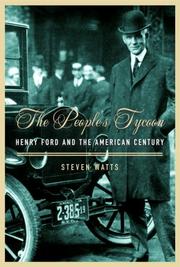
Steven Watts · 2005

Henry Ford as a shaper of American culture as much as of its industry.
David S. Landes · 2006

What drives family business dynasties such as the Rothschilds, Fords and Toyodas.
Allan M. Brandt · 2007

How the cigarette rose in 20th-century America, and how its harm was proved.
William J. Bernstein · 2008

Long-distance trade from Mesopotamia and the spice routes to modern globalisation.

Benjamin Wallace · 2008

The record-priced 1787 Lafite said to be Jefferson's, and doubts about its origin.

Recommended by: Tim Ferriss
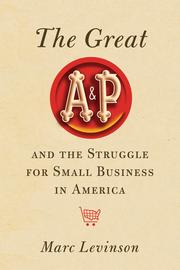
Marc Levinson · 2011

How A&P became the world's largest retailer and the political fight it set off.

Recommended by: Patrick Collison
Christian Wolmar · 2012

The history of the railways in the United States.
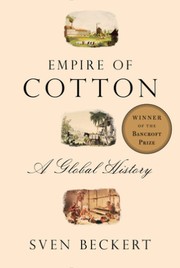
Sven Beckert · 2014

A global history of cotton used to trace how capitalism developed.
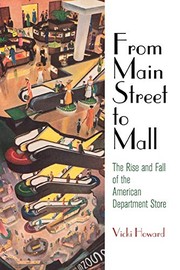
Vicki Howard · 2015

The rise and fall of the American department store, with Sears throughout.
Alan Greenspan, Adrian Wooldridge · 2018

American economic growth from colonial times to now, driven by creative destruction.

Recommended by: Li Lu
Matt Stoller · 2019

A political history of American monopoly and of the tradition that fought it.

“Matt Stoller, Goliath: The 100-Year War Between Monopoly Power and Democracy (New York: Simon & Schuster, 2019)” — Michael Mauboussin

Source: Market Share: Understanding Competitive Advantage Through Market Power, page 46

Recommended by: Michael Mauboussin, David Heinemeier Hansson
Gerald Posner · 2020

The US drug industry from patent medicines to the opioid epidemic and the Sacklers.
Mircea Raianu · 2021

A history of the Tata Group and Indian capitalism, drawn from the company's archives.
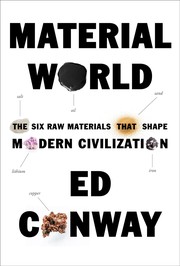
Ed Conway · 2023

Six materials the world runs on, sand, salt, iron, copper, oil and lithium, traced.

Allan Nevins · 1940

John D. Rockefeller's rise to found Standard Oil, and his philanthropy.

Boris Emmet, John E. Jeuck · 1950

The scholarly history of Sears, Roebuck, from mail order to department stores.

Ralph W. Hidy, Muriel E. Hidy · 1955

The authorised history of Standard Oil, written with full access to its records.
Peter Collier, David Horowitz · 1976

Four generations of the Rockefeller family, the fortune and the name.

D. K. Fieldhouse · 1978

How Unilever's overseas subsidiaries worked, 1895 to 1965.

Leon Harris · 1979

The Jewish families behind America's great department stores.

Maggie Keswick · 1982

Jardine Matheson and the model of the diversified Hong Kong trading house.
Naomi R. Lamoreaux · 1985

Why 1,800 American firms merged into about 150 at the turn of the century.
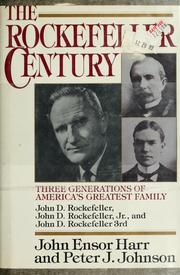
John Ensor Harr, Peter J. Johnson · 1988

Three generations of Rockefellers and how the fortune passed down.
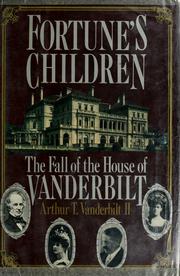
Arthur T. Vanderbilt II · 1989

How the Vanderbilt heirs spent and scattered the family fortune.

Art Davidson · 1990

The 1989 Exxon Valdez oil spill and Exxon's response, reported from Alaska.
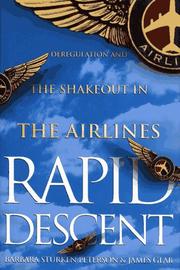
Barbara Sturken Peterson, James Glab · 1994

The American airline industry's upheaval in the years after deregulation.

T. A. Heppenheimer · 1995

Commercial aviation from biplanes after the First World War to deregulation.
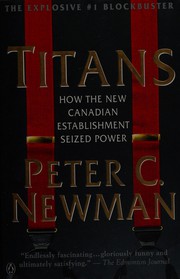
Peter C. Newman · 1998

The next generation of Canada's business owners after the old Establishment.
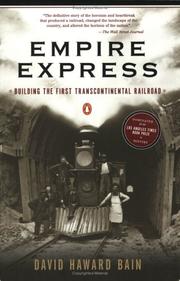
David Haward Bain · 1999

The building of America's first transcontinental railroad, from plan to completion.

Nancy Martha West · 2000

How Kodak's advertising taught Americans what to photograph.
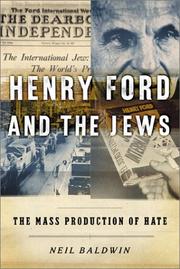
Neil Baldwin · 2001

How Henry Ford published The International Jew, a book the Nazis spread.
Rebecca Smith, John R. Emshwiller · 2003

Two Wall Street Journal reporters recount how they uncovered Enron's partnerships.
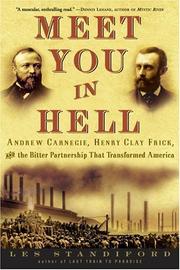
Les Standiford · 2005

How the Homestead strike turned Carnegie and Frick's partnership into a feud.
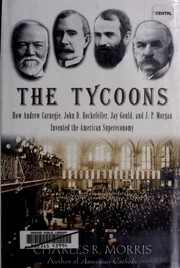
Charles R. Morris · 2005

Carnegie, Rockefeller, Gould and Morgan, and the industrial economy they built.

“on how four great builders of the 19th century built the world we live in today” — Marc Andreessen

Source: @pmarca, companion thread to 'It's Time to Build'

Recommended by: Marc Andreessen
Rush Loving Jr. · 2006

Conrail, deregulation and how US railroads returned to profit.
Steve Weinberg · 2008

Ida Tarbell and John D. Rockefeller, and the collision between the two.

Richard Schickel · 2008

An illustrated history of the Warner Bros studio and Hollywood.
Bryan Burrough · 2009

The rise and fall of the Texas oil fortunes, the Hunts among them.
Tom Zoellner · 2009

Uranium: its mining, its boom towns and the geopolitics of its supply.

Geoffrey Jones · 2010

A business history of the global beauty industry, from Avon and Coty to Shiseido.
Walter Kiechel · 2010

How Bruce Henderson and three others invented corporate strategy as a discipline.

“Kiechel, Walter, The Lords of Strategy: The Secret Intellectual History of the New Corporate World (Boston, MA: Harvard Business Press, 2010)” — Michael Mauboussin

Source: Measuring the Moat: Assessing the Magnitude and Sustainability of Value Creation, page 64

Recommended by: Michael Mauboussin

Tilar J. Mazzeo · 2010

The history of Chanel No. 5 from its formulation, including the Wertheimer deal.

Robert N. Proctor · 2011

How tobacco chemists engineered cigarettes, drawn from the industry's own documents.

Robert E. Gallamore, John R. Meyer · 2014

Why US railroads declined under regulation and recovered after the Staggers Act.
Chris Taylor · 2014

How Star Wars merchandise came to outgrow the films that created it.

Robert McNally · 2017

Why oil prices are stable only when a cartel or swing producer controls supply.
David Thomson · 2017

How four immigrant brothers built the Warner Bros film studio and its style.
Ian D. Gow, Stuart Kells · 2018

The history and economics of Deloitte, PwC, EY and KPMG, and their conflicts.
Richard Snow · 2019

How Walt Disney bet his company on building Disneyland.

Janek Wasserman · 2019

The Austrian School of economics, from Viennese coffeehouses to the Tea Party.
Javier Blas, Jack Farchy · 2021

The history of the commodity traders Vitol, Glencore, Trafigura and Cargill.

Nicholas Barbon · 1685

An early argument on building, the construction trade, taxes and population.

Recommended by: Marc Andreessen

Thomas Robert Malthus · 1798

Why population growth always presses against the food supply.

Recommended by: Mohnish Pabrai

Karl Polanyi · 1944

How the Industrial Revolution's self-regulating market upended society.

Recommended by: Satya Nadella
Douglass C. 94 North, Robert Paul Thomas · 1973

A new economic history of how Western Europe grew rich.

“Douglass C. North and Robert P. Thomas, The Rise of the Western World (Cambridge: Cambridge University Press, 1981), 102’119” — William J. Bernstein

Source: Efficient Frontier, issue 404 (2004)

Recommended by: Mohnish Pabrai, William J. Bernstein

Carlo Cipolla · 1981

European society and economy in the seven centuries before industrialization.

Recommended by: Ryan Peterson
Jurg Niehans · 1989

A history of economic theory and the economists who built it.

Recommended by: Eric Weinstein

Philip Mirowski · 1989

How economics copied the maths of 19th-century physics, and what that cost it.

“Mirowski, Philip, More Heat than Light: Economics as Social Physics, Physics as Nature’s Economics (Cambridge: Cambridge University Press, 1989)” — Michael Mauboussin

Source: Size Matters: The Kelly Criterion and the Importance of Money Management, page 12

Recommended by: Michael Mauboussin, Eric Weinstein
Jerry E. Patterson · 1989

An illustrated survey of the Vanderbilt family, its fortune and its mansions.
Nancy F. Koehn · 1990

Why Britain's empire after the Seven Years War struggled with the costs of power.

Recommended by: Mohnish Pabrai

David Hackett Fischer · 1996

Eight centuries of price revolutions, and what ended each one.

Nancy F. Koehn · 2001

How entrepreneurs from Wedgwood to Dell earned consumers' trust in their brands.

Recommended by: Mohnish Pabrai
Richard Korman · 2002

Charles Goodyear's obsession with rubber and the struggle for a rubber monopoly.

Recommended by: Mohnish Pabrai

Mark Arax, Rick Wartzman · 2003

J. G. Boswell and the secret farming empire he ran in the heart of California.

Recommended by: Mohnish Pabrai
John Steele Gordon · 2004

How the United States came to dominate the world by creating wealth, not by force.

Recommended by: Paul Graham
William J. Bernstein · 2004

The four institutions modern growth needed, from property rights to capital markets.

“This is morally and ethically unacceptable,” the essay concluded, “but also a corruption of capitalism itself.” 3 For a marvelous exposition of this great era—as well as a compelling and delightful experience—I urge you to read William Bernstein’s fine new book, The Birth of Plenty. 3” — John C. Bogle

Source: Creating Sound Governance: The Shareholder’s Perspective, page 3

Recommended by: John C. Bogle, Mohnish Pabrai, Morgan Housel
Nick Robins · 2006

The East India Company, from spice trader to ruler of India: the first multinational.

Recommended by: Patrick Collison

Gregory Clark · 2007

Why living standards stayed flat in a Malthusian trap until the industrial era.

Recommended by: Patrick Collison

Maury Klein · 2007

Revolutions in power, transport, communication and organisation that made big firms.

Recommended by: Paul Graham

Peter T. Leeson · 2009

Economics applied to pirates: why they behaved as they did and why they succeeded.

Recommended by: Mohnish Pabrai
Henry William Brands · 2010

How America became an industrial nation between the Civil War and the century's end.

Recommended by: Patrick Collison
Alexander J. Field · 2011

The American economy through the Depression and the economic policy of the time.

Recommended by: Patrick Collison, Raoul Pal
Sylvia Nasar · 2011

How modern economics came to be, through the people who made it.

Recommended by: Mohnish Pabrai
Terry S. Reynolds, Virginia P. Dawson · 2011

The history of Cleveland-Cliffs and American iron ore mining over 160 years.

Recommended by: Mohnish Pabrai

Paul Ingrassia · 2012

American history told through fifteen iconic car models.

Recommended by: Mohnish Pabrai
Michael Lind · 2012

Two centuries of American growth, and how economics, technology and politics relate.

Recommended by: Paul Graham

Charles R. Morris · 2012

The rise of American industry in the decades before the Civil War.

Recommended by: Patrick Collison
Diane Coyle · 2014

How GDP is measured, and why its figures can jump overnight.

Maximillian Potter · 2014

A plot to extort Domaine de la Romanée-Conti by poisoning its vines.
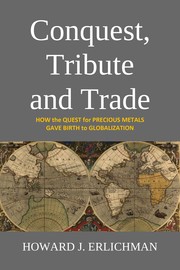
Howard J. Erlichman · 2016

How the quest for gold, silver and copper gave birth to globalisation.

Recommended by: Nick Szabo
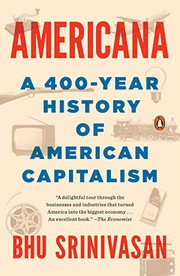
Bhu Srinivasan · 2017

Four centuries of American capitalism, told through its next big things.

Recommended by: Chamath Palihapitiya

Luke Barr · 2018

How the hotelier César Ritz and the chef Auguste Escoffier made luxury hotels.

Recommended by: Andrew Wilkinson
More general history