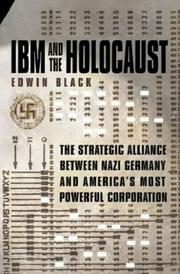
IBM and the Holocaust
How IBM and its German subsidiary worked with Nazi Germany from 1933 through the war.
IBM's punch-card business in Nazi Germany; contested but landmark.
Summary
Black argues that IBM formed a strategic alliance with Nazi Germany that began in 1933, in the first weeks of Hitler's rule, and continued through the Second World War. Before Jews could be targeted for asset confiscation, ghettoisation, deportation, slave labour and annihilation, they had to be identified, a cross-tabulation and organisational task so large that it called for a computer. No computer existed, but IBM's Hollerith punch-card technology did, and Black contends that the company's custom-designed and constantly updated Hollerith systems let the regime automate its persecution.
The book traces the technology step by step, from the identification and cataloguing programmes of the 1930s, including censuses, registrations and ancestral tracing, to the selections of the 1940s, and shows it organising railways and concentration-camp slave labour across Nazi Europe. Black presents this as the explanation for the speed and accuracy with which the Nazis located Europe's Jews, a puzzle he says historians had not fully assembled. He follows IBM and its German subsidiary together. The work is a landmark, though its claims are contested.
Key takeaways 4
- Mass persecution required data: the Nazi regime first had to identify and count Jews before it could target them.
- IBM's Hollerith punch-card systems supplied the tabulating capacity that the regime's censuses and registrations needed.
- The same technology ran railway scheduling and the organisation of camp slave labour.
- IBM supplied custom-designed and constantly updated systems, an ongoing service relationship rather than a one-off sale.
Who should read it
Readers studying corporate responsibility and the ethics of selling technology to governments, reading it alongside the debate over its claims.
Similar books 6
Chosen by shared topics, the entries that hold them, and the people who recommended both.
How IBM lost control of the PC industry to Microsoft, Intel and the clone makers.

How IBM built its personal computer outside the company's normal organisation.
IBM's technical and organisational history up to the System/360 computers.
IBM's founding under the father, its move into computers and the son's career.
Recommended by: Jim Collins, Aaron Levie
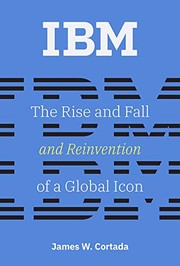
IBM from the 1880s to today: its strategies and how it shaped other organisations.
How the struggle between Thomas Watson and his son shaped IBM's success.