Updates

  1. Fund letters lists 118 more letters, each with its own page: 44 weekly commentaries by Jeremy Siegel from 2026, 31 issues of Van Tharp's newsletter from 2018, 23 Pabrai Investment Funds letters from 2021 to Q3 2026, 13 Efficient Frontier essays by William Bernstein, Oakmark's three 3Q 2026 commentaries, two Lindsell Train reports, a John Hussman comment and Third Point's Q3 2026 letter.
  2. 2,027 more books carry a one-line description in the Books table and on their pages; 7,067 of 7,715 have one, every tier 1, 2 and 3 book among them.
  3. Fund letters lists 187 more letters from 19 firms, among them Permanent Equity, Social Capital, Lux Capital, Square Peg, Bestinver, Cobas, Sequoia Fund, Marketfield and EquityCompass; each shows on its investor's page and has a page of its own.
  4. 2,928 more books carry a one-line description in the Books table and on their pages, so every tier 1, 2 and 3 book has one; 5,040 in all.
  5. Every publication on Newsletters has its own page: its writing, its writers, its staff and who recommends it. Investor pages have a Management tab; a company's Experts tab now leaves out its own people, who list under Management. Tabs on a phone move sideways only.
  6. Every fund letter and research paper has its own page: the thesis, the PDF, the companies and books it names, and for 176 letters and 24 papers so far a summary, key insights and quotes with their page.
  7. 99 books that no page listed now sit under their topics in Books, among them Caste, American Prometheus and Pale Blue Dot.
  8. Newsletters lists every newspaper, magazine, investment newsletter, journal and blog the reference holds, 442 in all, with the people who write there. The search box keeps your last 20 searches. You can create an account.
  9. 283 books that fund managers recommend in their letters are on the shelf, each with the letter's own words and page; investor pages have a Recommends tab.
  10. Person, company, investor and show pages link their own accounts on X, Threads, Instagram, LinkedIn, YouTube and Substack: 275 people, 552 companies and organisations, 88 investors and 478 shows.
  11. 716 more book recommendations name their source: the person's own reading list, letter, blog post, speech or interview, or an article that reports it. 232 of them quote the person's own words about the book, on the book card and on the book's page.
  12. Every US-listed company has a page with its SEC filings. Company pages list their experts and their management, past and present. Fund managers sit under Investors. Each show has a page of its episodes, and an episode page names its guests and hosts. Biographies lists groups, then people. Breadcrumbs show where a page sits.
  13. Media lists every podcast episode, video, interview and talk, over 10,000, by person, company, publisher and event; each filter searches its own choices. Books opens on its table, then Browse, then Authors and Recommenders. A filter's count no longer covers its arrow.
  14. A book that no company, country or subject page lists shows its topics under Where it sits in the reference. On a phone, a page's tabs scroll sideways only. Descriptions read the same on every page. See them in the Experts tab lists every expert the page names.
  15. Every podcast episode, video and interview has its own page with a video or audio player and a link to the source. Investor pages show each company's sector and market cap; firms such as Berkshire Hathaway have one page that holds their letters and their company tabs. Letters tabs filter by company and search the theses. Companies filter by Public, Private and Defunct and link each company's website.
  16. Every tab, view and search has its own address, such as /books/table/asset or /letters/companies, so Back works and a link opens the same place. Page addresses no longer end in .html. Fund letters, Investors, Companies and Papers load about a fifth of the data they did.
  17. Fund letters has a Companies tab: every company the letters name, with its market cap, sector, country, and how many letters and investors name it. Investor pages link each investor's website. Lists in table cells end with “… and N more” at every width.
  18. 1,120 more book summaries; descriptions for 373 papers; pages for 137 more companies, each with the fund letters that discuss it; 215 official photographs; search has its own page.
  19. 411 more books have a summary; person pages list 930 more of the books they wrote; 147 people show their official photograph.
  20. Every investor has a page with its letters and the companies they discuss; company pages list the investors whose letters name them.
  21. A Companies section at the top of the rail lists every company the books, experts and fund letters name.
  22. Person pages list letters, writing, profiles and links as sortable tables with filters, and show each person's companies as links; Fund letters show each letter's description in its own column.
  23. Experts show a checked job title and a short description of each person; 30 more people have photographs.
  24. Every company, fund, university and publication the experts work for has a page listing the people there.
  25. Fund letters show each letter's thesis and filter by it; 225 person pages list the essays, columns and newsletter issues the person wrote.
  26. Person pages list every essay and newsletter issue a person wrote, and their own books as a table in List view.
  27. Recommends shows the five largest kinds of book and the rest under More; browse pictures load sooner.
  28. Podcasts and talks link the original episode, filter by Audio and video or Press, and list each publisher once.
  29. Pages are wider, Recommends has List and Grid, and a filter clicked again turns off.
  30. Book cards sit in a ruled grid with Open Library and Goodreads links and each book's one-line note.
  31. Funds is now Investors; each investor's styles are buttons that filter the table.
  32. Podcasts and talks on a person's page filter by year and publisher and show as a list or a grid of pictures.
  33. Quotes show only people's own words: 472 summaries written by list sites are gone.
  34. Country pages open from Browse again, and every link on the shelf lands on a page.
  35. Subject and person pages show their sections as tabs, and each book appears once on a person's page.
  36. Book cards show the quote, who said it and the source; grids show five cards to a row.
  37. On a phone, a menu holds the sections, search, Updates, Feedback and dark mode.
  38. Feedback takes a screenshot of the page with no browser prompt, opens a screenshot full size when you click it, and clears itself once sent.
  39. Book cards are centred, search names the topic each book sits in, and any text cut short shows whole on hover.
  40. Search groups its results by kind: people, companies, geographies, subjects, topics, books, funds, fund letters and papers.
  41. The Books table lists who recommended each book by name, and the browser tab names the section you are in.
  42. Feedback can take a screenshot of the page, or one you paste or choose, and opens in the corner beside Updates.
  43. Each rail button reopens its section where you left it, and Browse, Table and People show on every book and subject page.
  44. Filters grey out choices that hold nothing instead of hiding them, and Books › People filters by authors or recommenders.
  45. Feedback takes a subject line and up to three screenshots.
  46. Biographies are grouped by the person they are about: 41 new pages, from Abraham Lincoln to Lee Kuan Yew.
  47. Sport splits into 23 sports, and Religion into one topic per faith.
  48. Book lists show as cards: the cover, one recommendation quote and every recommender by name.
  49. Seventeen subjects that had two or three pages under different names now have one page each.
  50. Every page lists its Experts as authors and recommenders, with a link to them on the Experts tab.
  51. Economics, Financial history, Financial panics and Accounting are subjects of their own, with one page per financial crisis.
  52. Book, person and subject pages open inside the app, so the tabs stay in view.
  53. 996 more book covers, and photographs or logos for 227 more people and companies.
  54. Books › Browse shows every subject as cards, and the rail holds Fund letters, Papers, Experts, Books and Funds.
  55. Every topic over 150 books splits into narrower topics, each with a page of its own.

Send feedback

What is it?
Screenshots, up to 3 (optional)
or paste one with Ctrl+V

We use your email only to reply to you.

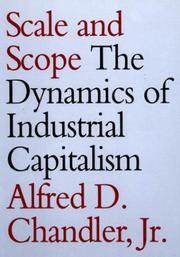
Scale and Scope

Scale and Scope

Why big industrial firms in the US, Britain and Germany rose or lagged, 1880 to 1940.

Alfred D. Chandler Jr.
1990
T1 810 pages · about 13h 30m to read Open Librarygoodreads

Comparative history of managerial capitalism in three countries.

Summary

Chandler compares the development of large industrial enterprise in the United States, Britain and Germany from the 1880s to the 1940s, examining several hundred of the largest firms in each country. It is the comparative sequel to The Visible Hand and to Strategy and Structure.

His explanation of why some firms and countries came to dominate industries rests on what he calls the three-pronged investment. A firm that made the first large investment in production facilities at minimum efficient scale, plus a national and international marketing and distribution network, plus a professional managerial hierarchy, obtained a first-mover advantage that later entrants could rarely overcome. The scale investment alone was insufficient, because a plant running below capacity has higher unit costs than a smaller one running full.

The comparative finding is the book's core. American firms practised what he calls competitive managerial capitalism, with professional management and dispersed ownership. German firms practised cooperative managerial capitalism, with professional management, close bank relationships and legal cartels that stabilised markets. British firms practised personal capitalism, with founding families retaining control, refusing to hire professional managers and declining to make the scale investments, which he argues is why Britain lost leadership in the new industries of the second industrial revolution.

The book is long, heavily empirical and demanding. The British decline thesis has been substantially contested by historians who argue that British firms responded rationally to their own market conditions and that Chandler's sample and criteria favour his conclusion. The three-pronged investment framework remains widely used.

Key takeaways 7

  1. First movers in capital-intensive industries obtained durable advantage by making three investments together: production at minimum efficient scale, distribution and marketing networks, and professional management.
  2. Investment in scale alone fails, because a plant operating below capacity has higher unit costs than a smaller plant running full.
  3. Organisational capability accumulated inside a firm is the asset that later entrants cannot buy, which is why first-mover advantage persisted for decades in these industries.
  4. British firms lost leadership in the new industries because founding families retained control and refused to hire professional managers or make the required scale investments.
  5. German industrial firms combined professional management with bank relationships and legal cartels, which stabilised markets and permitted long-horizon investment.
  6. Economies of scope, meaning using the same facilities and distribution for related products, drove diversification more than any portfolio logic did.
  7. The competitive position of national economies in this period was determined by the organisational form their large firms adopted rather than by resources or capital availability.

Who should read it

Investors and strategists who want the comparative historical basis for first-mover advantage and the role of organisational capability in industrial competition.

About Alfred D. Chandler Jr.

Professor of business history at Harvard Business School; won a Pulitzer Prize for The Visible Hand and died in 2007.

Strategy and Structure established that firms adopt the multidivisional form once they diversify, and The Visible Hand showed how salaried managers displaced market coordination inside large American enterprises - the source texts for how conglomerates and holding companies are analysed. Scale and Scope extends the comparison to Britain and Germany and explains why different ownership patterns produced different corporate structures.

Similar books 6

Chosen by shared topics, the entries that hold them, and the people who recommended both.
Alfred D. Chandler Jr. · 1977

How salaried managers replaced markets in coordinating US business, 1840 to 1920.

“Chandler, Alfred. The Visible Hand. Harvard, 1977.” — Paul Graham

Source: The Refragmentation — Paul Graham (bibliography)

Recommended by: Paul Graham

Alfred D. Chandler Jr. · 1962

How DuPont, GM, Standard Oil and Sears built the multidivisional firm.
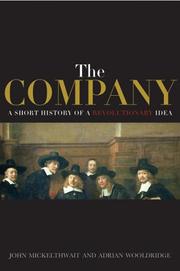
John Micklethwait, Adrian Wooldridge · 2003

A short history of the joint stock company, from trading charters to multinationals.

“Mickelthwaite, John, and Adrian Wooldridge. The Company. Modern Library, 2003.” — Paul Graham

Source: The Refragmentation — Paul Graham (bibliography)

Recommended by: Paul Graham

Alfred P. Sloan Jr., Alfred D. Chandler Jr. · 1963

The decentralised structure and financial controls that ran General Motors.

“Alfred P. Sloan Jr., My Years With General Motors (New York: Doubleday & Company, 1964)” — Michael Mauboussin

Source: Market-Expected Return on Investment: Bridging Accounting and Valuation, page 19

Recommended by: Michael Mauboussin, Mohnish Pabrai and 2 others

Geoffrey Jones · 2010

A business history of the global beauty industry, from Avon and Coty to Shiseido.

R. James Breiding · 2012

Why a small country without resources produces so many world-leading companies.

Where it sits in the reference 6

Academics
Business models
Business themes
Business themes
Mental models
Business themes

Topics 4

General HistoryBusiness and ManagementCompany HistoriesEconomic and Business History