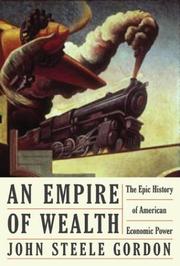
An Empire of Wealth
How the United States came to dominate the world by creating wealth, not by force.
Summary
The reference has not verified this book in detail; the summary states only what the title, author and subject establish.
Gordon argues that, unlike Rome or Britain, which held their power through force of arms and politics, the United States came to dominate the world by creating wealth and the capacity to create more of it. He sets out to show that this capacity is the true source of the nation's global influence, and he tells American economic history from that starting point.
The sources read in this pass give only this frame and do not set out the book's chapters, periods or cases. The P.S. edition adds 16 pages of author interviews and recommended reading. It was published in 2004.
Key takeaways 3
- Gordon treats wealth creation, not military power, as the basis of American influence.
- He contrasts the United States with empires that ruled by force.
- The book frames American history as economic history.
Who should read it
Readers who want an economic history of the United States built around the creation of wealth.
Who recommended it 1 · 1 direct
Similar books 6
Chosen by shared topics, the entries that hold them, and the people who recommended both.
Revolutions in power, transport, communication and organisation that made big firms.
Recommended by: Paul Graham
Four centuries of American capitalism, told through its next big things.
Recommended by: Chamath Palihapitiya
Why 1,800 American firms merged into about 150 at the turn of the century.
The history of oil from the first Pennsylvania well to the Gulf War.
“He's also an extremely articulate writer, as evidenced by his Pulitzer prize for his early work on oil, The Prize.” — Bill Gates
Source: The Quest — Gates Notes
Recommended by: Bill Gates, Jim Collins, Mohnish Pabrai and 4 others
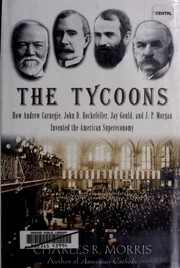
Carnegie, Rockefeller, Gould and Morgan, and the industrial economy they built.
“on how four great builders of the 19th century built the world we live in today” — Marc Andreessen
Source: @pmarca, companion thread to 'It's Time to Build'
Recommended by: Marc Andreessen
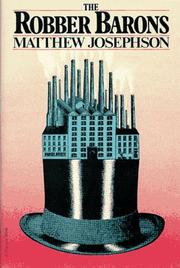
How Vanderbilt, Gould, Rockefeller, Morgan and others built 19th-century fortunes.
Recommended by: Larry Ellison
Where it sits in the reference 1
Topics 3
As an Amazon Associate I earn from qualifying purchases.