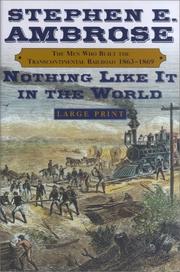
Nothing Like It in the World
The investors, politicians and workers who built the transcontinental railroad.
Summary
Ambrose tells the story of the men who built the transcontinental railroad: the investors who risked their businesses and money, the politicians who understood its importance, the engineers and surveyors who risked and sometimes lost their lives, and the Irish and Chinese immigrants, defeated Confederate soldiers and other labourers who did the hard and dangerous work on the tracks.
The federal government set two companies, the Union Pacific and the Central Pacific, against each other in a race for funding that rewarded speed over caution. Locomotives, rails and spikes were shipped from the East through Panama or around South America to reach the West, or hauled across the country to the Plains. Ambrose presents the project as a feat of engineering, vision and courage that consumed huge amounts of brainpower, muscle and sweat.
Key takeaways 4
- The transcontinental railroad needed investors, politicians, engineers and immigrant labour together.
- The government set the Union Pacific and Central Pacific racing each other for funding.
- The race rewarded speed over caution.
- Irish and Chinese immigrants and former Confederate soldiers did much of the work.
Who should read it
Readers interested in how a great infrastructure project was financed, organised and built.
Similar books 6
Chosen by shared topics, the entries that hold them, and the people who recommended both.
Why US railroads declined under regulation and recovered after the Staggers Act.
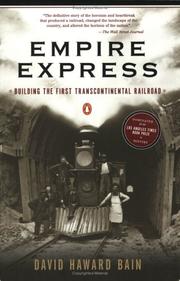
The building of America's first transcontinental railroad, from plan to completion.
How the transcontinental railroads, the first corporate giants, reshaped America.
The history of the railways in the United States.
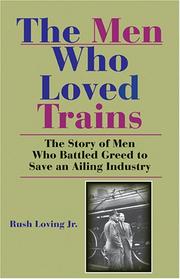
Conrail, deregulation and how US railroads returned to profit.

How Penn Central collapsed in 1970, then the largest US corporate failure.