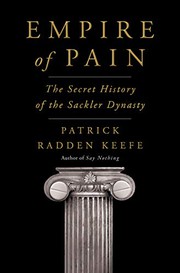
Empire of Pain: The Secret History of the Sackler Dynasty
Three generations of the Sackler family and how Purdue Pharma sold OxyContin.
The definitive account of the family, the company and the marketing.
Summary
Keefe, a New Yorker writer, wrote a three-generation history of the Sackler family and of Purdue Pharma, working from litigation documents, depositions and interviews, with the family and the company declining to cooperate.
The first generation is Arthur Sackler, a psychiatrist who built the modern pharmaceutical marketing industry. Keefe documents his innovations: advertising prescription drugs to physicians through medical journals he also controlled, funding research that supported the products he marketed, using apparently independent medical experts as promoters, and the Valium campaign that made it the most prescribed drug in the world. These methods, developed in the 1950s and 1960s, are the direct ancestors of what Purdue later did.
The central narrative is OxyContin. Purdue launched it in 1996 with a marketing campaign asserting that the extended-release formulation made addiction rare, a claim resting on a single sentence in a letter to a medical journal that had no supporting study. The company funded pain societies and continuing medical education that promoted aggressive opioid prescribing, deployed a large sales force with volume-based incentives, and targeted high-prescribing physicians. Keefe documents that the company had internal evidence of abuse and diversion early and continued.
The legal history covers the 2007 guilty plea by the company and three executives to misbranding, the fine paid without individual imprisonment, the subsequent continuation of the same practices, the litigation by states and municipalities, the bankruptcy filing used to resolve claims, and the settlement structure that protected family members who had not filed for bankruptcy themselves.
Keefe writes with a clear position and the family disputes his account. The documentary basis is extensive. The book is the standard account of how a marketing campaign produced a public health catastrophe and of how the legal system handled it.
Key takeaways 7
- Arthur Sackler built the modern pharmaceutical marketing industry by advertising to physicians through journals he also controlled.
- Funding apparently independent medical experts and research to support a marketed product was established practice decades before OxyContin.
- Purdue's claim that extended release made addiction rare rested on a single unsupported sentence in a letter to a medical journal.
- Funding pain societies and continuing medical education shifted prescribing norms across the profession rather than persuading individual doctors.
- Sales incentives based on prescription volume directed effort toward the highest-prescribing physicians.
- The 2007 guilty plea produced fines without individual imprisonment, and the practices continued afterward.
- Bankruptcy was used to resolve claims in a structure that protected family members who had not themselves filed.
Who should read it
Operators and investors in regulated industries who want a documented case of how marketing, professional influence and legal strategy combined to produce and then manage a catastrophe.
Similar books 6
Chosen by shared topics, the entries that hold them, and the people who recommended both.
The US drug industry from patent medicines to the opioid epidemic and the Sacklers.

The drug distributors behind the opioid epidemic and the lawsuits against them.
How Genentech turned genetic engineering into a company, from its founders' accounts.
Recommended by: Laura Deming, Patrick Collison

How OxyContin was marketed, and how its abuse spread across America.
Inside Vertex's first years: how a new drug company tries to discover a drug.
Recommended by: Laura Deming
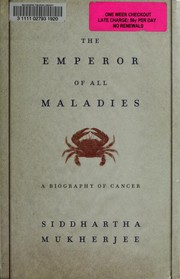
A biography of cancer, by a physician and oncologist.
“I loved Mukherjee's 2015 TED Talk and his brilliant book about cancer, The Emperor of All Maladies, which won the Pulitzer Prize in 2011.” — Bill Gates
Source: My thoughts on 'The Gene: An Intimate History' — Gates Notes
Recommended by: Bill Gates, Andrew Chen, Laura R Walker and 1 other
Where it sits in the reference 2
Topics 5
As an Amazon Associate I earn from qualifying purchases.