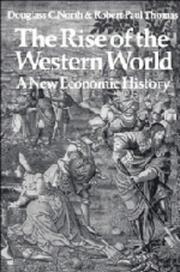
Rise of the Western World: A New Economic History
A new economic history of how Western Europe grew rich.
Who recommended it 2 · 2 direct
“Douglass C. North and Robert P. Thomas, The Rise of the Western World (Cambridge: Cambridge University Press, 1981), 102’119”
Similar books 6
Chosen by shared topics, the entries that hold them, and the people who recommended both.
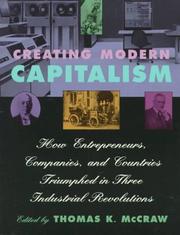
How Britain, Germany, Japan and the US each built their own form of capitalism.
Recommended by: Mohnish Pabrai
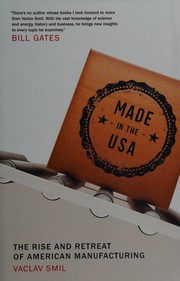
How American manufacturing rose to lead the world, and why its share then fell.
Recommended by: Mohnish Pabrai, Bill Gates
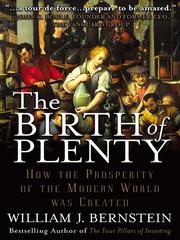
The four institutions modern growth needed, from property rights to capital markets.
“This is morally and ethically unacceptable,” the essay concluded, “but also a corruption of capitalism itself.” 3 For a marvelous exposition of this great era—as well as a compelling and delightful experience—I urge you to read William Bernstein’s fine new book, The Birth of Plenty. 3” — John C. Bogle
Source: Creating Sound Governance: The Shareholder’s Perspective, page 3
Recommended by: John C. Bogle, Mohnish Pabrai, Morgan Housel

Why Britain's empire after the Seven Years War struggled with the costs of power.
Recommended by: Mohnish Pabrai
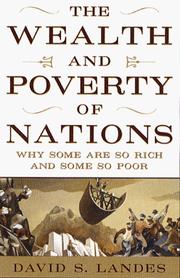
Why some nations grew rich over 500 years, with culture as the deciding factor.
Recommended by: Charlie Munger, Li Lu, Mohnish Pabrai and 1 other

Why living standards stayed flat in a Malthusian trap until the industrial era.
Recommended by: Patrick Collison
Where it sits in the reference 1
Topics 3
As an Amazon Associate I earn from qualifying purchases.