Economic theory, firms and competition
Textbooks and research on microeconomics, econometrics, game theory, contract theory and the firm, and works on antitrust, monopoly, utility regulation and corporate control.
Start here
- The Economics of RegulationAlfred E. Kahn, 1970
- Antitrust LawRichard A. Posner, 1976
- The Economic Institutions of CapitalismOliver E. Williamson, 1985
- Principles of Public Utility RatesJames C. Bonbright, 1961
- The Antitrust ParadoxRobert H. Bork, 1978
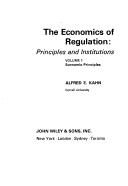
The economics of regulated industries, from pricing at marginal cost to competition.
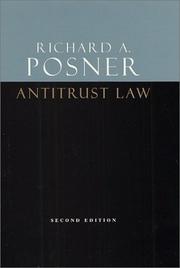
Antitrust should rest on the economics of efficiency, not on protecting competitors.
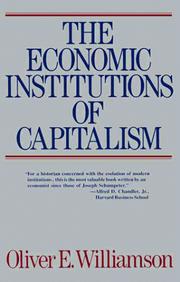
Why firms exist: transaction costs decide when to own rather than contract.
“Oliver E. Williamson, The Economic Institutions of Capitalism: Firms, Markets, Relational Contracting (New York: Free Press, 1985)” — Michael Mauboussin
Source: Measuring the Moat: Assessing the Magnitude and Sustainability of Value Creation
Recommended by: Michael Mauboussin
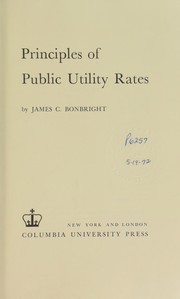
The economic criteria for setting regulated utility rates.
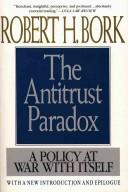
Antitrust law should pursue one goal, consumer welfare, and drop the rest.
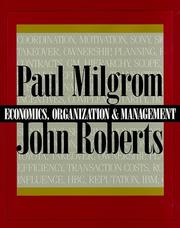
How firms are organised, using agency, contracts and transaction-cost economics.
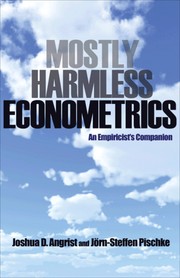
A practical guide to causal inference: regression, instruments, differences.
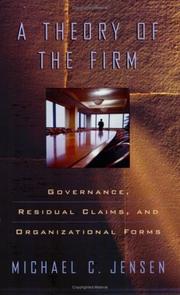
Collected papers on agency theory and the forces that make corporations efficient.
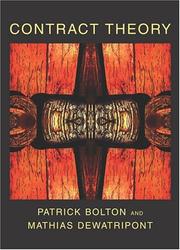
The graduate textbook on contracts between parties with different information.
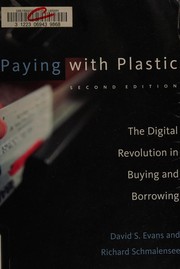
The economics and history of payment cards, from Diners Club to interchange fees.
Papers on complexity economics and increasing returns, with commentary.
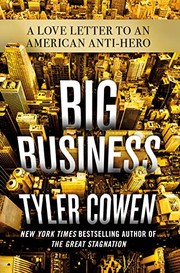
A defence of American business on fraud, CEO pay, monopoly and tech, issue by issue.
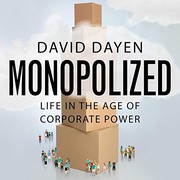
Market concentration in America, sector by sector, through the people it affects.
How share buybacks replaced reinvestment in American firms and held down wages.

How monopoly intermediaries take the earnings of writers, musicians and artists.
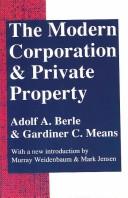
Ownership of big US firms had split from control, which passed to managers.
“The fact is that when Berle and Means published their landmark study, The Modern Corporation and Private Property; in 1932, there were, almost literally, no institutional owners of stocks.” — John C. Bogle
Source: The Ownership of Corporate America — Rights and Responsibilities, page 1
Recommended by: John C. Bogle, Michael Mauboussin
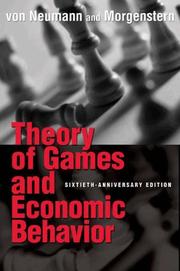
The founding of game theory: expected utility and strategy among interacting players.
“John von Neumann and Oskar Morgenstern, Theory of Games and Economic Behavior (Princeton, NJ: Princeton University Press, 1944)” — Michael Mauboussin
Source: Competitive Advantage Period: The Neglected Value Driver
Recommended by: Michael Mauboussin
How large corporations run by a technostructure of experts plan rather than compete.
Recommended by: Paul Graham

Industrial-organisation economics of brand choice and bilateral market power.
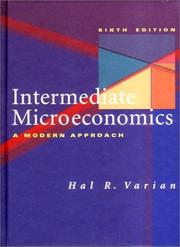
A microeconomics textbook, game theory and strategic behaviour included.
Recommended by: Tim O’Reilly
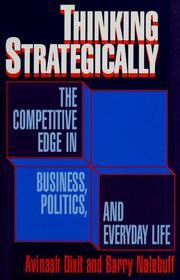
Game theory without maths: look forward, reason back, and make threats credible.
“Avinash K. Dixit and Barry J. Nalebuff, Thinking Strategically (New York: W. W. Norton & Co., 1991)” — Michael Mauboussin
Source: Measuring the Moat: Assessing the Magnitude and Sustainability of Value Creation, page 47
Recommended by: Jim Collins, Michael Mauboussin
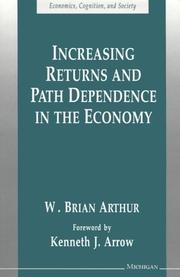
Papers showing positive feedback and lock-in govern parts of the economy.
“Arthur, W. Brian, Increasing Returns and Path Dependence in the Economy (Ann Arbor, MI: University of Michigan Press, 1994)” — Michael Mauboussin
Source: Importance of Diverse Thinking: Why the Santa Fe Institute Can Make You a Better Investor, page 11
Recommended by: Michael Mauboussin
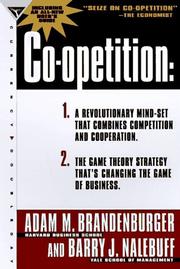
Game theory applied to business, which is cooperative and competitive at once.
“Adam M. Brandenburger and Barry J. Nalebuff, Co-opetition (New York: Currency Doubleday, 1996)” — Michael Mauboussin
Source: The Ecosystem Edge, page 10
Recommended by: Michael Mauboussin, Mohnish Pabrai
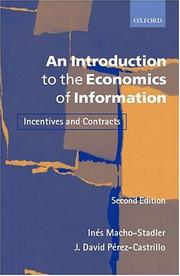
A graduate textbook on contracts under asymmetric information.
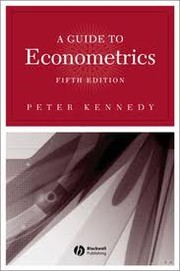
What each econometric technique is for, what it assumes and what goes wrong.
Recommended by: Nassim Nicholas Taleb
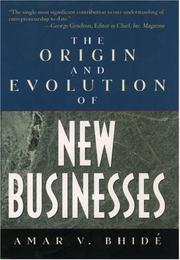
How new businesses start and evolve, and how their founders plan them.
“Branson reinforces Amar Bhide’s (author of The Origin and Evolution of New Businesses) thesis that most startups are low-risk ventures.” — Mohnish Pabrai
Source: Pabrai Investment Funds letter to partners (101103), page 6
Recommended by: Mohnish Pabrai

How rituals, ceremonies and mass advertising create common knowledge.
Recommended by: Mark Zuckerberg
A widely used introductory textbook of microeconomics.
Recommended by: Mohnish Pabrai
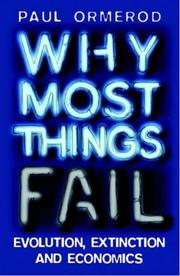
Why most business and policy ventures fail, read through biology and extinction.
Recommended by: Mohnish Pabrai, Ev Williams
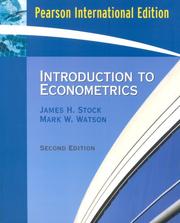
A textbook introduction to econometrics.
Recommended by: Eric Weinstein
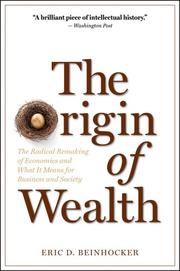
The economy as a complex evolving system rather than one in equilibrium.
“Eric D. Beinhocker, The Origin of Wealth: Evolution, Complexity, and the Radical Remaking of Economics (Boston: Harvard Business School Press, 2006)” — Michael Mauboussin
Source: Thirty Years: Reflections on the Ten Attributes of Great Investors, page 17
Recommended by: Michael Mauboussin, Ryan Peterson
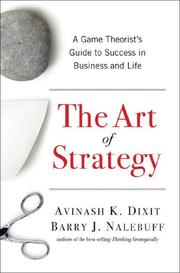
Game theory without maths, with new examples: commitment, signals, bargaining.
“for business, see Avinash K. Dixit and Barry J. Nalebuff, The Art of Strategy (New York: W.W. Norton & Company, 2008)” — Michael Mauboussin
Source: The Colonel Blotto Game: Transitivity and How to Win When You’re an Underdog, page 8
Recommended by: Michael Mauboussin, Marc Andreessen
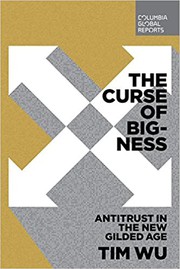
How antitrust shrank to a consumer price test, and the case for breaking up giants.
“Gustavo Grullon, Yelena Larkin, and Roni Michaely, “Are U.S. Industries Becoming More Concentrated?” Review of Finance, Vol. 23, No. 4, July 2019, 697-743 and Tim Wu, The Curse of Bigness: Antitrust in the New Gilded Age (New York: Columbia Global Reports, 2018)” — Michael Mauboussin
Source: Public to Private Equity in the United States: A Long-Term Look, page 60
Recommended by: Michael Mauboussin, Jeff Jordan
How economics can explain tastes rather than take them as given.
Recommended by: Eric Weinstein
A political history of American monopoly and of the tradition that fought it.
“Matt Stoller, Goliath: The 100-Year War Between Monopoly Power and Democracy (New York: Simon & Schuster, 2019)” — Michael Mauboussin
Source: Market Share: Understanding Competitive Advantage Through Market Power, page 46
Recommended by: Michael Mauboussin, David Heinemeier Hansson
An institutionalist study of American business firms and labour organisations.
Recommended by: Paul Graham
 John Kenneth Galbraithwrote 1 book here
 Michael E. Porterwrote 1 book here
 Tyler Cowenwrote 1 book here
 Michael Mauboussinrecommends 10 books here
 Mohnish Pabrairecommends 4 books here
 Paul Grahamrecommends 2 books here
 Eric Weinsteinrecommends 2 books here
 Jim Collinsrecommends 1 book here
 John C. Boglerecommends 1 book here
 Marc Andreessenrecommends 1 book here
 Nassim Nicholas Talebrecommends 1 book here
 David Heinemeier Hanssonrecommends 1 book here
 Ev Williamsrecommends 1 book here
 Jeff Jordanrecommends 1 book here
 Mark Zuckerbergrecommends 1 book here