
Rational Ritual
How rituals, ceremonies and mass advertising create common knowledge.
Common knowledge and coordination; why rituals and advertising work
Summary
Chwe, a political scientist, gives a game-theoretic account of why public rituals, ceremonies, advertising during mass audience events and mass media exist. His argument turns on common knowledge, meaning the situation in which everyone knows something, everyone knows that everyone knows it, and so on without limit.
His claim is that coordination problems require common knowledge rather than merely shared knowledge. In a coordination problem each person wants to act only if enough others act, so knowing the fact yourself is insufficient; you must know that others know it, and that they know you know. Rituals solve this because participants see each other seeing. A circular seating arrangement, a public ceremony, a broadcast watched simultaneously by millions all generate common knowledge in a way that private communication of the same information does not.
He applies this across examples: the French Revolution's public festivals, royal progresses, religious ritual, the design of public squares, the pricing of Super Bowl advertising, and the difference between broadcast and targeted media. His treatment of advertising is the most cited: advertisers pay a premium for large simultaneous audiences partly because a product everyone knows everyone has seen is more valuable for goods whose worth depends on other people using them.
The book is short, formally rigorous and clearly written. Its limitation is that the mechanism, while genuinely explanatory, is presented as accounting for more of ritual's function than it plausibly does, and Chwe does not engage much with anthropological accounts that give other explanations.
Key takeaways 7
- Coordination requires common knowledge, meaning everyone knows the fact and knows that everyone else knows it, which private communication of the same fact does not produce.
- Public rituals generate common knowledge because participants observe each other observing, which is why the physical arrangement of an audience matters.
- Advertisers pay a premium for large simultaneous audiences because common knowledge that a product is widely known raises its value for goods whose worth depends on adoption by others.
- Circular and inward-facing arrangements in public spaces and buildings exist because they let each participant see the others, which generates common knowledge.
- Authoritarian regimes suppress public assembly specifically because assembly generates common knowledge of shared discontent that individuals already privately hold.
- Targeted media that reaches the same number of people privately does not substitute for broadcast in creating common knowledge.
- The content of a ritual matters less than the fact that it is publicly and mutually observed, which explains why rituals persist after their stated meanings are forgotten.
Who should read it
Founders and marketers thinking about network effects, launch coordination and why broadcast advertising differs from targeted reach.
Who recommended it 1
Similar books 6
Chosen by shared topics, the entries that hold them, and the people who recommended both.

Common knowledge, where everyone knows that everyone knows, and what it does.
Recommended by: Bill Gates
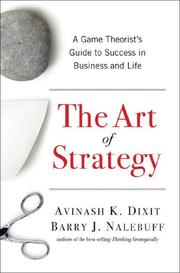
Game theory without maths, with new examples: commitment, signals, bargaining.
“for business, see Avinash K. Dixit and Barry J. Nalebuff, The Art of Strategy (New York: W.W. Norton & Company, 2008)” — Michael Mauboussin
Source: The Colonel Blotto Game: Transitivity and How to Win When You’re an Underdog, page 8
Recommended by: Michael Mauboussin, Marc Andreessen
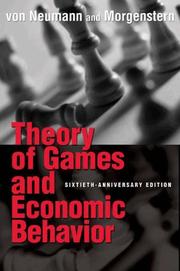
The founding of game theory: expected utility and strategy among interacting players.
“John von Neumann and Oskar Morgenstern, Theory of Games and Economic Behavior (Princeton, NJ: Princeton University Press, 1944)” — Michael Mauboussin
Source: Competitive Advantage Period: The Neglected Value Driver
Recommended by: Michael Mauboussin
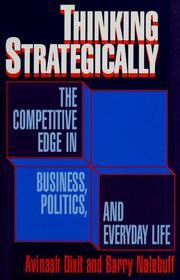
Game theory without maths: look forward, reason back, and make threats credible.
“Avinash K. Dixit and Barry J. Nalebuff, Thinking Strategically (New York: W. W. Norton & Co., 1991)” — Michael Mauboussin
Source: Measuring the Moat: Assessing the Magnitude and Sustainability of Value Creation, page 47
Recommended by: Jim Collins, Michael Mauboussin

How economics can explain tastes rather than take them as given.
Recommended by: Eric Weinstein
Papers on complexity economics and increasing returns, with commentary.