Predatory Value Extraction
How share buybacks replaced reinvestment in American firms and held down wages.
The academic case that repurchases hollow out corporate investment.
Summary
William Lazonick and Jang-Sup Shin argue that American corporations shifted from retaining earnings and reinvesting them to downsizing and distributing cash to shareholders, and that this shift explains stagnant wages, reduced innovation and rising inequality. The book extends Lazonick's long research programme on corporate resource allocation.
Their central empirical claim concerns buybacks. Lazonick's data show that large American corporations have distributed the great majority of net income as dividends and share repurchases over recent decades, with buybacks alone frequently exceeding half. He argues that the Securities and Exchange Commission's Rule 10b-18, adopted in 1982, made large open-market repurchases safe from manipulation liability and thereby created the practice. He connects this to executive compensation in stock options, which gives management a direct interest in raising the share price during vesting windows.
The theoretical argument is against the shareholder value doctrine itself. Lazonick and Shin hold that shareholders are not the residual claimants that theory assumes, because public shareholders in the secondary market supply no capital to the firm; the actual risk-bearers are taxpayers who funded the underlying research and workers who invested in firm-specific skills. They call the resulting distribution value extraction and treat hedge fund activism as its most aggressive form. The argument is contested. Critics respond that buybacks return capital to shareholders who reinvest it elsewhere, that Lazonick's payout ratios use denominators that overstate the picture, and that firms with genuine investment opportunities do not lack capital. The data assembly is the book's contribution regardless of where a reader lands.
Key takeaways 7
- Large American corporations have distributed most of their net income through dividends and buybacks rather than reinvesting it.
- Rule 10b-18, adopted in 1982, made large open-market repurchases legally safe and created the modern buyback practice.
- Stock option compensation gives executives a direct financial interest in raising the share price during specific windows.
- Public shareholders buying in the secondary market supply no capital to the firm, which undermines their claim to be residual claimants.
- Taxpayers funding basic research and workers investing in firm-specific skills bear risk without any claim on the returns.
- Lazonick and Shin argue that hedge fund activism extracts accumulated value rather than correcting managerial failure.
- Innovation requires committed finance that tolerates uncertainty over long periods, which distribution-oriented firms cannot supply.
Who should read it
Investors and directors examining capital allocation policy who want the strongest empirical case against buyback-led distribution.
Similar books 6
Chosen by shared topics, the entries that hold them, and the people who recommended both.
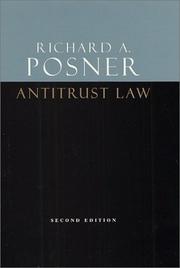
Antitrust should rest on the economics of efficiency, not on protecting competitors.
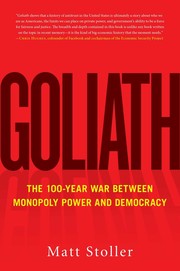
A political history of American monopoly and of the tradition that fought it.
“Matt Stoller, Goliath: The 100-Year War Between Monopoly Power and Democracy (New York: Simon & Schuster, 2019)” — Michael Mauboussin
Source: Market Share: Understanding Competitive Advantage Through Market Power, page 46
Recommended by: Michael Mauboussin, David Heinemeier Hansson
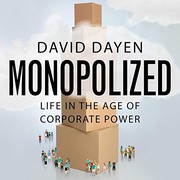
Market concentration in America, sector by sector, through the people it affects.
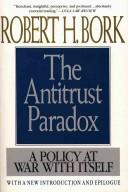
Antitrust law should pursue one goal, consumer welfare, and drop the rest.

How antitrust shrank to a consumer price test, and the case for breaking up giants.
“Gustavo Grullon, Yelena Larkin, and Roni Michaely, “Are U.S. Industries Becoming More Concentrated?” Review of Finance, Vol. 23, No. 4, July 2019, 697-743 and Tim Wu, The Curse of Bigness: Antitrust in the New Gilded Age (New York: Columbia Global Reports, 2018)” — Michael Mauboussin
Source: Public to Private Equity in the United States: A Long-Term Look, page 60
Recommended by: Michael Mauboussin, Jeff Jordan
The economics of regulated industries, from pricing at marginal cost to competition.