Complexity and systems science
Books on chaos, networks, emergence, scaling, causality and the Santa Fe Institute view of economies as complex systems.
Start here
- ScaleGeoffrey West, 2017
- The Book of WhyJudea Pearl, Dana Mackenzie, 2018
- CyberneticsNorbert Wiener, 1948
- Order Out of ChaosIlya Prigogine, Isabelle Stengers, 1984
- Complexity: The Emerging Science at the Edge of Order and ChaosM. Mitchell Waldrop, 1992
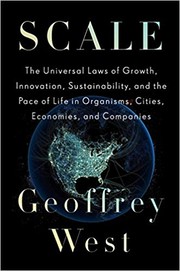
Why organisms, cities and companies follow power laws set by their supply networks.
“Geoffrey West, Scale: The Universal Laws of Growth, Innovation, Sustainability, and the Pace of Life in Organisms, Cities, Economies, and Companies (New York: Penguin Press, 2017), 26” — Michael Mauboussin
Source: Underestimating the Red Queen: Measuring Growth and Maintenance Investments, page 18
Recommended by: Michael Mauboussin, Nat Eliason and 4 others
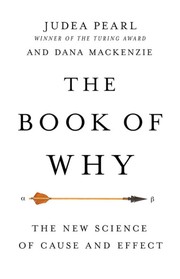
How the science of cause and effect moved past 'correlation is not causation'.
Recommended by: Bill Gates, Keith Rabois, Naval Ravikant

Control and communication in animals and machines run on the same principles.
How irreversible processes in thermodynamics bring order out of disorder.

The founding of the Santa Fe Institute and the people who built complexity science.
“Much of the work is being carried out in conjunction with a broad, interdisciplinary effort underway at the Santa Fe Institute, ably chronicled in a new book, Complexity by Mitchell Waldrop.” — Bill Miller
Source: 1992 Q4 Market Commentary
Recommended by: Bill Miller, Michael Mauboussin, Bill Gurley and 2 others

How machines and economies grow so complex that they behave like living systems.
“Had we read Kevin Kelly’s new book, Out of Control: The Rise of Neo- Biological Civilization, we would have realized that complex adaptive systems like the market need a long time to adjust to certain kinds of new information and they will do so in ways impossible to specify in advance.” — Bill Miller
Source: 1994 Q2 Market Commentary
Recommended by: Bill Miller, Cynthia Johnson and 3 others
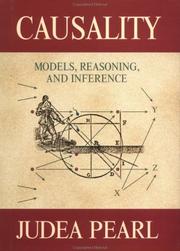
A mathematical theory of causation for statistics, AI, economics and science.
Big changes in human affairs emerge from the bottom up rather than by design.
“Everything else written by Matt Ridley. Matt is a scientist, optimist, and forward thinker. One of my favorite authors.” — Naval Ravikant
Source: Naval's Recommended Reading — The Almanack of Naval Ravikant
Recommended by: Naval Ravikant
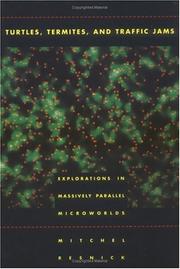
Computer tools that help people, even children, explore how complex systems work.
“The first challenge to the centralized mindset comes from a delightful book by MIT Professor Mitchel Resnick, “Turtles, Termites, and Traffic Jams.” — Michael Mauboussin
Source: The Invisible Lead Steer: New Answers to Old Questions About the Stock Market, page 3
Recommended by: Michael Mauboussin

A graduate text on power laws, fractals and critical points in complex systems.
Recommended by: Nassim Nicholas Taleb
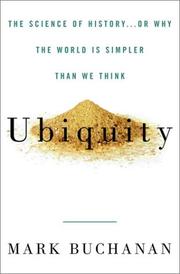
Self-organised criticality: why earthquakes and crashes come in all sizes.
“Mark Buchanan, Ubiquity: The Science of History . . . Or Why the World is Simpler Than We Think (New York: Crown Publishers, 2000)” — Michael Mauboussin
Source: Interdisciplinary Perspectives on Risk, page 5
Recommended by: Michael Mauboussin
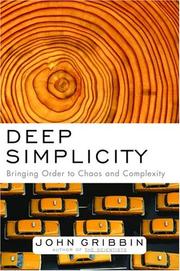
Chaos and complexity theory: how simple rules produce complex behaviour.
Recommended by: Charlie Munger
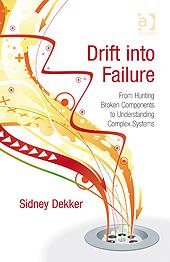
How complex systems, from subprime lending to space shuttles, drift into failure.
Papers on complexity economics and increasing returns, with commentary.
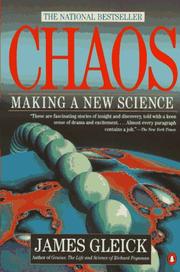
How scientists found order in chaos, from nonlinearity to the butterfly effect.
Recommended by: Jim Collins, Naval Ravikant, Stewart Brand

How economics copied the maths of 19th-century physics, and what that cost it.
“Mirowski, Philip, More Heat than Light: Economics as Social Physics, Physics as Nature’s Economics (Cambridge: Cambridge University Press, 1989)” — Michael Mauboussin
Source: Size Matters: The Kelly Criterion and the Importance of Money Management, page 12
Recommended by: Michael Mauboussin, Eric Weinstein

Complexity science and the rules behind order in cells, brains and markets.
Recommended by: Vlad Tenev
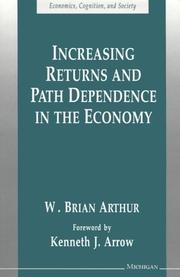
Papers showing positive feedback and lock-in govern parts of the economy.
“Arthur, W. Brian, Increasing Returns and Path Dependence in the Economy (Ann Arbor, MI: University of Michigan Press, 1994)” — Michael Mauboussin
Source: Importance of Diverse Thinking: Why the Santa Fe Institute Can Make You a Better Investor, page 11
Recommended by: Michael Mauboussin
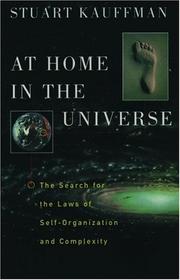
The laws of self-organization and complexity, from the origin of life to firms.
“Kauffman, S. At Home in the Universe: The Search for Laws of SelfOrganization and Complexity, Oxford: Oxford University Press, 1995” — Michael Mauboussin
Source: Shift Happens: On a New Paradigm of the Markets as a Complex Adaptive System, page 15
Recommended by: Michael Mauboussin, Naval Ravikant
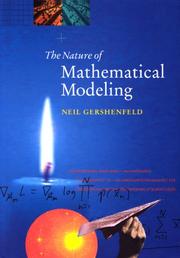
Techniques for mathematical modelling, aimed at simple, efficient computer code.
Recommended by: Patrick Collison, Bret Victor
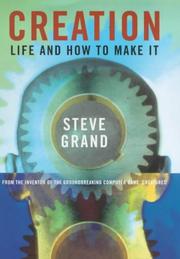
How a game designer built artificial life from simple rules of biology.
Recommended by: Mohnish Pabrai, Jeff Bezos

How simple elements organise themselves into more intelligent, adaptive systems.
Recommended by: Ev Williams

How very simple programs produce complexity, and what that explains in nature.
Recommended by: Mohnish Pabrai, Steve Jurvetson
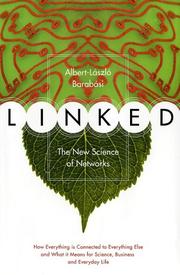
The science of networks, and why social networks, companies and organisms are alike.
“Barabasi, Albert-Laszlo, Linked: How Everything is Connected to Everything Else and What It Means (New York: Perseus Books, 2002)” — Michael Mauboussin
Source: Exploring Network Economics, page 15
Recommended by: Michael Mauboussin, Mohnish Pabrai
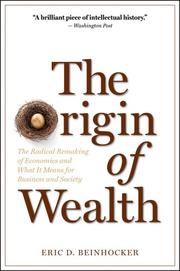
The economy as a complex evolving system rather than one in equilibrium.
“Eric D. Beinhocker, The Origin of Wealth: Evolution, Complexity, and the Radical Remaking of Economics (Boston: Harvard Business School Press, 2006)” — Michael Mauboussin
Source: Thirty Years: Reflections on the Ten Attributes of Great Investors, page 17
Recommended by: Michael Mauboussin, Ryan Peterson

The pattern behind catastrophes from blackouts to oil spills, and how to plan.
Recommended by: Mohnish Pabrai
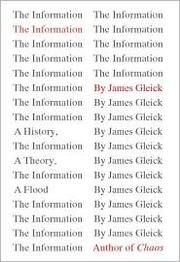
A history of information, from African talking drums to the theory that measures it.
Recommended by: Patrick Collison, Marc Andreessen and 2 others
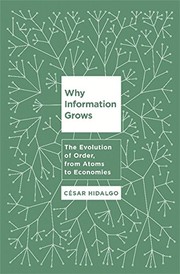
Why some nations prosper, explained by how information and knowledge grow.
Recommended by: Naval Ravikant
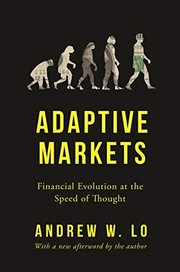
The adaptive markets hypothesis, joining efficient markets and behavioural finance.
“Lo, Andrew W., Adaptive Markets: Financial Evolution at the Speed of Thought (Princeton, NJ: Princeton University Press, 2017)” — Michael Mauboussin
Source: Who Is On the Other Side? You Need Good BAIT to Land a Winner, page 40
Recommended by: Michael Mauboussin



 Michael Mauboussinrecommends 11 books here
 Naval Ravikantrecommends 6 books here
 Mohnish Pabrairecommends 4 books here
 Bill Millerrecommends 3 books here
 Ev Williamsrecommends 3 books here
 Stewart Brandrecommends 3 books here
 Patrick Collisonrecommends 2 books here
 Steve Jurvetsonrecommends 2 books here
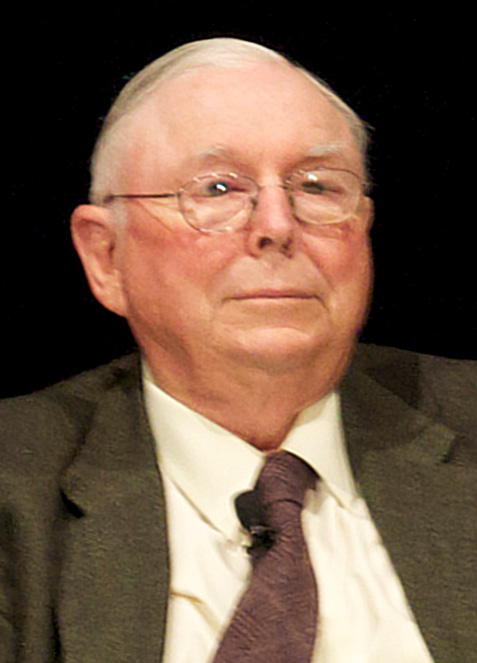 Charlie Mungerrecommends 1 book here
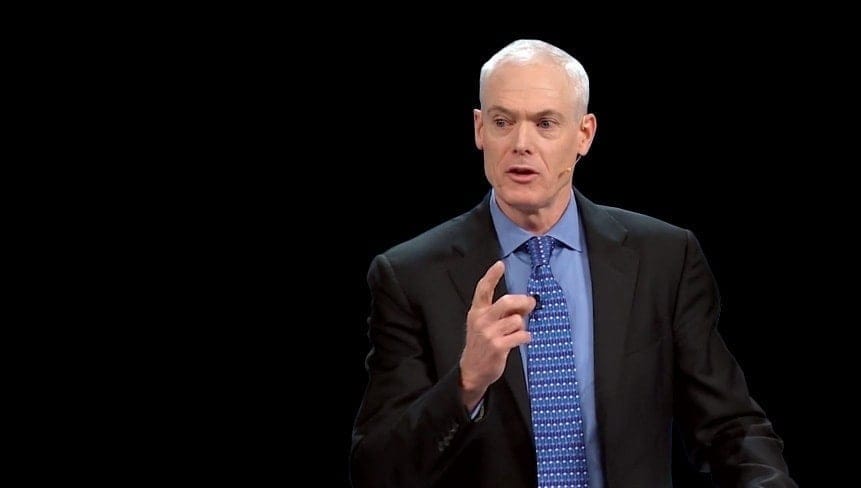 Jim Collinsrecommends 1 book here
 Marc Andreessenrecommends 1 book here
 Nassim Nicholas Talebrecommends 1 book here
Show all 27
 Marc Benioffrecommends 1 book here
 Bill Gatesrecommends 1 book here
 Bill Gurleyrecommends 1 book here
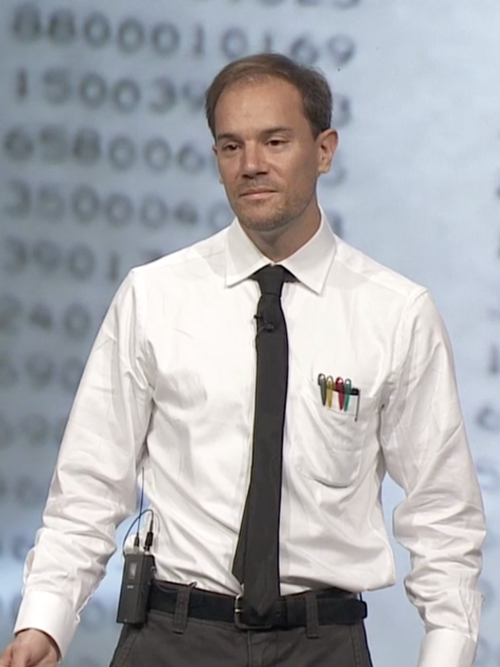 Bret Victorrecommends 1 book here
 Cynthia Johnsonrecommends 1 book here
 Eric Weinsteinrecommends 1 book here
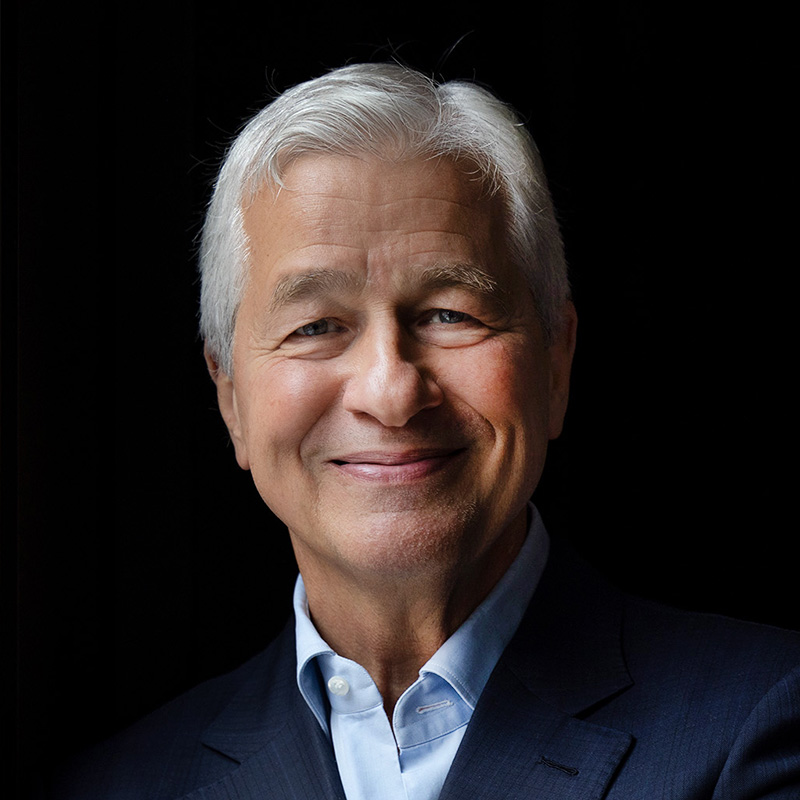 Jamie Dimonrecommends 1 book here
 Jeff Bezosrecommends 1 book here
 Keith Raboisrecommends 1 book here
 Mark Zuckerbergrecommends 1 book here
 Nat Eliasonrecommends 1 book here
 Ryan Petersenrecommends 1 book here
 Vinod Khoslarecommends 1 book here
 Vlad Tenevrecommends 1 book here