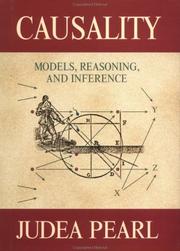
Causality
A mathematical theory of causation for statistics, AI, economics and science.
Summary
Pearl, a leading researcher in the field, gives a comprehensive account of the modern analysis of causation. He shows how causality grew from a vague concept into a mathematical theory with applications in statistics, artificial intelligence, economics, philosophy, cognitive science and the health and social sciences. He unifies the probabilistic, manipulative, counterfactual and structural approaches to causation and devises simple mathematical tools for studying how causal connections relate to statistical associations.
Pearl offers natural models, simple procedures for inference and precise mathematical definitions of causal concepts that traditional texts avoided or made needlessly complicated, and argues for including causal analysis in the standard teaching of statistics, artificial intelligence, business, epidemiology, the social sciences and economics. The first edition changed how causality is treated in statistics, philosophy, computer science, social science and economics, and has been cited in more than 5,000 scientific publications. The revised edition clarifies difficult issues, answers readers' questions and surveys recent advances, for anyone who wants to find meaningful relationships in data or predict the effects of actions and policies.
Key takeaways 4
- Causation can be defined and analysed with precise mathematics rather than left vague.
- Statistical association alone does not establish a causal connection.
- Probabilistic, counterfactual and structural approaches to causation can be unified.
- Causal models let analysts predict the effects of actions and policies from data.
Who should read it
Quantitative investors, economists and data scientists who want the rigorous theory of how to draw causal conclusions from data.
Similar books 6
Chosen by shared topics, the entries that hold them, and the people who recommended both.
How the science of cause and effect moved past 'correlation is not causation'.
Recommended by: Bill Gates, Keith Rabois, Naval Ravikant
What each econometric technique is for, what it assumes and what goes wrong.
Recommended by: Nassim Nicholas Taleb
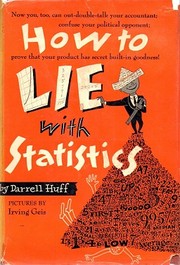
How biased samples, chosen averages and cut-off chart axes make numbers mislead.
“This puckish riff on how math can be manipulated is only 142 pages; most people could read it on a train ride or two, or in an afternoon at the beach. As light as the book is, however, it is nevertheless profound. In one short take after another, Huff picks apart the ways in which marketers use statistics, charts, graphics and other ways of presenting numbers to baffle and trick the public.” — Jason Zweig
Source: Best Books for Investors: A Short Shelf — jasonzweig.com
Recommended by: Bill Gates, Jason Zweig, Mohnish Pabrai and 7 others
A practical guide to causal inference: regression, instruments, differences.
Statistics without the maths, for reading claims: averages, correlation, regression.
Recommended by: Keith Rabois
Regression's assumptions and the causal claims it cannot support.
Recommended by: Nassim Nicholas Taleb
Where it sits in the reference 1
Topics 4
As an Amazon Associate I earn from qualifying purchases.