
Mathematics and Statistics
Pure and applied mathematics, probability, statistics, data analysis and the culture of mathematical thinking. Read by students, quants and anyone who wants numbers to stop lying to them.
Start here
- On Growth and FormD'Arcy Wentworth Thompson, 1917
- Theory of Games and Economic BehaviorJohn von Neumann, Oskar Morgenstern, 1944
- How to Lie with StatisticsDarrell Huff, 1954
- The Strategy of ConflictThomas C. Schelling, 1960
- Beat the DealerEdward O. Thorp, 1962

How mathematics and physical forces shape the forms of living things.
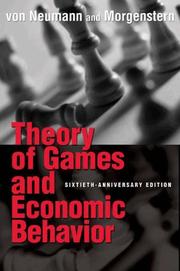
The founding of game theory: expected utility and strategy among interacting players.
“John von Neumann and Oskar Morgenstern, Theory of Games and Economic Behavior (Princeton, NJ: Princeton University Press, 1944)” — Michael Mauboussin
Source: Competitive Advantage Period: The Neglected Value Driver
Recommended by: Michael Mauboussin
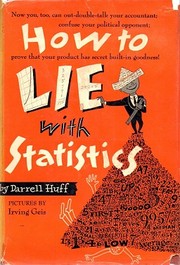
How biased samples, chosen averages and cut-off chart axes make numbers mislead.
“This puckish riff on how math can be manipulated is only 142 pages; most people could read it on a train ride or two, or in an afternoon at the beach. As light as the book is, however, it is nevertheless profound. In one short take after another, Huff picks apart the ways in which marketers use statistics, charts, graphics and other ways of presenting numbers to baffle and trick the public.” — Jason Zweig
Source: Best Books for Investors: A Short Shelf — jasonzweig.com
Recommended by: Bill Gates, Jason Zweig, Mohnish Pabrai and 7 others
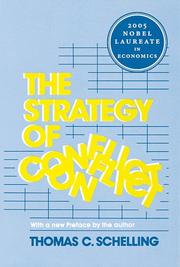
Conflict as bargaining: commitment, credible threats and focal points.
Recommended by: Naval Ravikant
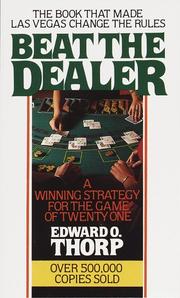
The first proven way to beat blackjack, by counting the cards left in the deck.
“Many years ago, Ed Thorp, an MIT professor of mathematics, literally “wrote the book” on blackjack. It’s called “Beat the Dealer.” — Howard Marks
Source: A Case in Point, page 1
Recommended by: Howard Marks, Michael Mauboussin
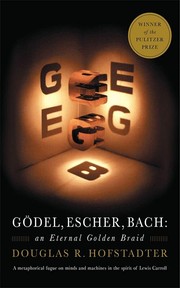
How a mind could arise from parts, traced through Godel, Escher and Bach.
Recommended by: Nat Eliason, Naval Ravikant, Demis Hassabis and 3 others
Computer tournaments of the prisoner's dilemma show why tit-for-tat wins.
“That clever but unsatisfying explanation eventually led me to the book and article that I'm recommending this year - The Evolution of Cooperation by Robert Axelrod, and a related journal article1 (jointly, "EoC").” — Mark Leonard
Source: Constellation Software Inc. 2014 President's Letter, page 5
Recommended by: Mark Leonard, Michael Mauboussin and 2 others
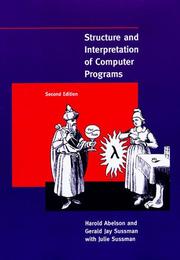
MIT's introductory computer science text, taught through Lisp and Scheme.
Recommended by: Bret Victor, Patrick Collison, Paul Graham and 1 other
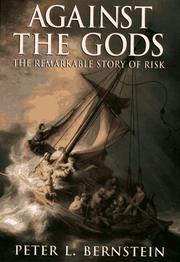
How people learned to measure risk, from early probability to portfolio theory.
“(Risk is the subject of Peter Bernstein’s wonderful new book, Against the Gods: The Remarkable Story of Risk.)” — Bill Miller
Source: 1996 Q3 Market Commentary
Recommended by: Bill Miller, Charles de Vaulx, Howard Marks and 9 others
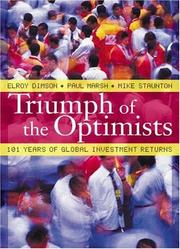
Stock, bond and bill returns for sixteen countries from 1900 to 2000.
“Recently Dimson, Marsh, and Staunton, in their wonderful monograph, The Triumph of the Optimists, have examined the real dividend-growth rates in 16 nations over the entire 20th century.” — William J. Bernstein
Source: Efficient Frontier, issue 702 (2002)
Recommended by: Jason Zweig, Mohnish Pabrai and 1 other
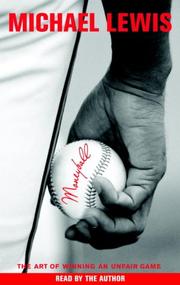
How the Oakland A's won on a small payroll by buying players the market undervalued.
“Moneyball by Michael Lewis was a great example of how a baseball team could be successfully constructed using principles that were very similar to those used by value investors.” — Bill Nygren
Source: Bill Nygren Market Commentary | 1Q14
Recommended by: Bill Nygren, Jim Collins, Joel Greenblatt and 5 others
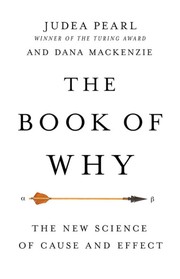
How the science of cause and effect moved past 'correlation is not causation'.
Recommended by: Bill Gates, Keith Rabois, Naval Ravikant

Control and communication in animals and machines run on the same principles.
The graduate engineering text on probability and stochastic processes.
Recommended by: Nassim Nicholas Taleb
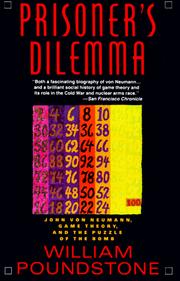
Von Neumann, game theory and the prisoner's dilemma in nuclear strategy.
“For international relations, see William Poundstone, Prisoner’s Dilemma (New York: Doubleday, 1992)” — Michael Mauboussin
Source: The Colonel Blotto Game: Transitivity and How to Win When You’re an Underdog, page 8
Recommended by: Michael Mauboussin
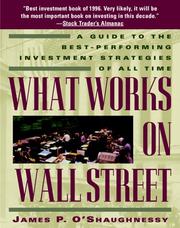
Decades of US stock data testing which selection rules have beaten the market.
“Strongly Recommended. Great data.” — Mohnish Pabrai
Source: Mohnish's Bookshelf — Books on Investing & Capital Allocation, entry 336
Recommended by: Mohnish Pabrai, Patrick O'Shaughnessy and 2 others
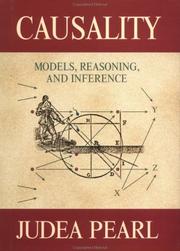
A mathematical theory of causation for statistics, AI, economics and science.
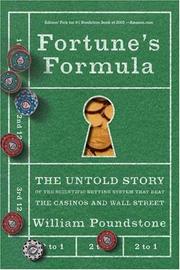
The Kelly criterion for sizing bets, from Bell Labs to casinos and hedge funds.
“For a less technical discussion, see William Poundstone, Fortune’s Formula: The Untold Story of the Scientific Betting System that Beat the Casinos and Wall Street (New York: Hill and Wang, 2005), 197-201” — Michael Mauboussin
Source: Thoughts on Dividends and Buybacks: Clearing Up Some Common Misconceptions, page 10
Recommended by: Michael Mauboussin, Mohnish Pabrai
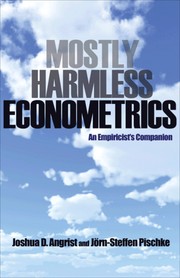
A practical guide to causal inference: regression, instruments, differences.
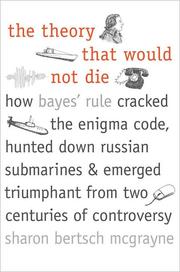
The history of Bayes' rule and the long fight over it.
“To read more about the controversy, see Sharon Bertsch McGrayne, The Theory That Would Not Die: How Bayes’ Rule Cracked the Enigma Code, Hunted Down Russian Submarines, and Emerged Triumphant from Two Centuries of Controversy (New Haven, CT: Yale University Press, 2011).” — Michael Mauboussin
Source: Cultivating Your Judgment Skills: A Framework for Improving the Quality of Decisions, page 13
Recommended by: Michael Mauboussin
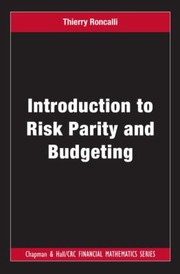
The mathematics of risk parity: risk contributions and risk budgeting.
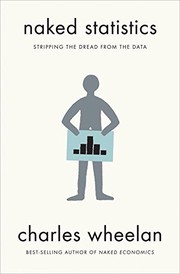
Statistics without the maths, for reading claims: averages, correlation, regression.
Recommended by: Keith Rabois
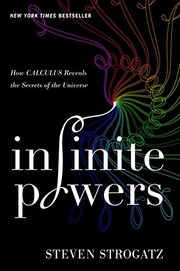
How calculus works and how it made modern technology possible.
Recommended by: Michael Mauboussin, Naval Ravikant

A graduate text on power laws, fractals and critical points in complex systems.
Recommended by: Nassim Nicholas Taleb
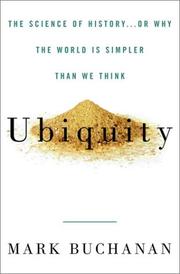
Self-organised criticality: why earthquakes and crashes come in all sizes.
“Mark Buchanan, Ubiquity: The Science of History . . . Or Why the World is Simpler Than We Think (New York: Crown Publishers, 2000)” — Michael Mauboussin
Source: Interdisciplinary Perspectives on Risk, page 5
Recommended by: Michael Mauboussin
How judges, juries and scientists weighed evidence before formal statistics.
Recommended by: Nassim Nicholas Taleb
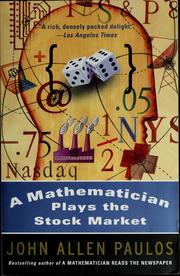
A mathematician's WorldCom losses, used to explain errors of probability in markets.
Recommended by: Mohnish Pabrai
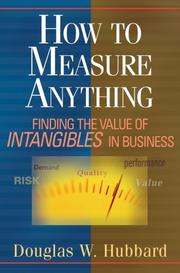
Why anything a manager cares about can be measured, and how to measure it.
“Hubbard, Douglas, How to Measure Anything: Finding the Value of Intangibles in Business (Hoboken, NJ: John Wiley & Sons, 2007)” — Michael Mauboussin
Source: The Wisdom of Crowds in Markets: Crowd Behavior in Prediction, Betting, and Stock Markets
Recommended by: Michael Mauboussin, Julia Galef, Nick Ganju
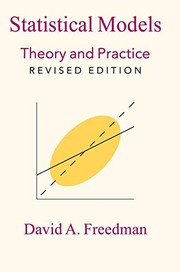
Regression's assumptions and the causal claims it cannot support.
Recommended by: Nassim Nicholas Taleb
The key papers on the Kelly criterion for sizing bets, for and against.
“Leonard C. MacLean, Edward O. Thorp, and William T. Ziemba, eds., The Kelly Capital Growth Investment Criterion: Theory and Practice (Hackensack, NJ: World Scientific, 2011), 823” — Michael Mauboussin
Source: Probabilities and Payoffs: The Practicalities and Psychology of Expected Value
Recommended by: Michael Mauboussin, Nassim Nicholas Taleb
A risk manager's history of quantitative risk and what value-at-risk is for.
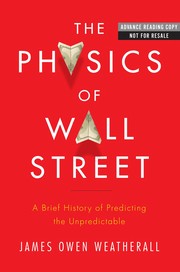
How physicists and mathematicians brought their models into finance.
“But such oversimplification can—and did—create a flawed conclusion.3 2 I am indebted to James Owen Wetherall, physicist, philosopher, and mathematician at the University of California for telling Bachelier’s story in his book, “The Physics of Wall Street, A Brief History of Predicting the Unpredictable” (Houghton Mifflin Harcourt, 2015).” — John C. Bogle
Source: David and Goliath: Who Wins the Quantitative Battle?, page 8
Recommended by: John C. Bogle, Eric Weinstein
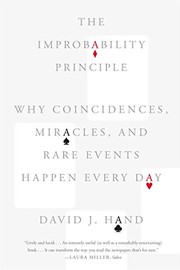
Probability and coincidence, explained for a general reader.
Recommended by: Mohnish Pabrai
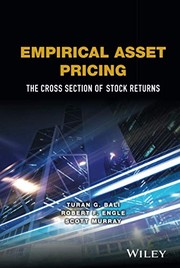
Portfolio sorts and cross-sectional regressions: how to test what predicts returns.
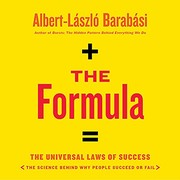
Network science on how success and reputation build up unequally.
“This book transforms how our success-obsessed society approaches their professional careers and long-term goals.” — Vinod Khosla
Source: 2019 Book Recommendations — Vinod Khosla, Medium
Recommended by: Vinod Khosla, Nassim Nicholas Taleb
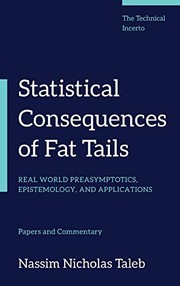
The mathematics of fat-tailed distributions and what they do to statistics.
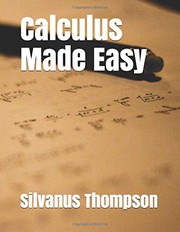
A popular primer that makes calculus clear to readers at every level.
Recommended by: Naval Ravikant
An accessible introduction to the logical foundations of mathematics.
Recommended by: Vlad Zamfir

Why mathematics is worth doing for its beauty, apart from any use.
Recommended by: Patrick Collison, Paul Graham
An introduction to mathematics written to dispel the fear of the subject.
Recommended by: Paul Graham
A guide to the method of solving mathematical problems.
Recommended by: Patrick Collison

The wartime theory of filtering and predicting time series, applied to engineering.
Recommended by: Patrick Collison
Symmetry in art, nature, mathematics and the sciences.
Recommended by: Eric Weinstein
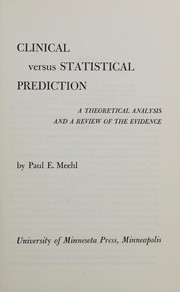
Whether clinical judgement or statistical formulas predict better in psychology.
“Paul E. Meehl, Clinical versus Statistical Prediction: A Theoretical Analysis and a Review of the Evidence (Minneapolis, MN: University of Minnesota Press, 1954)” — Michael Mauboussin
Source: BIN There, Done That: How to Reduce the Sources of Forecasting Error, page 14
Recommended by: Michael Mauboussin, Daniel Kahneman
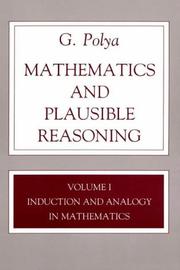
Induction, analogy and the patterns of plausible inference in mathematics.
Recommended by: Patrick Collison
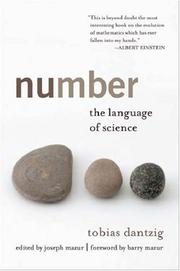
How the concept of number evolved from prehistoric times to the twentieth century.
Recommended by: Bryan Johnson
A primer on the theory of games of strategy, written for non-specialists.
Recommended by: Naval Ravikant
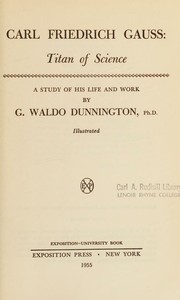
The most comprehensive English life of Germany's greatest mathematician.
Recommended by: Paul Graham
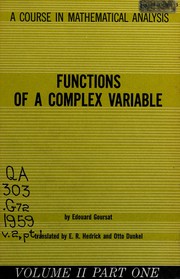
A course in calculus and mathematical analysis.
Recommended by: Patrick Collison
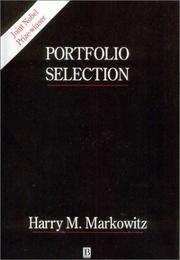
An asset's risk depends on how it moves with the rest of the portfolio.
“Markowitz, Harry M., Portfolio Selection: Efficient Diversification of Investment (New Haven, CT: Yale University Press, 1959)” — Michael Mauboussin
Source: Size Matters: The Kelly Criterion and the Importance of Money Management, page 12
Recommended by: Michael Mauboussin, William J. Bernstein
A system for doing fast, complicated arithmetic in your head.
Recommended by: Paul Graham
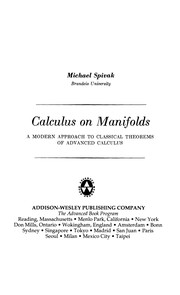
Recommended by: Patrick Collison, Eric Weinstein
A survey by 18 Russian mathematicians of 20 areas of mathematics, from origins on.
Recommended by: Patrick Collison, Bret Victor and 1 other
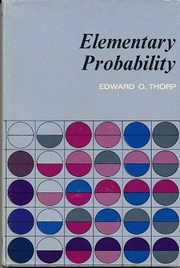
The standard introduction to harmonic analysis for students.
Recommended by: Patrick Collison
A multi-volume monograph on programming algorithms and their analysis.
Recommended by: Patrick Collison, Marc Andreessen and 1 other
An introduction to differential geometry: curves, surfaces and curvature.
Recommended by: Eric Weinstein, John Doerr
Informal ways to study data, from plots to numerical summaries done by hand.
Recommended by: Patrick Collison
The textbook on Einstein's general theory of relativity.
Recommended by: Eric Weinstein
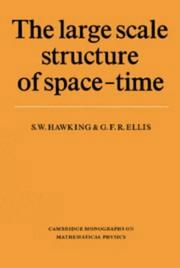
The mathematics of general relativity behind gravitational collapse and singularity.
Recommended by: Eric Weinstein
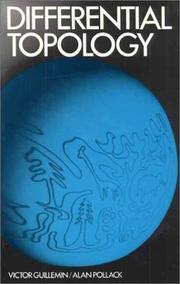
An introductory textbook of differential topology.
Recommended by: Eric Weinstein
General relativity presented for mathematicians.
Recommended by: Eric Weinstein
Design in art, science and mathematics: number, ratio, scale and their logic.
Recommended by: Patrick Collison, Bret Victor
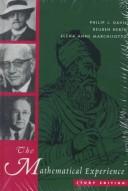
The culture, history and philosophy of mathematics, and how mathematicians work.
Recommended by: Patrick Collison
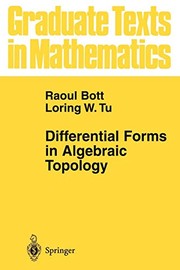
An informal graduate introduction to homotopy and cohomology via differential forms.
Recommended by: Eric Weinstein
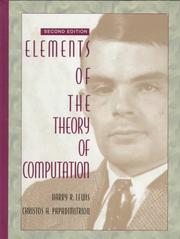
A textbook on formal languages, automata and computational complexity.
Recommended by: Eric Weinstein
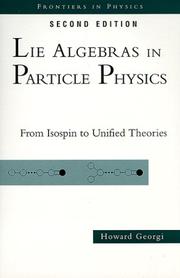
Lectures that teach group theory and Lie algebras for use in particle physics.
Recommended by: Eric Weinstein
An elementary introduction to gauge theory in physics.
Recommended by: Eric Weinstein
The theory and practice of designing statistical graphics, charts and tables.
“The classic text is Edward R. Tufte, The Visual Display of Quantitative Information, 2nd Ed. (Cheshire, CT: Graphics Press, 2001)” — Michael Mauboussin
Source: Feedback: Information as a Basis for Improvement, page 18
Recommended by: Jeff Atwood, Jim Collins, Michael Mauboussin and 3 others
Graduate geometry of surfaces, transformation groups, fields and manifolds.
Recommended by: Eric Weinstein
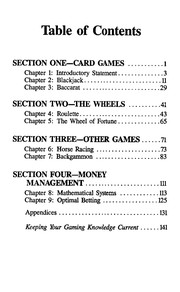
The mathematics of baccarat, backgammon, blackjack and other games of chance.
“In his book, The Mathematics of Gambling, Thorp explains the Kelly system’s attractive features:12 1.” — Michael Mauboussin
Source: Size Matters: The Kelly Criterion and the Importance of Money Management, page 4
Recommended by: Michael Mauboussin

The Atiyah-Singer index formula and its use in gauge-theoretic physics.
Recommended by: Eric Weinstein
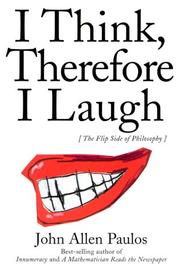
Logic and analytic philosophy explained through jokes.
Recommended by: Mohnish Pabrai, Nassim Nicholas Taleb
Quirky essays on how people perceive and think.
Recommended by: Patrick Collison
Methods for showing data in graphs in science and technology.
Recommended by: Bret Victor
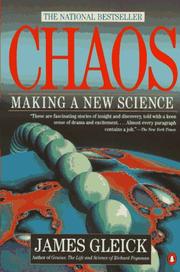
How scientists found order in chaos, from nonlinearity to the butterfly effect.
Recommended by: Jim Collins, Naval Ravikant, Stewart Brand
A graduate tutorial on superstring theory and its attempt to unify physics.
Recommended by: Eric Weinstein
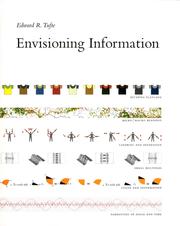
How to show complex information on flat paper or screens, with many examples.
“The bibles of information design. Nothing comparable exists.” — Bret Victor
Source: Links — Bret Victor (his five-star list)
Recommended by: Bret Victor, Jeff Atwood, Jim Collins and 2 others
A university text on the design and analysis of computer algorithms.
Recommended by: Patrick Collison
A text on abstract algebra and how its areas connect.
Recommended by: Patrick Collison
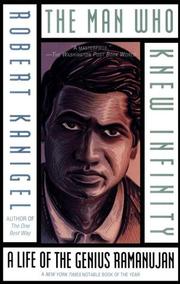
The life of Srinivasa Ramanujan, Indian mathematician, and his work with G. H. Hardy.
Recommended by: Patrick Collison, Paul Graham and 1 other
Game theory without maths: look forward, reason back, and make threats credible.
“Avinash K. Dixit and Barry J. Nalebuff, Thinking Strategically (New York: W. W. Norton & Co., 1991)” — Michael Mauboussin
Source: Measuring the Moat: Assessing the Magnitude and Sustainability of Value Creation, page 47
Recommended by: Jim Collins, Michael Mauboussin
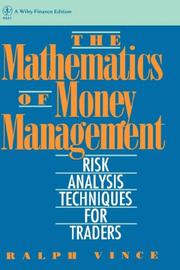
Optimal f and the mathematics of sizing positions and bets.
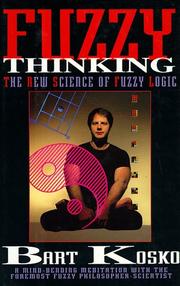
66 short articles on the theory, technology and applications of computer science.
Recommended by: Patrick Collison
A reference on cryptography for programmers, with code in C.
Recommended by: Patrick Collison
The history of the number e, from compound interest to the Gateway Arch.
Recommended by: Patrick Collison
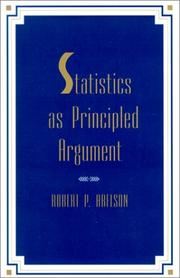
Statistical analysis as argument: how to interpret data and tell a coherent story.
Recommended by: Patrick Collison
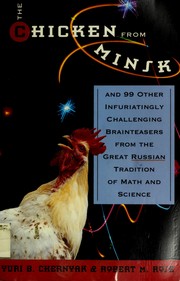
A hundred brain teasers from the Russian tradition of math and physics problems.
Recommended by: Patrick Collison
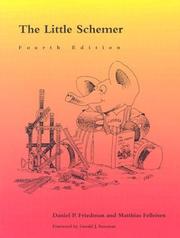
Computing taught as an extension of arithmetic, with programs as recursive functions.
“One of the most unique and effective pedagogic books ever written.” — Bret Victor
Source: Links — Bret Victor (his five-star list)
Recommended by: Bret Victor, Paul Graham, Susan J. Fowler
Problems and algorithms in advanced scientific computation.
Recommended by: Eric Weinstein
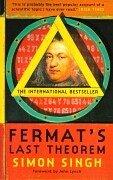
The centuries-long search for a proof of Fermat's Last Theorem.
“And then some blast from the past if you're interested, there's a great book called "Fermat's Enigma" by this guy Simon Singh, which is talking about, you know, Fermat has this theorem, which is X to the N plus Y to the N equal Z to the N.” — Chamath Palihapitiya
Source: Transcript: Chamath Palihapitiya
Recommended by: Chamath Palihapitiya, Mohnish Pabrai
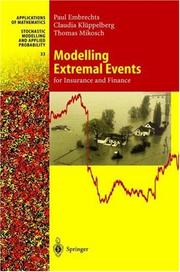
The graduate reference on extreme value theory for insurance and finance.
Recommended by: Nassim Nicholas Taleb
The statistical tools of empirical finance and the questions they test.
“Campbell, John Y., Andrew W. Lo, and A. Craig MacKinley, The Econometrics of Financial Markets (Princeton, NJ: Princeton University Press, 1996)” — Michael Mauboussin
Source: Capital Ideas Revisited: The Prime Directive, Sharks, and The Wisdom of Crowds, page 16
Recommended by: Michael Mauboussin, William J. Bernstein
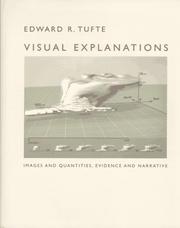
How to present information so that pictures and charts explain clearly.
“The bibles of information design. Nothing comparable exists.” — Bret Victor
Source: Links — Bret Victor (his five-star list)
Recommended by: Bret Victor, Jeff Atwood, Jim Collins and 1 other
What each econometric technique is for, what it assumes and what goes wrong.
Recommended by: Nassim Nicholas Taleb
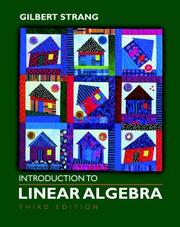
Linear algebra taught through the four fundamental subspaces of a matrix.
Recommended by: Eric Weinstein
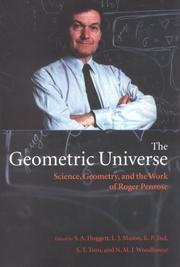
Essays on geometry and physics inspired by the work of Roger Penrose.
Recommended by: Eric Weinstein
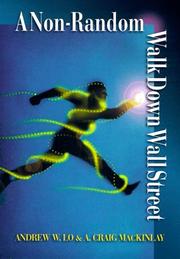
Research papers showing that stock prices do not follow a random walk.
“Andrew W. Lo and A. Craig MacKinlay, A Non-Random Walk Down Wall Street (Princeton, NJ: Princeton University Press, 1999), 4-5” — Michael Mauboussin
Source: Capital Ideas Revisited - Part 2: Thoughts on Beating a Mostly-Efficient Stock Market, page 9
Recommended by: Michael Mauboussin
Problems, strategies and techniques for skill at mathematical problem solving.
Recommended by: Patrick Collison
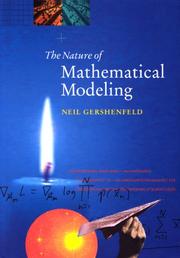
Techniques for mathematical modelling, aimed at simple, efficient computer code.
Recommended by: Patrick Collison, Bret Victor
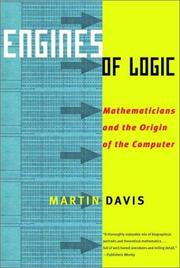
The mathematicians whose logic led to the computer.
Recommended by: Patrick Collison
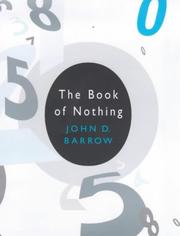
How people have understood nothing, from zero in India to the vacuum in physics.
Recommended by: Naval Ravikant
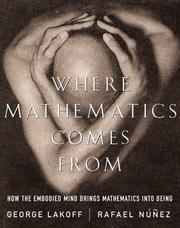
What mathematical ideas mean, and why theorems are true because of what they mean.
Recommended by: Bret Victor
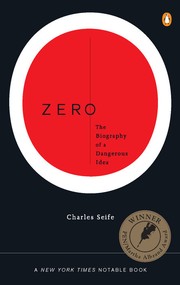
The history of zero, from the Babylonians to its threat to modern physics.
Recommended by: Matt Mullenweg, Bryan Johnson
The mathematical and complexity foundations of cryptography.
Recommended by: Sophie Bakalar
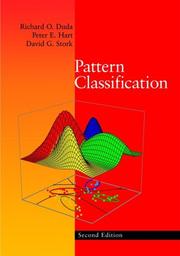
A text and reference on pattern recognition, from speech to character recognition.
Recommended by: Eric Weinstein
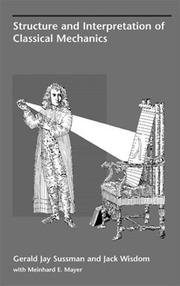
Classical mechanics taught through computational tools for Hamiltonian systems.
Recommended by: Patrick Collison
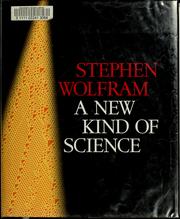
How very simple programs produce complexity, and what that explains in nature.
Recommended by: Mohnish Pabrai, Steve Jurvetson
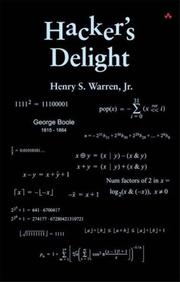
A collection of small programming tricks for working with integers and bits.
Recommended by: Bret Victor
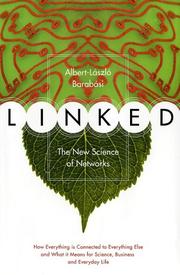
The science of networks, and why social networks, companies and organisms are alike.
“Barabasi, Albert-Laszlo, Linked: How Everything is Connected to Everything Else and What It Means (New York: Perseus Books, 2002)” — Michael Mauboussin
Source: Exploring Network Economics, page 15
Recommended by: Michael Mauboussin, Mohnish Pabrai
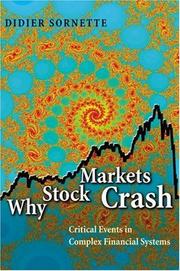
Why big crashes build up inside markets rather than follow the news.
“In an important and fascinating book, Why Stock Markets Crash, geophysicist Didier Sornette argues that stock market distributions comprise two different populations, the body (which you can model with standard theory) and the tail (which relies on completely different mechanisms).” — Michael Mauboussin
Source: Integrating the Outliers: Two Lessons from the St. Petersburg Paradox, page 3
Recommended by: Michael Mauboussin, Nassim Nicholas Taleb
A compact mathematical treatment of pricing derivatives and using them.
Recommended by: Nassim Nicholas Taleb
Riemann's 1859 hypothesis on prime numbers, unsolved for 150 years.
Recommended by: Mohnish Pabrai
A textbook introduction to general relativity with modern techniques.
Recommended by: Patrick Collison
Advanced work on type systems and how they capture programs' run-time behaviour.
Recommended by: Patrick Collison
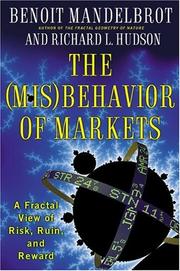
Why standard finance models understate market risk, from fractal geometry's creator.
“(Italics added.) Mandelbrot on Risk, Ruin, and Reward The abstract theories of Karl Popper and Frank Knight can be directly applied to the financial markets, which is exactly what Benoit Mandelbrot, the brilliant inventor of fractal geometry, has done with Richard Hudson in his book The (Mis)Behavior of Markets, ominously subtitled “A Fractal View of Risk, Ruin, and Reward.” — John C. Bogle
Source: Black Monday and Black Swans, page 3
Recommended by: John C. Bogle, Mohnish Pabrai and 2 others
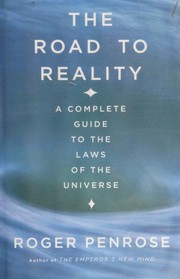
A complete guide in one volume to the laws of physics that govern the universe.
Recommended by: Patrick Collison
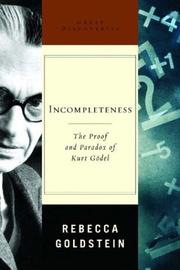
The life and thought of Kurt Gödel, whose theorems changed mathematics.
Recommended by: Patrick Collison
A paradox in which one apple is cut into five pieces and reassembled into two.
Recommended by: Patrick Collison

How seeing turns into showing: turning data and evidence into explanation.
“The bibles of information design. Nothing comparable exists.” — Bret Victor
Source: Links — Bret Victor (his five-star list)
Recommended by: Bret Victor, Jeff Atwood, Patrick Collison
A textbook introduction to econometrics.
Recommended by: Eric Weinstein
The story of algebra and the people behind its formulae, roots and radicals.
Recommended by: Patrick Collison
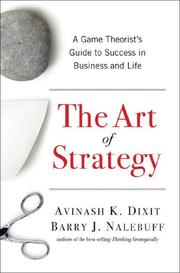
Game theory without maths, with new examples: commitment, signals, bargaining.
“for business, see Avinash K. Dixit and Barry J. Nalebuff, The Art of Strategy (New York: W.W. Norton & Company, 2008)” — Michael Mauboussin
Source: The Colonel Blotto Game: Transitivity and How to Win When You’re an Underdog, page 8
Recommended by: Michael Mauboussin, Marc Andreessen
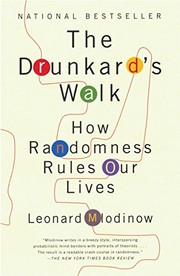
How randomness shapes our lives, the history of probability, and why we misread it.
“I thought it was about the philosophy of randomness, but turned out to be about the math of probability. Might read again some day when in the mood for that.” — Derek Sivers
Source: Derek Sivers book notes (primary, rated list) · Rating: 3/10
Recommended by: Derek Sivers, Michael Mauboussin and 1 other
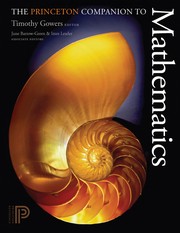
Nearly 200 entries by leading mathematicians on modern maths and its core ideas.
Recommended by: Patrick Collison, Balaji S. Srinivasan
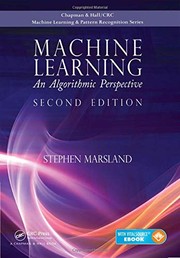
A textbook on machine learning built around its algorithms.
Recommended by: Patrick Collison
What mathematics, beyond numbers and formulas, can say about politics.
“I've got a book called Mathematics of Politics, because I'm interested in both politics, and also the math behind elections, and that stuff.” — Kevin Systrom
Source: The Tim Ferriss Show Transcripts: Kevin Systrom (#369)
Recommended by: Kevin Systrom
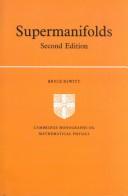
The modern theory of supermanifolds, from analysis over supernumbers on.
Recommended by: Eric Weinstein
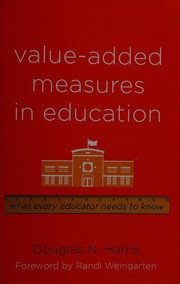
What value-added measures of teaching are and how educators should use them.
Recommended by: Bill Gates
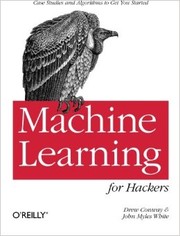
An introduction to machine learning through case studies and algorithms.
Recommended by: Patrick Collison
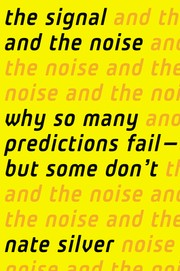
Why some forecasts succeed and most fail, from weather to earthquakes and economics.
“See Gigerenzer, Calculated Risks, 28-29. 14 For a book that treats this topic and more, see Annie Duke, Thinking in Bets: Making Smarter Decisions When You Don't Have All the Facts (New York: Portfolio/Penguin, 2018). 15 For a good discussion of Bayes’ Theorem, see Nate Silver, The Signal and the Noise: Why So Many Predictions Fail—But Some Don’t (New York, The Penguin Press, 2012), 232-261.” — Michael Mauboussin
Source: Confidence: Methods to Assess Confidence Under Uncertainty, page 7
Recommended by: Bill Gates, Michael Mauboussin and 2 others
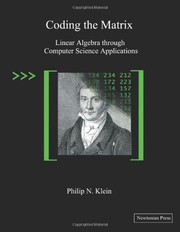
Linear algebra taught through applications in computer science.
Recommended by: Patrick Collison

The differential geometry needed for general relativity and quantum field theory.
Recommended by: Patrick Collison
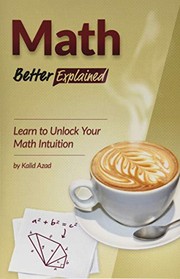
An intuitive guide to the key ideas of high school and college maths.
Recommended by: Naval Ravikant
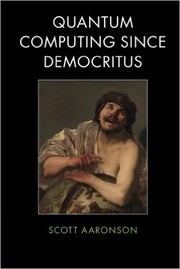
A tour of deep ideas in mathematics, computer science and physics.
Recommended by: Patrick Collison, Emmett Shear
Results in quantum field theory obtained by topological methods.
Recommended by: Eric Weinstein
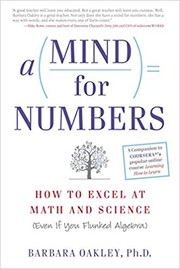
How to learn maths and science, from the course Learning How to Learn.
“Thought I was getting a book about math, but ended up being a surprisingly good book about learning in general. Main points are about diffused thinking vs focused thinking.” — Derek Sivers
Source: Derek Sivers book notes (primary, rated list) · Rating: 8/10
Recommended by: Derek Sivers, Mohnish Pabrai
What the data people leave online reveal about human nature.
Recommended by: Mohnish Pabrai
How mathematical thinking helps avoid errors in everyday reasoning.
“Mathematics as an extension of common sense. I'd like to go through this again, doing and thoroughly understanding all the examples. On the first read, I let it pass over me.” — Derek Sivers
Source: Derek Sivers book notes (primary, rated list) · Rating: 6/10
Recommended by: Bill Gates, Derek Sivers, Keith Rabois and 1 other
The fight over infinitely small quantities that shook the old order in Europe.
Recommended by: Sophie Bakalar
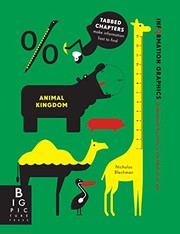
Information graphics for young readers, on animals and science.
Recommended by: Coleen Baik, Jessica Hische
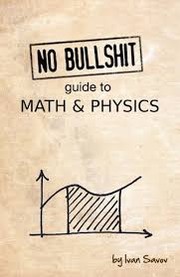
A condensed course in the fundamentals of mathematics, physics and calculus.
Recommended by: Naval Ravikant
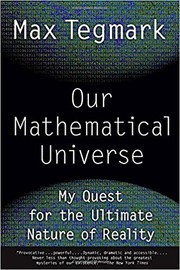
The hypothesis that physical reality is a mathematical structure, through physics.
Recommended by: Mark Cuban
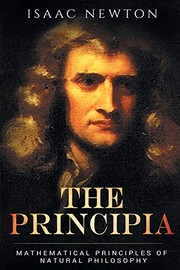
The mathematical principles of time, force and motion behind modern physics.
Recommended by: Paul Graham, Sam Altman
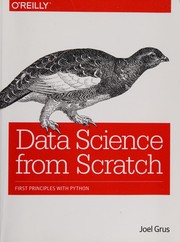
Data science taught from first principles in Python.
Recommended by: Balaji S. Srinivasan
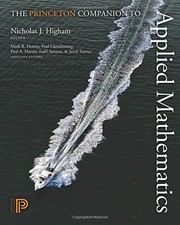
Expert entries on applied maths: concepts, modelling, simulation and applications.
Recommended by: Patrick Collison, Naval Ravikant
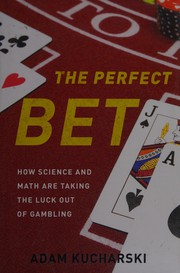
How scientists and mathematicians have tried to beat the house at gambling.
Recommended by: Patrick O'Shaughnessy

The thirteen books of geometry and number theory, built by deduction.
Recommended by: Paul Graham
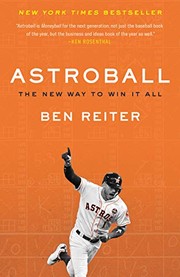
How the Houston Astros used statistics to rebuild their baseball team.
Recommended by: Nick Crocker
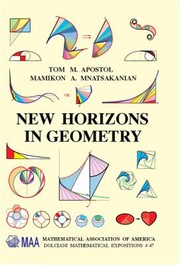
Geometric results that link lengths, areas and volumes and solve hard integrals.
Recommended by: Bret Victor
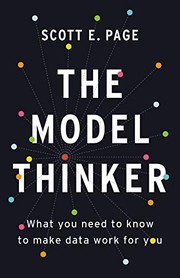
About thirty formal models: what each explains and where each fails.
“Scott E. Page, The Model Thinker: What You Need to Know to Make Data Work for You (New York: Basic Books, 2018), 27-42” — Michael Mauboussin
Source: BIN There, Done That: How to Reduce the Sources of Forecasting Error, page 14
Recommended by: Michael Mauboussin, Keith Rabois
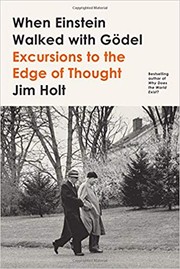
Essays on the deepest ideas of science and mathematics, from time to infinity.
Recommended by: Bryan Johnson
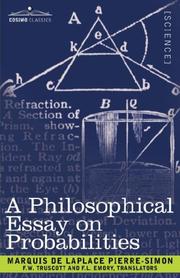
An introduction for lay readers to the concepts and uses of probability theory.
Recommended by: Patrick Collison
A graduate reference on the analysis and geometry used in mathematical physics.
Recommended by: Eric Weinstein
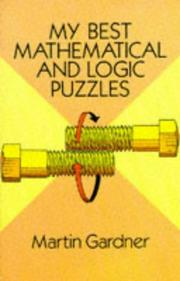
Short math and logic puzzles, from the mutilated chessboard to the fork in the road.
Recommended by: Patrick Collison
Euclid's first six books, with diagrams and proofs drawn in bright coloured shapes.
Recommended by: Patrick Collison
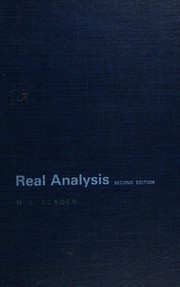
A mathematician's notes on a satire set in a two-dimensional world.
Recommended by: Bryan Johnson
A first course in physics and its mathematics for the ardent amateur.
Recommended by: Patrick Collison, Eric Weinstein
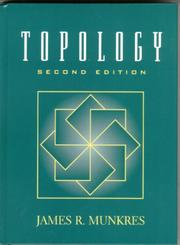
A funny tour of the numbers behind life, games, food and space.
Recommended by: Catriona Wallace
 Edward O. Thorpwrote 4 books here
 Andrew W. Lowrote 2 books here
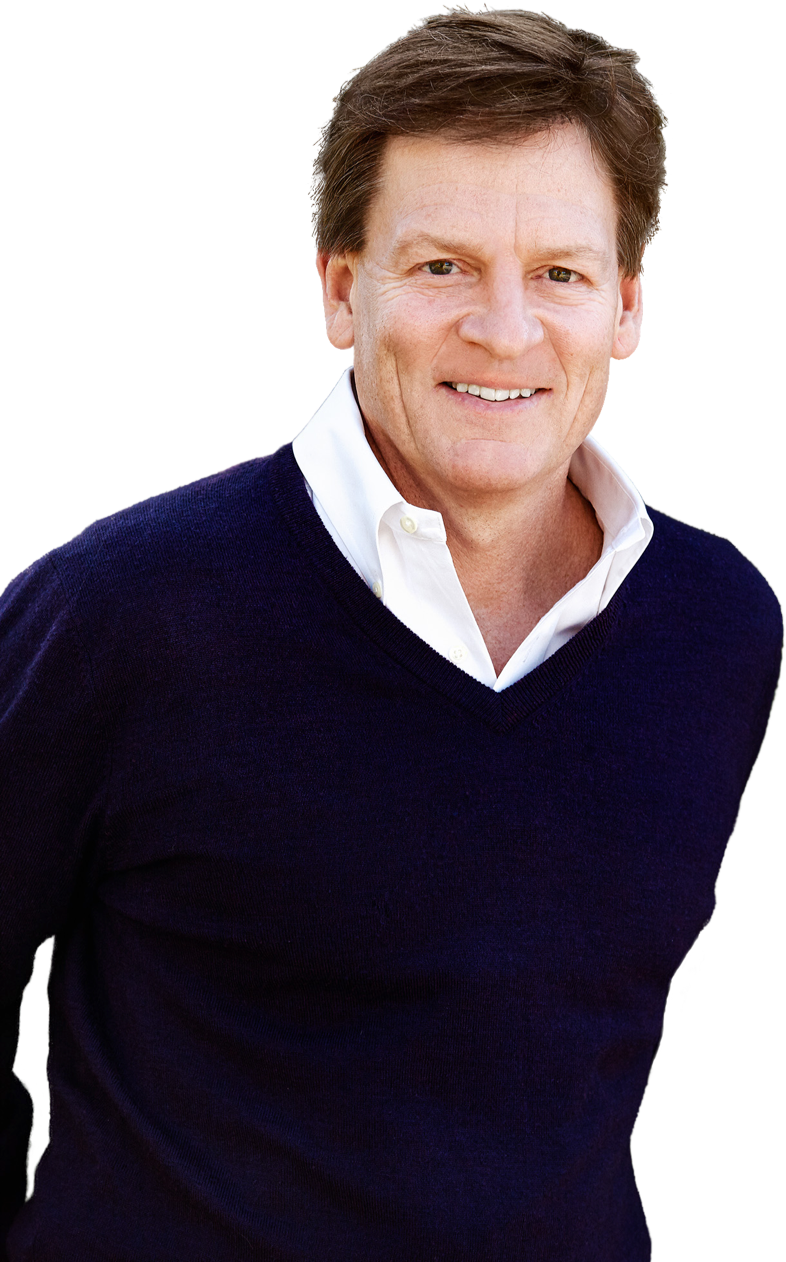 Michael Lewiswrote 1 book here
 Nassim Nicholas Talebwrote 1 book here
 James P. O'Shaughnessywrote 1 book here
 Patrick Collisonrecommends 53 books here
 Eric Weinsteinrecommends 26 books here
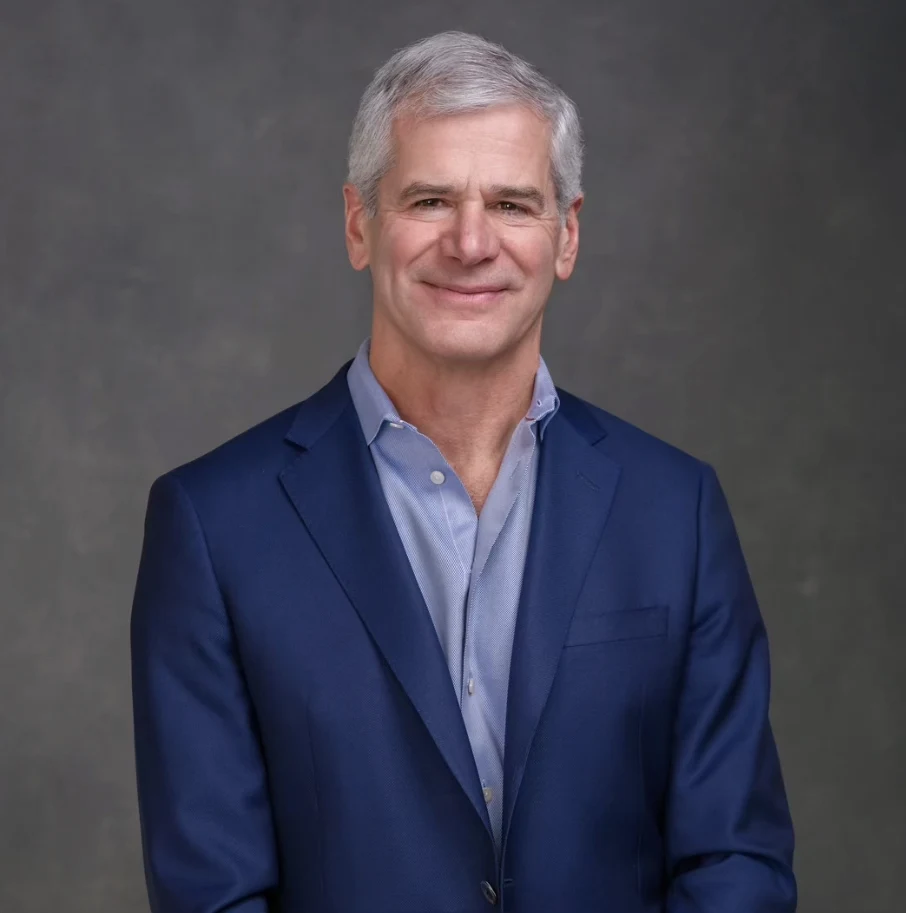 Michael Mauboussinrecommends 25 books here
 Mohnish Pabrairecommends 17 books hereNassim Nicholas Talebrecommends 13 books here
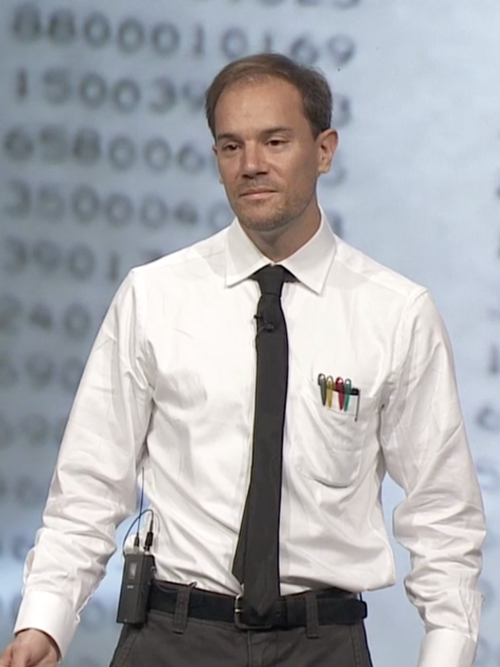 Bret Victorrecommends 13 books here
 Naval Ravikantrecommends 13 books here
 Paul Grahamrecommends 9 books here
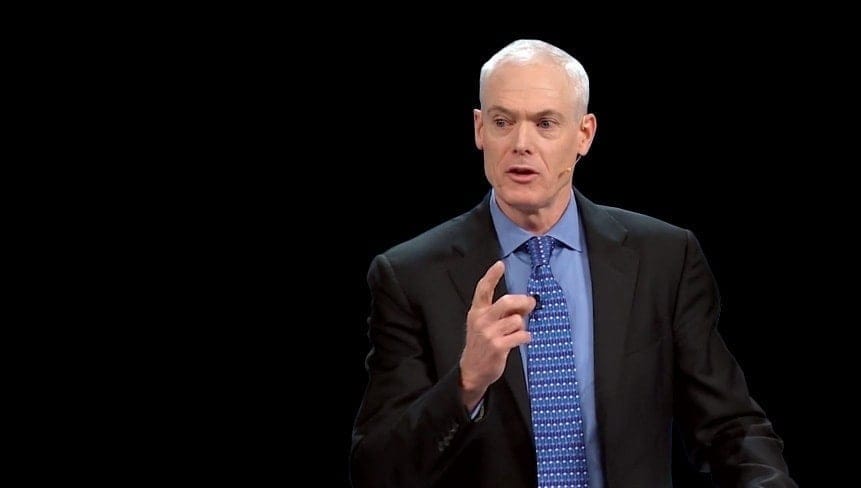 Jim Collinsrecommends 7 books here
 Bill Gatesrecommends 5 books here
 Bryan Johnsonrecommends 4 books here
Show all 62
 Jeff Atwoodrecommends 4 books here
 Keith Raboisrecommends 4 books here
 John C. Boglerecommends 3 books here
 Marc Andreessenrecommends 3 books here
 Jason Zweigrecommends 3 books here
 Derek Siversrecommends 3 books here
 Howard Marksrecommends 2 books here
 Seth Klarmanrecommends 2 books here
 Balaji S. Srinivasanrecommends 2 books here
 Ev Williamsrecommends 2 books here
 Max Levchinrecommends 2 books here
 Nat Eliasonrecommends 2 books here
 Steve Jurvetsonrecommends 2 books here
 Daniel Kahnemanrecommends 1 book here
 Bill Millerrecommends 1 book here
 John Doerrrecommends 1 book here
 Kevin Kellyrecommends 1 book here
 Morgan Houselrecommends 1 book here
 Bill Nygrenrecommends 1 book here
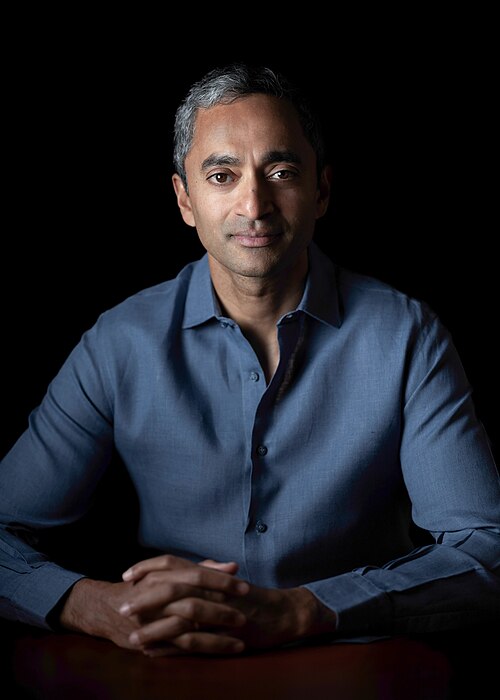 Chamath Palihapitiyarecommends 1 book here
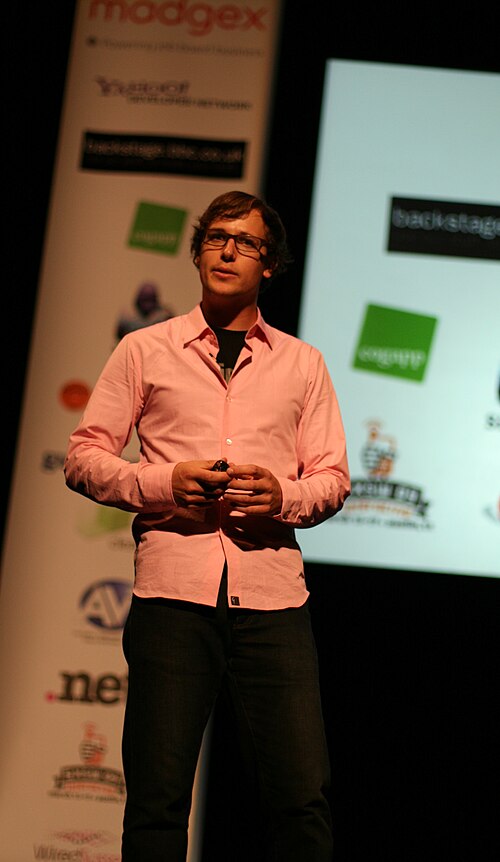 Daniel Burkarecommends 1 book here
 Demis Hassabisrecommends 1 book here
 Emmett Shearrecommends 1 book here
 Jessica Hischerecommends 1 book here
 Jordan Hughesrecommends 1 book here
 Julia Galefrecommends 1 book here
 Kevin Roserecommends 1 book here
 Kevin Systromrecommends 1 book here
 Mark Cubanrecommends 1 book here
 Matt Mullenwegrecommends 1 book here
 Nick Crockerrecommends 1 book here
 Raoul Palrecommends 1 book here
 Sam Altmanrecommends 1 book here
 Stewart Brandrecommends 1 book here
 Susan J. Fowlerrecommends 1 book here
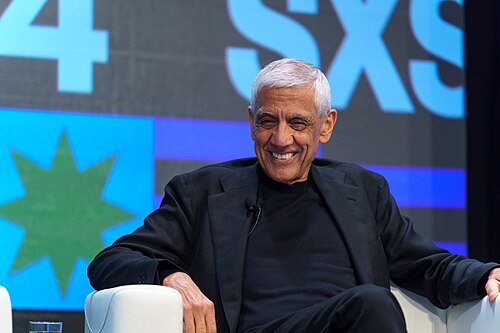 Vinod Khoslarecommends 1 book here