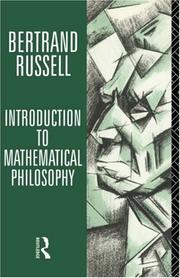
Introduction to Mathematical Philosophy
An accessible introduction to the logical foundations of mathematics.
Summary
Bertrand Russell wrote Introduction to Mathematical Philosophy, first published in 1919, while serving time in Brixton Prison for his anti-war activities. It is an accessible introduction to the foundations of mathematics; the preface says it is meant for readers with limited knowledge of mathematics and no prior experience of mathematical logic, and it is often used in introductory courses in the philosophy of mathematics.
Russell explores the foundational principles of logic and mathematics and the relation between them. He treats the logical basis and definition of the natural numbers, real and complex numbers, limits and continuity, and classes, along with the philosophy of number, the problem of mathematical infinity, and whether mathematical knowledge is empirical or rests on pure reason. The Goodreads description presents the book as a gateway into the relationship between mathematics and philosophy, rigorous but written for non-specialists.
Key takeaways 4
- Numbers can be defined from logic, Russell argues.
- The book introduces infinity, continuity and classes for non-specialists.
- Russell asks whether mathematical truth is empirical or a matter of pure reason.
- He wrote it in prison during the First World War.
Who should read it
Philosophy students and general readers curious about the logical foundations of mathematics.
Who recommended it 1
Similar books 6
Chosen by shared topics, the entries that hold them, and the people who recommended both.

Why mathematics is worth doing for its beauty, apart from any use.
Recommended by: Patrick Collison, Paul Graham
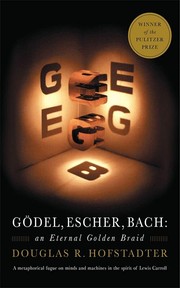
How a mind could arise from parts, traced through Godel, Escher and Bach.
Recommended by: Nat Eliason, Naval Ravikant, Demis Hassabis and 3 others
Logic and analytic philosophy explained through jokes.
Recommended by: Mohnish Pabrai, Nassim Nicholas Taleb
Quirky essays on how people perceive and think.
Recommended by: Patrick Collison
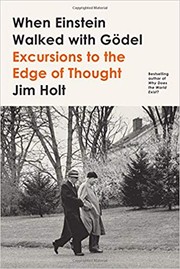
Essays on the deepest ideas of science and mathematics, from time to infinity.
Recommended by: Bryan Johnson
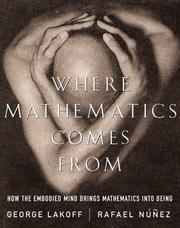
What mathematical ideas mean, and why theorems are true because of what they mean.
Recommended by: Bret Victor
Where it sits in the reference 4
As an Amazon Associate I earn from qualifying purchases.