Bret Victor
Interface designer, computer scientist and electrical engineer known for his talks on the future of computing; designed interfaces at Apple from 2007 to 2010.
 Dynamicland
 Apple
More 6
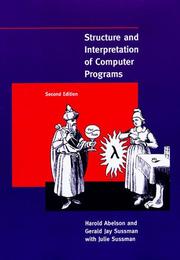
MIT's introductory computer science text, taught through Lisp and Scheme.
Source: Links — Bret Victor (his five-star list)
Also recommended by: Patrick Collison, Paul Graham, Max Levchin
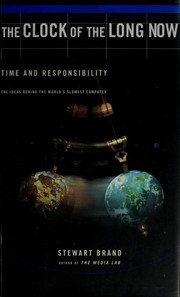
The case for a 10,000-year clock and for long-term thinking in institutions.
Also recommended by: Michael Mauboussin, Phil Libin and 1 other
How seeing turns into showing: turning data and evidence into explanation.
“The bibles of information design. Nothing comparable exists.” — Bret Victor
Source: Links — Bret Victor (his five-star list)
Also recommended by: Jeff Atwood, Patrick Collison
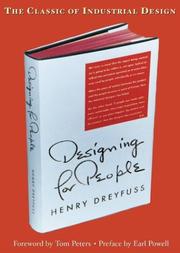
An industrial designer on designing products around the human body.
Also recommended by: Patrick Collison
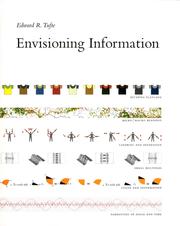
How to show complex information on flat paper or screens, with many examples.
“The bibles of information design. Nothing comparable exists.” — Bret Victor
Source: Links — Bret Victor (his five-star list)
Also recommended by: Jeff Atwood, Jim Collins, Patrick Collison and 1 other
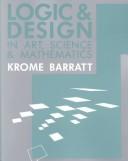
Design in art, science and mathematics: number, ratio, scale and their logic.
Also recommended by: Patrick Collison
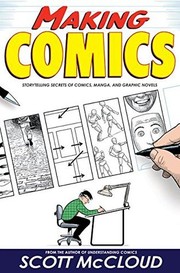
How to construct comics, taught in comic form.
“The pedagogical potential of the comic form is vast and mostly untapped.” — Bret Victor
Source: Links — Bret Victor (his five-star list)
Also recommended by: Kevin Kelly
A comprehensive history of graphic design.
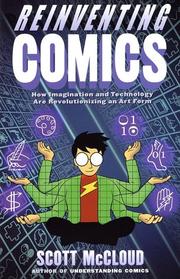
Twelve revolutions in how comics are made, published and read, digital ones included.
“The pedagogical potential of the comic form is vast and mostly untapped.” — Bret Victor
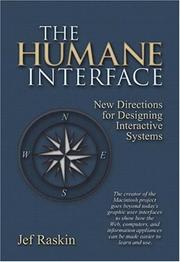
A guide to interactive system design that goes beyond today's widgets and habits.
“Another classic analytic look at interface design.” — Bret Victor
Source: Links — Bret Victor (his five-star list)
Also recommended by: Patrick Collison, Dustin Moskovitz

Why computerised products are hard to use, and how interaction design fixes it.
Also recommended by: Andrew Chen, Brian Armstrong, Jeff Atwood and 1 other
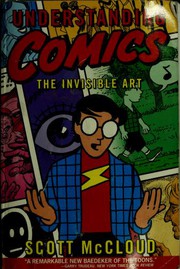
How comics work as an art form and how they are made.
“The pedagogical potential of the comic form is vast and mostly untapped.” — Bret Victor
Source: Links — Bret Victor (his five-star list)
Also recommended by: Patrick Collison, Daniel Burka, Ev Williams
A survey by 18 Russian mathematicians of 20 areas of mathematics, from origins on.
Also recommended by: Patrick Collison, Nassim Nicholas Taleb

Geometric results that link lengths, areas and volumes and solve hard integrals.
Methods for showing data in graphs in science and technology.
Techniques for mathematical modelling, aimed at simple, efficient computer code.
Also recommended by: Patrick Collison
The theory and practice of designing statistical graphics, charts and tables.
Also recommended by: Jeff Atwood, Jim Collins, Michael Mauboussin and 2 others

How to present information so that pictures and charts explain clearly.
“The bibles of information design. Nothing comparable exists.” — Bret Victor
Source: Links — Bret Victor (his five-star list)
Also recommended by: Jeff Atwood, Jim Collins, Patrick Collison

What mathematical ideas mean, and why theorems are true because of what they mean.
A collection of small programming tricks for working with integers and bits.

How simulation changed the way scientists and designers see the world.
Also recommended by: Patrick Collison

Computing taught as an extension of arithmetic, with programs as recursive functions.
“One of the most unique and effective pedagogic books ever written.” — Bret Victor
Source: Links — Bret Victor (his five-star list)
Also recommended by: Paul Graham, Susan J. Fowler

How the counterculture shaped the people who built the first personal computers.
Also recommended by: Kevin Kelly, Patrick Collison
How we see our surroundings, our place and movement in them, and what things afford.
The theory that consciousness is learned, arising from a once two-chambered mind.
Also recommended by: Patrick O'Shaughnessy, Adam Robinson and 2 others
A novel of a hacker in a corporate-run America and its virtual world, the Metaverse.
Also recommended by: Nat Eliason, Naval Ravikant, Alexis Ohanian and 11 others
A framework and vocabulary for understanding games and game design.
“A comprehensive and insightful analysis of interactive design.” — Bret Victor

Lessons on doing science and engineering, and on thinking about their future.
Source: Links — Bret Victor (his five-star list)
Also recommended by: Patrick Collison, Keith Rabois

A critique of 'primitive versus advanced' views of the mind across human societies.

The US Army from Korea through Vietnam, and what was wrong with it, from the front.
“The first compre-hensive treatise on interface design.” — Bret Victor
Source: Links — Bret Victor (his five-star list)
Also recommended by: Jeff Atwood, Tim Ferriss
| Computational Public Space | worrydream.com | Blog post | 2025-05-15 |
| Links to archives | worrydream.com | Blog post | 2025-01-10 |
| Tweet refs | worrydream.com | Blog post | 2024-12-31 |
| Preview images | worrydream.com | Blog post | 2024-12-31 |
| Booklets | worrydream.com | Blog post | 2024-10-14 |
| Realtoys | worrydream.com | Blog post | 2024-09-20 |
| Dynamicland website | worrydream.com | Blog post | 2024-09-04 |
| Hypercard in the World | worrydream.com | Blog post | 2024-08-29 |
| Computing is Everywhere : A Conversation with Bret Victor | Catalyst | 2018-03-20 | 37 min | Can electrical engineers create tangible objects? Do we really need to be writing lines of code in a text-editor to be programming? Is it time for society to redefine what it means to compute? This week, Paul and Rich sit down with Bret Victor to discuss his journey from Electrical Engineer at Caltech, to UI Designer at Apple, to Creator of his ultimate vision, Dynamicland. The building is a computer; the computer is a building: This week Paul Ford and Rich Ziade sit down with Bret Victor to talk to about Dynamicland — a non-profit that’s inventing a new computational medium, where people work together with real objects in the real world (not alone with virtual objects on screens). We chat about the tech behind Dynamicland, the importance of creating intentional communities, and how a culture of secrecy at Apple inspired a life-long vision of community computing. Bret also shares a surefire way to impress a date — bring them to GuitarCenter and show them your analog modeling synth! 3:58 — Rich: “The bureaucracy got obliterated; all the machinery that usually slows you down was gone. The parents weren’t home!” 13:14 — Bret: “I came in the first day, went ot my desk and there was an iPad sitting on my desk. This was 2007. The iPhone just had been released. The iPad was not a thing at all… and I said ‘what is this?’ and my boss said ‘well we don’t know, Steve wants a tablet’.” 16:03 — Bret: “I was starting to see that my values and Apple’s values were a bit at odds. |
| Bret Victor - The Humane Representation of Thought | Colin McDonnell | |||
| Bret Victor - Stop Drawing Dead Fish | Colin McDonnell | |||
| Bret Victor - Inventing on Principle | Rui Oliveira |