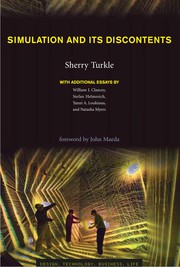
Simulation and Its Discontents
How simulation changed the way scientists and designers see the world.
Summary
Sherry Turkle examines how the technologies of simulation and visualisation, now pervasive in science, engineering and design, have changed the way people see the world over twenty years, and finds that simulation has become a sensibility of its own. Architecture students no longer design with a pencil, and science and engineering students admit that computer models seem more "real" than experiments in physical laboratories.
Echoing the architect Louis Kahn's question "What does a brick want?", Turkle asks "What does simulation want?" Her answer is immersion. The benefits are clear: architects create buildings unimaginable before virtual design, scientists find the structure of molecules by manipulating them in virtual space, and physicians practise anatomy on digitised humans. But immersion brings losses as well as gains. Older scientists describe a younger generation as "drunk with code", while young scientists, engineers and designers try to capture their mentors' tacit knowledge of buildings and bodies. On both sides of the generational divide there is anxiety that something important slips away. Turkle's essay is followed by four in-depth investigations.
Key takeaways 4
- Simulation has become the main medium of work in science and design.
- Simulations demand immersion, which brings both power and blind spots.
- Young professionals may lose the tacit knowledge their mentors hold.
- Models can come to feel more real than physical experiments.
Who should read it
Scientists, engineers, designers and students of technology and society.
Who recommended it 2 · 1 direct
Similar books 6
Chosen by shared topics, the entries that hold them, and the people who recommended both.
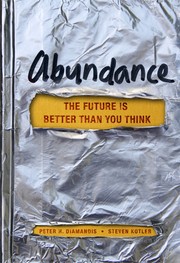
The case that fast-improving technology will make scarce resources cheap.
Recommended by: Bill Gates, Richard Branson, Morgan Housel and 2 others
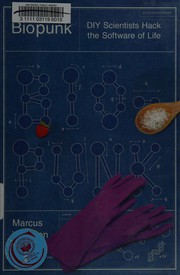
The amateurs who hack biology and genetic engineering outside the laboratories.
Recommended by: Balaji S. Srinivasan
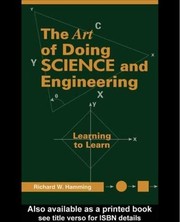
Lessons on doing science and engineering, and on thinking about their future.
Recommended by: Bret Victor, Patrick Collison, Keith Rabois
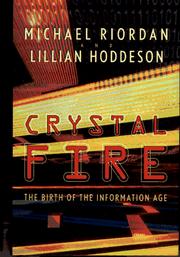
How the Bell Labs team of Shockley, Bardeen and Brattain invented the transistor.
Recommended by: Patrick Collison