Abundance
The case that fast-improving technology will make scarce resources cheap.
Summary
Diamandis, who founded the XPRIZE Foundation, and Kotler argue that exponentially improving technologies will make the resources humans need cheap enough that scarcity ceases to be the organising economic problem. Their claim is that this is achievable within a few decades for the basic requirements of water, food, energy, healthcare, education and freedom.
The argument rests on several components. Exponential technologies including computing, networks, sensors, robotics, biotechnology, nanomaterials and artificial intelligence improve at rates that compound and that human intuition consistently underestimates. Scarcity is frequently a function of access and technology rather than of physical availability, which they illustrate with aluminium, once more precious than gold and now trivially cheap because electrolysis made extraction possible. Three additional forces contribute: what they call do-it-yourself innovators working with cheap tools, technophilanthropists directing large fortunes at specific problems, and the rising billion, meaning people entering the connected economy who represent both a market and a source of solutions.
They cover specific domains with the technologies they expect to solve each, including desalination and water purification, vertical farming and cultured meat, solar and storage, diagnostics and telemedicine, and online education.
The book is unrelentingly optimistic and gives limited weight to political economy, distribution or the possibility that technologies fail to arrive. Published in 2012, several of its specific predictions have not materialised on the stated timelines. The aluminium example and the argument that scarcity is often a technology problem are the durable contributions.
Key takeaways 8
- Scarcity is frequently a function of access and technology rather than of physical availability, which aluminium demonstrates historically.
- Exponentially improving technologies compound at rates that human intuition consistently underestimates.
- The basic requirements of water, food, energy, healthcare and education could be met cheaply enough that scarcity ceases to organise economic life.
- Cheap tools have allowed small groups to attempt problems that previously required governments or large corporations.
- Large individual fortunes directed at specific problems can fund work that neither markets nor governments will undertake.
- People entering the connected economy represent both a large new market and a source of solutions rather than only a demand on resources.
- Prize competitions can direct effort toward defined problems at a fraction of the cost of funding research directly.
- The book gives limited weight to distribution, political economy and the possibility that the technologies do not arrive on schedule.
Who should read it
Founders and investors in resource and deep technology sectors who want the optimistic framework, with its 2012 timelines checked against what happened.
Who recommended it 5 · 2 direct
Similar books 6
Chosen by shared topics, the entries that hold them, and the people who recommended both.
The amateurs who hack biology and genetic engineering outside the laboratories.
Recommended by: Balaji S. Srinivasan
How simulation changed the way scientists and designers see the world.
Recommended by: Patrick Collison, Bret Victor
Absurdly complex scientific ways to do everyday tasks.
Recommended by: Bill Gates
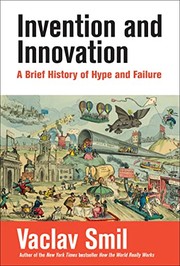
A history of human invention, and a corrective to the hype around innovation.
Recommended by: Bill Gates
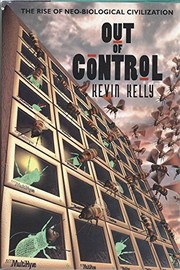
How machines and economies grow so complex that they behave like living systems.
“Had we read Kevin Kelly’s new book, Out of Control: The Rise of Neo- Biological Civilization, we would have realized that complex adaptive systems like the market need a long time to adjust to certain kinds of new information and they will do so in ways impossible to specify in advance.” — Bill Miller
Source: 1994 Q2 Market Commentary
Recommended by: Bill Miller, Cynthia Johnson and 3 others