Dataclysm: Who We Are (When We Think No One's Looking)
What the data people leave online reveal about human nature.
Summary
Rudder uses the data people leave online to study human nature rather than to sell to them, hire or fire them, or spy on them. He draws on terabytes of records from Twitter, Facebook, Reddit, OkCupid and other sites, and presents his findings visually. Among his studies, he tracks the rise and fall of America's most reviled word through Google searches, examines how collective rage forms on Twitter, and traces migration, showing how people from particular small towns move to the same large cities around the world.
His argument is that this flood of behavioural data, recorded when people think no one is looking, will change the science of human behaviour, because it shows what people do rather than what they tell researchers. He also takes up the problem of keeping privacy in a world where such studies are possible. The book appeared in 2014.
Key takeaways 4
- Online behaviour records what people do when they think no one is watching, which surveys cannot capture.
- Search data can track how attitudes, such as the use of a slur, change over time.
- Collective outrage on social media follows patterns that can be measured.
- Large behavioural datasets raise privacy problems in the same act that makes them useful for research.
Who should read it
Readers curious about what large-scale online data reveals about behaviour, and about the privacy costs of collecting it.
Who recommended it 1 · 1 direct
Similar books 6
Chosen by shared topics, the entries that hold them, and the people who recommended both.
Bandwidth, multimedia, virtual reality and the internet, explained without hype.
“Technology is transforming society as the computer moves from a business tool to a home appliance, and as the effects and implications of Being Digital, as Nicholas Negroponte’s new book has it, come to be instantiated.” — Bill Miller
Source: 1995 Q2 Market Commentary
Recommended by: Bill Miller, Mohnish Pabrai
Why people long for human contact in a world full of technology, and its dangers.
Recommended by: Mohnish Pabrai
How the problem-solving and teamwork of games could solve real-world problems.
“While this book was not out at the time of this writing, this is likely another useful resource: Jane McGonigal, Reality is Broken: Why Games Make Us Better and How They Can Change the World (New York: Penguin Press, 2011).” — Michael Mauboussin
Source: Blaming the Rat: Incentives, Motivation, and How They Interact, page 14
Recommended by: Michael Mauboussin, Mohnish Pabrai
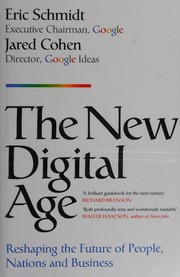
A forecast of a hugely connected future world, with its challenges and benefits.
Recommended by: Mohnish Pabrai, Michael Bloomberg
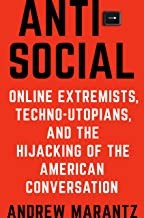
How right-wing extremists used social media to move into American politics.
Recommended by: Kara Swisher
Twenty essays on the observation that software is eating the world.
Recommended by: David Perell, Patrick O'Shaughnessy