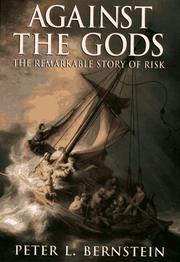
Against the Gods: The Remarkable Story of Risk
How people learned to measure risk, from early probability to portfolio theory.
Summary
Bernstein traces the intellectual history of risk measurement from the absence of any probability mathematics in antiquity through to modern portfolio theory and derivatives. His organising claim is that the boundary between the modern world and the past is the ability to measure and manage risk rather than to attribute outcomes to fate.
The narrative moves through the people who built the tools. It covers the Hindu-Arabic numbering system, Cardano's gambling analysis, the Pascal and Fermat correspondence of 1654 that produced the mathematics of probability, Graunt's mortality tables, Bernoulli's expected utility and the resolution of the St Petersburg paradox, Bayes, Gauss and the normal distribution, Galton on regression to the mean, Knight on the difference between measurable risk and true uncertainty, Keynes on probability as degree of belief, von Neumann and Morgenstern on game theory, Markowitz on diversification, and Black, Scholes and Merton on option pricing.
The last section covers the behavioural challenge. Bernstein gives serious space to Kahneman and Tversky, and argues that prospect theory undermines the rational-actor assumptions that the whole edifice of risk management rests on. He wrote before the 2008 crisis and before LTCM's failure had been fully absorbed, but he raises the problem of models that assume the future resembles the past.
The book is history rather than instruction, so a reader wanting techniques will not find them. The mathematical explanations are light, which makes it accessible and also imprecise. Some of the biographical material is anecdotal. It remains the best single account of where risk measurement came from and why its assumptions were adopted.
Key takeaways 8
- The distinguishing feature of the modern era is the belief that risk can be measured and managed rather than attributed to fate.
- Probability mathematics did not exist before the seventeenth century despite thousands of years of gambling, because the required numbering system and the idea of predictable future events were both absent.
- Bernoulli established that people value outcomes according to utility rather than to monetary amount, which explains why a fair bet can be irrational to accept.
- Regression to the mean means that extreme results are usually followed by less extreme ones, and ignoring it produces systematic forecasting errors.
- Knight separated risk, where probabilities are knowable, from uncertainty, where they are not, and financial models routinely treat the second as the first.
- Diversification reduces risk without a corresponding reduction in expected return, which Markowitz demonstrated mathematically in 1952.
- Risk models assume the future will resemble the measured past, and that assumption is the point at which they fail.
- Behavioural findings about how people actually decide undermine the rationality assumption on which quantitative risk management was built.
Who should read it
Investors and risk managers who want the origins and assumptions of the tools they use daily, rather than another treatment of the tools themselves.
About Peter L. Bernstein
Founder, Peter L. Bernstein Inc.; founding editor of The Journal of Portfolio Management; economist and financial historian (1919-2009)
Against the Gods and Capital Ideas are the standard accounts of risk and of modern finance theory, read across the whole field.
Who recommended it 12 · 10 direct
“(Risk is the subject of Peter Bernstein’s wonderful new book, Against the Gods: The Remarkable Story of Risk.)”
“I found a great deal of inspiration in his newsletter “Economics and Portfolio Strategy,” in his book “Against the Gods: The Remarkable Story of Risk,” and in our correspondence.”
“The late polymath Peter Bernstein poured a long lifetime of erudition and insight into this intellectual history of risk, luck, probability and the problems of trying to forecast what the future holds.”
“Bernstein is well known to all of you, I’m sure, both through his bi-monthly publication, Economics and Portfolio Strategy, and his books, including his marvelous chronicle of risk, Against the Gods.”
“see the classic book Against the Gods: The Remarkable Story of Risk for more on this”
“Peter L. Bernstein, Against the Gods: The Remarkable Story of Risk (New York: John Wiley & Sons, 1996), 107-109”
“I recently read a great book called, “Against the Gods, the Remarkable Story of Risk” by Peter Bernstein.”
Similar books 6
Chosen by shared topics, the entries that hold them, and the people who recommended both.
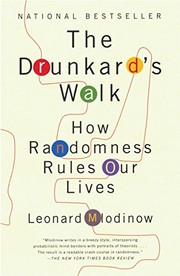
How randomness shapes our lives, the history of probability, and why we misread it.
“I thought it was about the philosophy of randomness, but turned out to be about the math of probability. Might read again some day when in the mood for that.” — Derek Sivers
Source: Derek Sivers book notes (primary, rated list) · Rating: 3/10
Recommended by: Derek Sivers, Michael Mauboussin and 1 other
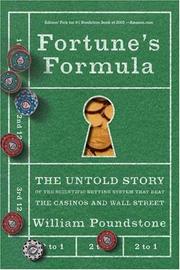
The Kelly criterion for sizing bets, from Bell Labs to casinos and hedge funds.
“For a less technical discussion, see William Poundstone, Fortune’s Formula: The Untold Story of the Scientific Betting System that Beat the Casinos and Wall Street (New York: Hill and Wang, 2005), 197-201” — Michael Mauboussin
Source: Thoughts on Dividends and Buybacks: Clearing Up Some Common Misconceptions, page 10
Recommended by: Michael Mauboussin, Mohnish Pabrai
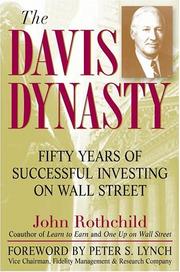
Three generations of Davises, who built a fortune from insurance stocks.
Recommended by: Mohnish Pabrai, Peter Bernstein and 2 others

Why people mistake luck for skill, above all in markets.
“Fooled By Randomness was unquestionably the best non-fiction book I read in 2005.” — Brad Feld
Source: Book Review: Fooled By Randomness — Feld Thoughts
Recommended by: Barton Biggs, Brad Feld, Derek Sivers and 15 others

Rare, unforeseen, high-impact events drive history, explained only after the fact.
“The Black Swan U The best-known bird around today is The Black Swan, the second book from Nassim Nicolas Taleb.” — Howard Marks
Source: The Complete Collection, page 530
Recommended by: David Perell, Howard Marks, Marc Andreessen and 20 others
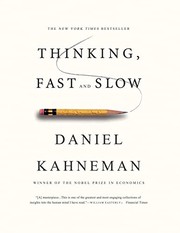
How fast, automatic thought and slow, deliberate thought shape judgment and error.
“…books I've recommended, highlighted to death, or forced on friends.” — Andrew Wilkinson
Source: Andrew Wilkinson's Bookshelf, neverenough.com
Recommended by: Andrew Wilkinson, Charles de Vaulx and 36 others
Where it sits in the reference 9
Topics 4
As an Amazon Associate I earn from qualifying purchases.