Games, gambling and quantitative finance
Books on game theory, betting systems, risk and fat tails, and the mathematics of markets, portfolios and derivatives.
Start here
- Theory of Games and Economic BehaviorJohn von Neumann, Oskar Morgenstern, 1944
- The Strategy of ConflictThomas C. Schelling, 1960
- Beat the DealerEdward O. Thorp, 1962
- The Evolution of CooperationRobert Axelrod, 1984
- Against the Gods: The Remarkable Story of RiskPeter L. Bernstein, 1996
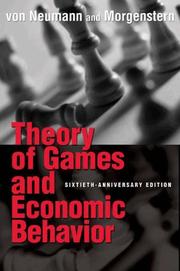
The founding of game theory: expected utility and strategy among interacting players.
“John von Neumann and Oskar Morgenstern, Theory of Games and Economic Behavior (Princeton, NJ: Princeton University Press, 1944)” — Michael Mauboussin
Source: Competitive Advantage Period: The Neglected Value Driver
Recommended by: Michael Mauboussin
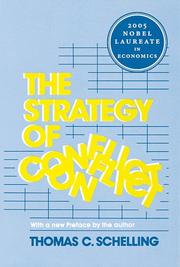
Conflict as bargaining: commitment, credible threats and focal points.
Recommended by: Naval Ravikant
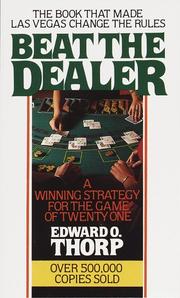
The first proven way to beat blackjack, by counting the cards left in the deck.
“Many years ago, Ed Thorp, an MIT professor of mathematics, literally “wrote the book” on blackjack. It’s called “Beat the Dealer.” — Howard Marks
Source: A Case in Point, page 1
Recommended by: Howard Marks, Michael Mauboussin
Computer tournaments of the prisoner's dilemma show why tit-for-tat wins.
“That clever but unsatisfying explanation eventually led me to the book and article that I'm recommending this year - The Evolution of Cooperation by Robert Axelrod, and a related journal article1 (jointly, "EoC").” — Mark Leonard
Source: Constellation Software Inc. 2014 President's Letter, page 5
Recommended by: Mark Leonard, Michael Mauboussin and 2 others
How people learned to measure risk, from early probability to portfolio theory.
“(Risk is the subject of Peter Bernstein’s wonderful new book, Against the Gods: The Remarkable Story of Risk.)” — Bill Miller
Source: 1996 Q3 Market Commentary
Recommended by: Bill Miller, Charles de Vaulx, Howard Marks and 9 others
Stock, bond and bill returns for sixteen countries from 1900 to 2000.
“Recently Dimson, Marsh, and Staunton, in their wonderful monograph, The Triumph of the Optimists, have examined the real dividend-growth rates in 16 nations over the entire 20th century.” — William J. Bernstein
Source: Efficient Frontier, issue 702 (2002)
Recommended by: Jason Zweig, Mohnish Pabrai and 1 other
Von Neumann, game theory and the prisoner's dilemma in nuclear strategy.
“For international relations, see William Poundstone, Prisoner’s Dilemma (New York: Doubleday, 1992)” — Michael Mauboussin
Source: The Colonel Blotto Game: Transitivity and How to Win When You’re an Underdog, page 8
Recommended by: Michael Mauboussin
Decades of US stock data testing which selection rules have beaten the market.
“Strongly Recommended. Great data.” — Mohnish Pabrai
Source: Mohnish's Bookshelf — Books on Investing & Capital Allocation, entry 336
Recommended by: Mohnish Pabrai, Patrick O'Shaughnessy and 2 others
The Kelly criterion for sizing bets, from Bell Labs to casinos and hedge funds.
“For a less technical discussion, see William Poundstone, Fortune’s Formula: The Untold Story of the Scientific Betting System that Beat the Casinos and Wall Street (New York: Hill and Wang, 2005), 197-201” — Michael Mauboussin
Source: Thoughts on Dividends and Buybacks: Clearing Up Some Common Misconceptions, page 10
Recommended by: Michael Mauboussin, Mohnish Pabrai
The mathematics of risk parity: risk contributions and risk budgeting.

A graduate text on power laws, fractals and critical points in complex systems.
Recommended by: Nassim Nicholas Taleb
Self-organised criticality: why earthquakes and crashes come in all sizes.
“Mark Buchanan, Ubiquity: The Science of History . . . Or Why the World is Simpler Than We Think (New York: Crown Publishers, 2000)” — Michael Mauboussin
Source: Interdisciplinary Perspectives on Risk, page 5
Recommended by: Michael Mauboussin
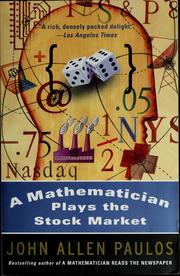
A mathematician's WorldCom losses, used to explain errors of probability in markets.
Recommended by: Mohnish Pabrai
The key papers on the Kelly criterion for sizing bets, for and against.
“Leonard C. MacLean, Edward O. Thorp, and William T. Ziemba, eds., The Kelly Capital Growth Investment Criterion: Theory and Practice (Hackensack, NJ: World Scientific, 2011), 823” — Michael Mauboussin
Source: Probabilities and Payoffs: The Practicalities and Psychology of Expected Value
Recommended by: Michael Mauboussin, Nassim Nicholas Taleb
A risk manager's history of quantitative risk and what value-at-risk is for.
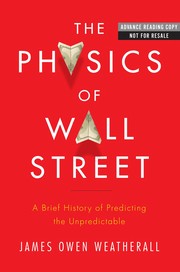
How physicists and mathematicians brought their models into finance.
“But such oversimplification can—and did—create a flawed conclusion.3 2 I am indebted to James Owen Wetherall, physicist, philosopher, and mathematician at the University of California for telling Bachelier’s story in his book, “The Physics of Wall Street, A Brief History of Predicting the Unpredictable” (Houghton Mifflin Harcourt, 2015).” — John C. Bogle
Source: David and Goliath: Who Wins the Quantitative Battle?, page 8
Recommended by: John C. Bogle, Eric Weinstein
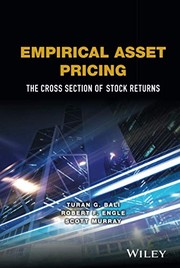
Portfolio sorts and cross-sectional regressions: how to test what predicts returns.
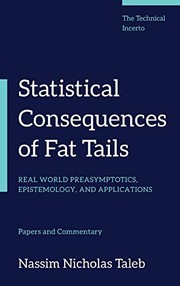
The mathematics of fat-tailed distributions and what they do to statistics.
A primer on the theory of games of strategy, written for non-specialists.
Recommended by: Naval Ravikant
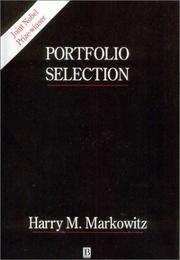
An asset's risk depends on how it moves with the rest of the portfolio.
“Markowitz, Harry M., Portfolio Selection: Efficient Diversification of Investment (New Haven, CT: Yale University Press, 1959)” — Michael Mauboussin
Source: Size Matters: The Kelly Criterion and the Importance of Money Management, page 12
Recommended by: Michael Mauboussin, William J. Bernstein
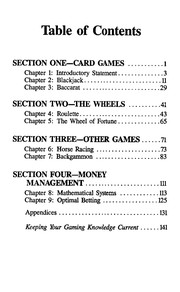
The mathematics of baccarat, backgammon, blackjack and other games of chance.
“In his book, The Mathematics of Gambling, Thorp explains the Kelly system’s attractive features:12 1.” — Michael Mauboussin
Source: Size Matters: The Kelly Criterion and the Importance of Money Management, page 4
Recommended by: Michael Mauboussin
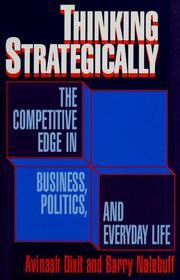
Game theory without maths: look forward, reason back, and make threats credible.
“Avinash K. Dixit and Barry J. Nalebuff, Thinking Strategically (New York: W. W. Norton & Co., 1991)” — Michael Mauboussin
Source: Measuring the Moat: Assessing the Magnitude and Sustainability of Value Creation, page 47
Recommended by: Jim Collins, Michael Mauboussin
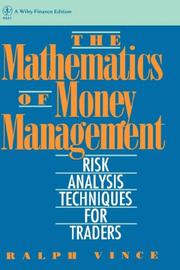
Optimal f and the mathematics of sizing positions and bets.
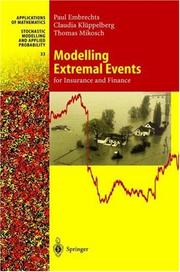
The graduate reference on extreme value theory for insurance and finance.
Recommended by: Nassim Nicholas Taleb
The statistical tools of empirical finance and the questions they test.
“Campbell, John Y., Andrew W. Lo, and A. Craig MacKinley, The Econometrics of Financial Markets (Princeton, NJ: Princeton University Press, 1996)” — Michael Mauboussin
Source: Capital Ideas Revisited: The Prime Directive, Sharks, and The Wisdom of Crowds, page 16
Recommended by: Michael Mauboussin, William J. Bernstein
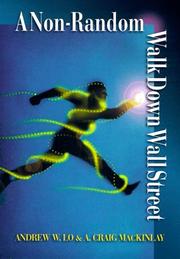
Research papers showing that stock prices do not follow a random walk.
“Andrew W. Lo and A. Craig MacKinlay, A Non-Random Walk Down Wall Street (Princeton, NJ: Princeton University Press, 1999), 4-5” — Michael Mauboussin
Source: Capital Ideas Revisited - Part 2: Thoughts on Beating a Mostly-Efficient Stock Market, page 9
Recommended by: Michael Mauboussin
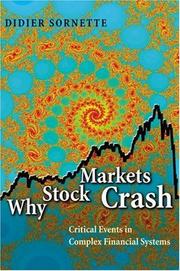
Why big crashes build up inside markets rather than follow the news.
“In an important and fascinating book, Why Stock Markets Crash, geophysicist Didier Sornette argues that stock market distributions comprise two different populations, the body (which you can model with standard theory) and the tail (which relies on completely different mechanisms).” — Michael Mauboussin
Source: Integrating the Outliers: Two Lessons from the St. Petersburg Paradox, page 3
Recommended by: Michael Mauboussin, Nassim Nicholas Taleb
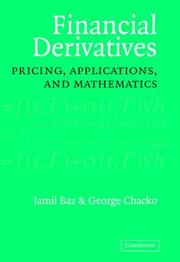
A compact mathematical treatment of pricing derivatives and using them.
Recommended by: Nassim Nicholas Taleb
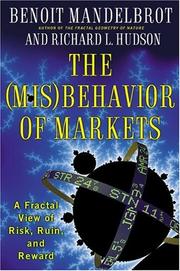
Why standard finance models understate market risk, from fractal geometry's creator.
“(Italics added.) Mandelbrot on Risk, Ruin, and Reward The abstract theories of Karl Popper and Frank Knight can be directly applied to the financial markets, which is exactly what Benoit Mandelbrot, the brilliant inventor of fractal geometry, has done with Richard Hudson in his book The (Mis)Behavior of Markets, ominously subtitled “A Fractal View of Risk, Ruin, and Reward.” — John C. Bogle
Source: Black Monday and Black Swans, page 3
Recommended by: John C. Bogle, Mohnish Pabrai and 2 others
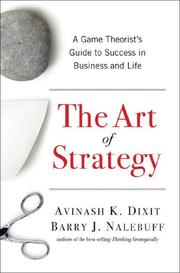
Game theory without maths, with new examples: commitment, signals, bargaining.
“for business, see Avinash K. Dixit and Barry J. Nalebuff, The Art of Strategy (New York: W.W. Norton & Company, 2008)” — Michael Mauboussin
Source: The Colonel Blotto Game: Transitivity and How to Win When You’re an Underdog, page 8
Recommended by: Michael Mauboussin, Marc Andreessen
What mathematics, beyond numbers and formulas, can say about politics.
“I've got a book called Mathematics of Politics, because I'm interested in both politics, and also the math behind elections, and that stuff.” — Kevin Systrom
Source: The Tim Ferriss Show Transcripts: Kevin Systrom (#369)
Recommended by: Kevin Systrom
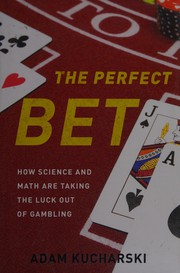
How scientists and mathematicians have tried to beat the house at gambling.
Recommended by: Patrick O'Shaughnessy
 Edward O. Thorpwrote 3 books here
 Andrew W. Lowrote 2 books here
 Nassim Nicholas Talebwrote 1 book here
 James P. O'Shaughnessywrote 1 book here
 Michael Mauboussinrecommends 15 books hereNassim Nicholas Talebrecommends 6 books here
 Mohnish Pabrairecommends 6 books here
 John C. Boglerecommends 3 books here
 Naval Ravikantrecommends 3 books here
 Howard Marksrecommends 2 books here
 Jim Collinsrecommends 2 books here
 Marc Andreessenrecommends 2 books here
 Jason Zweigrecommends 2 books here