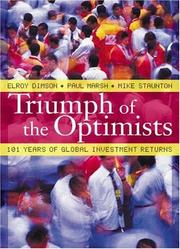
Triumph of the Optimists
Stock, bond and bill returns for sixteen countries from 1900 to 2000.
101 years of returns across sixteen countries; the survivorship-free equity record.
Summary
Dimson, Marsh and Staunton assembled consistent annual returns for equities, bonds, bills, inflation and currencies for sixteen countries from 1900 to 2000, correcting for the survivorship bias that had distorted every prior long-run study by using only markets that survived and prospered.
The findings changed what could responsibly be claimed about long-run returns. Equities outperformed bonds and bills in every one of the sixteen countries over the century, which supports the equity risk premium. But the premium was substantially smaller than the American-only figures then in circulation, roughly four to five percent over bills globally rather than the six to seven percent commonly cited. Several markets suffered total or near-total losses at some point, including Russia and China where investors lost everything, and Germany, Japan and Italy where real returns were catastrophic for extended periods. The United States was among the best-performing markets of the century, which means using American data to estimate expected returns systematically overstates them.
They also document that dividend income rather than capital appreciation supplied most of the real return, that real bond returns over the century were poor in many countries, and that inflation destroyed fixed income wealth repeatedly.
The book is data-heavy with extensive tables and charts, and it functions as a reference. The database is updated annually in the Credit Suisse and now UBS Global Investment Returns Yearbook, which is where current figures should be taken from. The 2002 volume is the foundational statement of the method and the findings.
Key takeaways 7
- Equities outperformed bonds and bills in all sixteen countries studied over the twentieth century, which supports the equity risk premium as a general phenomenon.
- The global equity risk premium was roughly four to five percent over bills, substantially lower than the American-only figures then in common use.
- The United States was one of the best-performing markets of the century, so using American data to estimate expected returns systematically overstates them.
- Investors in Russia and China lost everything, and several other markets produced catastrophic real returns for decades, which is what survivorship-corrected data reveals.
- Reinvested dividend income rather than capital appreciation supplied the majority of long-run real equity return.
- Real returns on government bonds over the century were poor in most countries, because inflation destroyed fixed income wealth repeatedly.
- Prior long-run return studies were distorted by using only markets that survived and prospered, which inflated every estimate derived from them.
Who should read it
Allocators and investors who need survivorship-corrected long-run return data before setting any expected return assumption.
Who recommended it 3 · 3 direct
“Recently Dimson, Marsh, and Staunton, in their wonderful monograph, The Triumph of the Optimists, have examined the real dividend-growth rates in 16 nations over the entire 20th century.”
Similar books 6
Chosen by shared topics, the entries that hold them, and the people who recommended both.
Three generations of Davises, who built a fortune from insurance stocks.
Recommended by: Mohnish Pabrai, Peter Bernstein and 2 others

How people learned to measure risk, from early probability to portfolio theory.
“(Risk is the subject of Peter Bernstein’s wonderful new book, Against the Gods: The Remarkable Story of Risk.)” — Bill Miller
Source: 1996 Q3 Market Commentary
Recommended by: Bill Miller, Charles de Vaulx, Howard Marks and 9 others
US returns since 1802 show stocks beat bonds and cash over every long period.
“his book "Stocks for the Long Run" contributed greatly to the bull market's middle years” — Howard Marks
Source: Oaktree memo 'Irrational Exuberance'
Recommended by: Howard Marks, John C. Bogle and 4 others
The Kelly criterion for sizing bets, from Bell Labs to casinos and hedge funds.
“For a less technical discussion, see William Poundstone, Fortune’s Formula: The Untold Story of the Scientific Betting System that Beat the Casinos and Wall Street (New York: Hill and Wang, 2005), 197-201” — Michael Mauboussin
Source: Thoughts on Dividends and Buybacks: Clearing Up Some Common Misconceptions, page 10
Recommended by: Michael Mauboussin, Mohnish Pabrai
The case for buying quality companies with rising dividends and holding them.
Why dividends, not price gains, should be the measure of an investment's return.
Where it sits in the reference 3
Topics 4
As an Amazon Associate I earn from qualifying purchases.