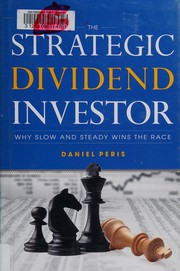
The Strategic Dividend Investor
Why dividends, not price gains, should be the measure of an investment's return.
Peris argues dividends, not multiple expansion, drive real returns.
Summary
Daniel Peris manages dividend-focused portfolios and holds a doctorate in history, and this book argues that the dividend rather than capital appreciation should be understood as the primary source of equity return.
His historical argument is that for most of the history of equity investing, investors bought shares for the income they produced, and the expectation that returns would come principally from price appreciation is a recent development dating from the postwar period. He documents the long-run decomposition of American equity returns into dividend income, dividend growth and change in valuation, and shows that the first two account for the great majority over long horizons while the third has contributed most of the variation.
His practical argument follows. An investor buying for income can assess the sustainability and growth of a company's cash distribution, which is a tractable analytical problem, whereas an investor buying for appreciation must forecast what someone else will pay, which is not. He sets out how to analyse dividend sustainability, coverage and growth, what payout ratios indicate in different industries, and how to build a portfolio on this basis. He is critical of the treatment of buybacks as equivalent to dividends, arguing that they are discretionary and frequently poorly timed. The book is more historically grounded than most dividend investing advocacy. Its principal weakness is that it does not seriously address the tax disadvantage of dividends for taxable investors in many jurisdictions.
Key takeaways 7
- Dividend income and dividend growth account for the great majority of long-run equity returns, with valuation change contributing most of the variation.
- The expectation that equity returns come principally from price appreciation is a recent development rather than the historical norm.
- An investor buying for income can analyse cash distribution sustainability, which is tractable, rather than forecasting what others will pay.
- Buybacks are discretionary and frequently badly timed, so treating them as equivalent to dividends is a mistake.
- Payout ratios carry different information in different industries, and a single threshold applied across sectors misleads.
- Peris argues that a company committing to a dividend accepts a discipline that a company retaining cash does not.
- The book does not adequately address the tax disadvantage of dividends for taxable investors.
Who should read it
Investors considering an income-focused equity approach who want the historical return decomposition behind the argument.
Similar books 6
Chosen by shared topics, the entries that hold them, and the people who recommended both.
The case for buying quality companies with rising dividends and holding them.
Stock, bond and bill returns for sixteen countries from 1900 to 2000.
“Recently Dimson, Marsh, and Staunton, in their wonderful monograph, The Triumph of the Optimists, have examined the real dividend-growth rates in 16 nations over the entire 20th century.” — William J. Bernstein
Source: Efficient Frontier, issue 702 (2002)
Recommended by: Jason Zweig, Mohnish Pabrai and 1 other
What stocks that rose a hundredfold had in common, and how to find them.
Recommended by: Mohnish Pabrai
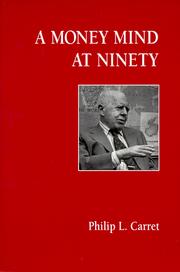
A fund manager of sixty years on investing, business and a long life.
Recommended by: Mohnish Pabrai
A compilation marking fifty years of Berkshire Hathaway under Buffett and Munger.
Recommended by: Warren Buffett
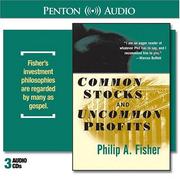
Buy a few outstanding growth companies, research them by scuttlebutt, and hold.
“In his book « Common stocks and Uncommon Profits », the legendary investor Philip Fisher devoted a complete chapter on “when to buy”.” — Francois Rochon
Source: Giverny Capital Annual Letter to Partners 2003, page 3
Recommended by: Arnold Van Den Berg, Bill Stewart and 12 others
Where it sits in the reference 2
Topics 1
As an Amazon Associate I earn from qualifying purchases.