
The Efficient Market Hypothesis
The claim that prices absorb available information fast enough that trading on it yields nothing after costs - a model with documented cracks in momentum, the value premium and crashes far too violent for its statistics. Use it as the null hypothesis: assume the price is right until you can name the structural reason it is not. It is why cheap index funds beat most managers, and why an edge you cannot articulate is not an edge.
Start here
- A Random Walk Down Wall StreetBurton G. Malkiel, 1973
- The Myth of the Rational MarketJustin Fox, 2009
- Adaptive MarketsAndrew W. Lo, 2017
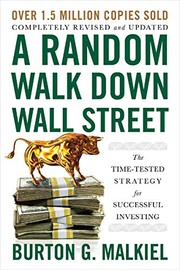
Stock prices follow a random walk, so a low-cost index fund beats stock picking.
“Even earlier, in 1973, in his classic A Random Walk Down Wall Street, Burton G. Malkiel had called for such a fund, although, alas, when we started it, I had yet to read his book.” — John C. Bogle
Source: CONVERGENCE!, page 1
Recommended by: Jason Zweig, John C. Bogle and 5 others
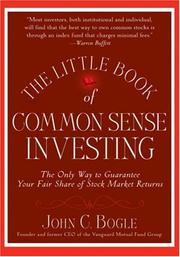
After costs, most investors trail the market, so hold a low-cost index fund.
“Bogle, John C., The Little Book of Common Sense Investing: The Only Way to Guarantee Your Fair Share of Stock Market Returns (Hoboken, NJ: John Wiley & Sons, 2007)” — Michael Mauboussin
Source: Untangling Skill and Luck: How to Think About Outcomes - Past, Present, and Future, page 33
Recommended by: Michael Mauboussin, Mohnish Pabrai and 6 others
How Markowitz, Sharpe, Fama, Black and Scholes built the theory of modern finance.
“But it was in his Capital Ideas, published in 1992, that I first learned of Louis Bachelier’s 1900 dissertation, The Theory of Speculation.” — John C. Bogle
Source: Success In Investment Management: What Can We Learn From Indexing?, page 1
Recommended by: John C. Bogle, Michael Mauboussin
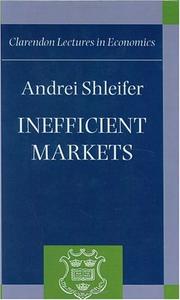
Behavioural finance as a research programme, and why arbitrage has limits.
“The Rules of the Game In his excellent book, Inefficient Markets, Harvard professor Andrei Shleifer summarizes the three arguments that underpin the efficient market hypothesis (EMH): 5 1.” — Michael Mauboussin
Source: Contrarian Investing: The Psychology of Going Against the Crowd, page 2
Recommended by: Michael Mauboussin
The rise and fall of the efficient market theory and the modern finance it built.
“Fox, Justin, The Myth of the Rational Market: A History of Risk, Reward, and Delusion on Wall Street (New York: HarperCollins, 2009)” — Michael Mauboussin
Source: Who Is On the Other Side? A Framework for Understanding Market (In)Efficiency
Recommended by: Michael Mauboussin, Mohnish Pabrai
The adaptive markets hypothesis, joining efficient markets and behavioural finance.
“Lo, Andrew W., Adaptive Markets: Financial Evolution at the Speed of Thought (Princeton, NJ: Princeton University Press, 2017)” — Michael Mauboussin
Source: Who Is On the Other Side? You Need Good BAIT to Land a Winner, page 40
Recommended by: Michael Mauboussin

How economics copied the maths of 19th-century physics, and what that cost it.
“Mirowski, Philip, More Heat than Light: Economics as Social Physics, Physics as Nature’s Economics (Cambridge: Cambridge University Press, 1989)” — Michael Mauboussin
Source: Size Matters: The Kelly Criterion and the Importance of Money Management, page 12
Recommended by: Michael Mauboussin, Eric Weinstein
Portfolio sorts and cross-sectional regressions: how to test what predicts returns.
The first graduate textbook to set out financial economics as one theory.
A graduate statement of financial economics' theory and evidence.
Research papers on why stock, bond and property prices are so volatile.
Proposals for markets to hedge the largest risks households and countries face.
The statistical tools of empirical finance and the questions they test.
“Campbell, John Y., Andrew W. Lo, and A. Craig MacKinley, The Econometrics of Financial Markets (Princeton, NJ: Princeton University Press, 1996)” — Michael Mauboussin
Source: Capital Ideas Revisited: The Prime Directive, Sharks, and The Wisdom of Crowds, page 16
Recommended by: Michael Mauboussin, William J. Bernstein
Why stock returns can be predicted from firm traits, against efficient markets.
Recommended by: Mohnish Pabrai
Research papers showing that stock prices do not follow a random walk.
“Andrew W. Lo and A. Craig MacKinlay, A Non-Random Walk Down Wall Street (Princeton, NJ: Princeton University Press, 1999), 4-5” — Michael Mauboussin
Source: Capital Ideas Revisited - Part 2: Thoughts on Beating a Mostly-Efficient Stock Market, page 9
Recommended by: Michael Mauboussin
How price-driven volatility explains stock-price puzzles and why few beat the market.
Recommended by: Mohnish Pabrai
How finance could insure people against the large risks in their lives.
Recommended by: Nassim Nicholas Taleb
Fischer Black's life and ideas, from option pricing on, that shaped modern finance.
Recommended by: Mohnish Pabrai
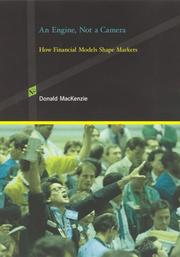
How financial economics changed the markets it set out to describe.
“There’s a wonderful chapter about LTCM in “An Engine, Not a Camera: How Financial Models Shape Markets” by Donald MacKenzie, a professor of sociology at the University of Edinburgh.15 The most recent issue of a bond is called on-the-run.” — Michael Mauboussin
Source: Animating Mr. Market: Adopting a Proper Psychological Attitude, page 6
Recommended by: Michael Mauboussin
A sequel to Capital Ideas on how financial theory has developed since.
Reflexivity applied to the credit crisis as it unfolded.
Recommended by: Mohnish Pabrai
An options trader's case against pricing derivatives by probability.
Recommended by: Nassim Nicholas Taleb

Five lectures giving a compact overview of his thinking on economics and markets.
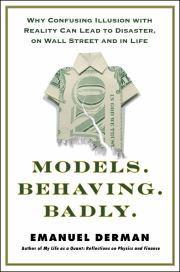
Why models are not theories, and the harm of mistaking them for reality.
Recommended by: Nassim Nicholas Taleb
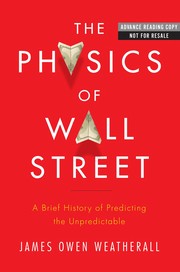
How physicists and mathematicians brought their models into finance.
“But such oversimplification can—and did—create a flawed conclusion.3 2 I am indebted to James Owen Wetherall, physicist, philosopher, and mathematician at the University of California for telling Bachelier’s story in his book, “The Physics of Wall Street, A Brief History of Predicting the Unpredictable” (Houghton Mifflin Harcourt, 2015).” — John C. Bogle
Source: David and Goliath: Who Wins the Quantitative Battle?, page 8
Recommended by: John C. Bogle, Eric Weinstein
Markets pay skilled active managers; a survey of the strategies they run.
“Now another outstanding Nordic researcher (and AQR partner), Lasse Heje Pedersen, presents me with the same dilemma: His new book, Efficiently Inefficient (Princeton University Press), is fantastic — almost too good at laying out how successful professional asset managers think and act.” — Clifford Asness
Source: Efficient Inefficiency: The Oxymoron That Explains the Investing World
Recommended by: Clifford Asness, Michael Mauboussin
A formal model of markets whose efficiency shifts as participants adapt.
“Andrew W. Lo and Ruixun Zhang, The Adaptive Markets Hypothesis: An Evolutionary Approach to Understanding Financial System Dynamics (Oxford: Oxford University Press, 2024)” — Michael Mauboussin
Source: Who Is On the Other Side? A Framework for Understanding Market (In)Efficiency
Recommended by: Michael Mauboussin
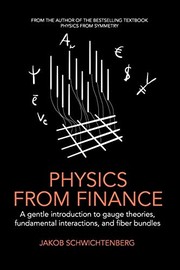
A gentle introduction to gauge theories and the fundamental forces through finance.
Recommended by: Balaji S. Srinivasan
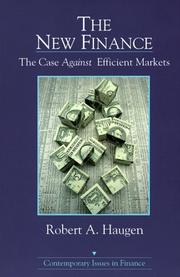
The case against efficient markets, with the evidence on mispriced stocks.
“In fact, Robert Haugen, in The New Finance, identifies this as the source of the value premium.” — William J. Bernstein
Source: Efficient Frontier, issue 999 (1999)
Recommended by: Mohnish Pabrai, William J. Bernstein and 1 other
 Andrew W. Lowrote 4 books here
 Robert J. Shillerwrote 3 books here
 Eugene F. Famawrote 2 books here
 George Soroswrote 2 books here
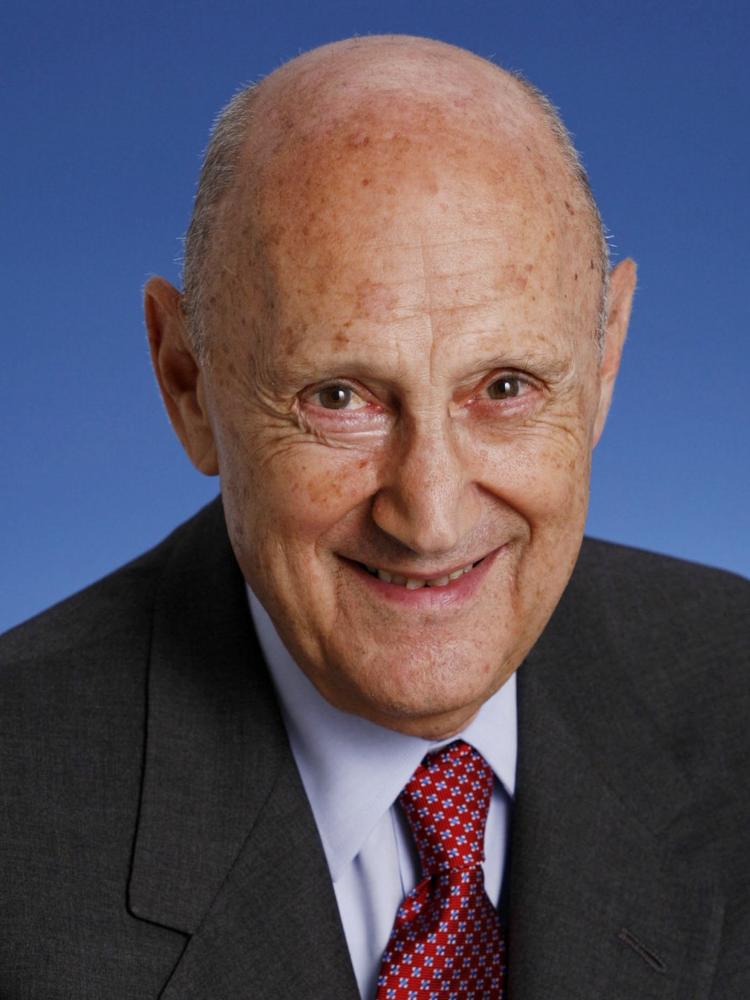 Burton G. Malkielwrote 1 book here
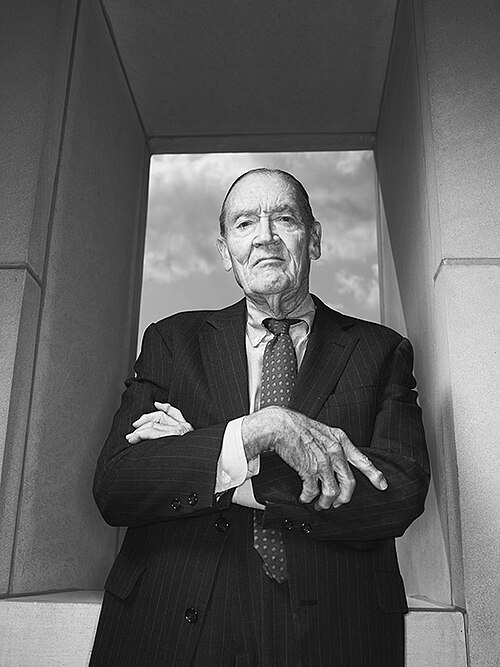 John C. Boglewrote 1 book here
 Emanuel Dermanwrote 1 book here
 Michael Mauboussinrecommends 12 books here
 Mohnish Pabrairecommends 8 books hereJohn C. Boglerecommends 3 books here
 Nassim Nicholas Talebrecommends 3 books here
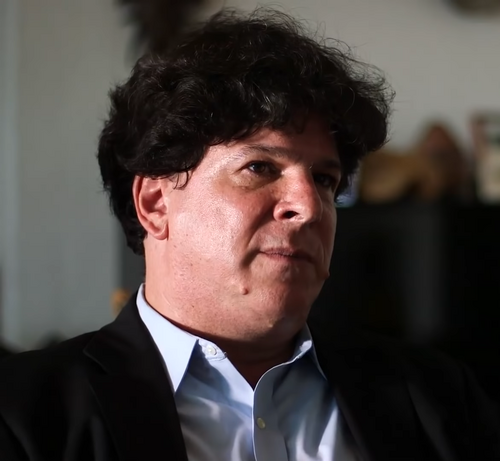 Eric Weinsteinrecommends 2 books here
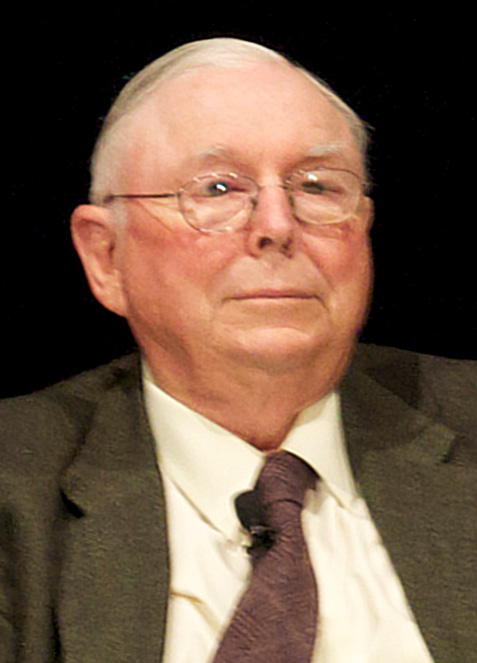 Charlie Mungerrecommends 1 book here
 Clifford Asnessrecommends 1 book here
 Marc Andreessenrecommends 1 book here
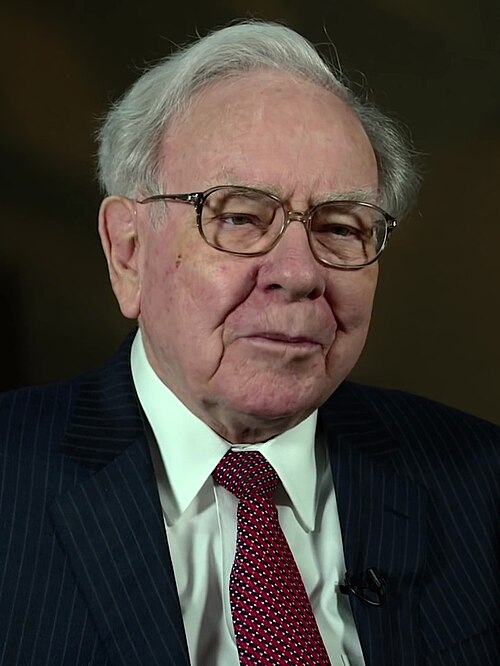 Warren Buffettrecommends 1 book here
 Jason Zweigrecommends 1 book here
Show all 18



- Who Is On the Other Side?Michael J. Mauboussin · paper · A framework for locating your actual source of edge.
- The Wisdom of CrowdsMichael J. Mauboussin · paper · When aggregation works and when it collapses into a mob.
- Myth Busting and the Variant PerceptionMichael J. Mauboussin · paper · Testing consensus beliefs against the actual data.
- The Limits of Crowd WisdomShane Parrish · essay · Crowds are wise only while members stay independent.