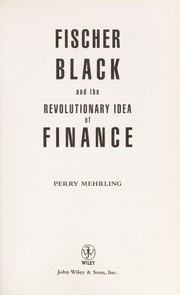
Fischer Black and the Revolutionary Idea of Finance
Fischer Black's life and ideas, from option pricing on, that shaped modern finance.
The option-pricing theory the fund's Nobel laureates were trading on.
Summary
Mehrling, a monetary economist, wrote an intellectual biography of Fischer Black that is as much a history of modern finance as a life. Black co-authored the option pricing formula, worked at Arthur D. Little, taught at Chicago and MIT, and spent his last years at Goldman Sachs.
Mehrling's argument is that Black is misunderstood as a mathematician who produced a formula. Black's actual position was more radical: he took the capital asset pricing model as literally true and applied it to everything, including monetary policy, business cycles and international finance, which produced conclusions that neither Keynesians nor monetarists could accept. His monetary work argued that money is passive, that the quantity of money is determined by demand rather than by the central bank, and that a modern financial system with unrestricted banking would produce a price level indeterminate by any monetary aggregate. Almost nobody agreed and most of it was never published in mainstream journals.
The book also covers Black's paper on noise, which argued that markets need traders acting on noise for liquidity to exist, that prices are efficient only within a factor of two, and that most of what looks like information trading is not.
Mehrling is careful about the finance and about Black's disagreements with Fama, Merton and Samuelson. The book requires some familiarity with financial theory. Its value for investors is the account of what the capital asset pricing model implies if taken seriously, and Black's noise argument, which remains the most useful short statement of how efficiency and inefficiency coexist.
Key takeaways 7
- Black took the capital asset pricing model as literally true and applied it beyond securities to money, business cycles and international finance, which is why his monetary work was rejected.
- Markets require traders acting on noise rather than information, because without them there would be no liquidity and no trading at all.
- Prices are efficient only within a wide band, which Black estimated as a factor of two, and precision beyond that is not available.
- The quantity of money in a developed financial system is determined by demand rather than by the central bank, which makes monetary aggregates uninformative.
- Business cycles reflect mismatches between the capital stock and what consumers want, not monetary shocks or demand failures.
- The option pricing formula was a byproduct of applying equilibrium reasoning to a warrant, not a mathematical exercise in its own right.
- Working at an investment bank gave Black access to the practical questions that academic finance had stopped asking.
Who should read it
Investors with a theoretical bent who want the intellectual history of modern finance through its most independent thinker, particularly on noise and market efficiency.
Who recommended it 1 · 1 direct
Similar books 6
Chosen by shared topics, the entries that hold them, and the people who recommended both.
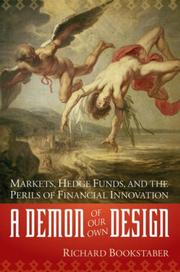
How financial innovation made markets more crisis-prone, from a risk manager.
“The New York Times of August 18 described A Demon of Our Own Design, by Richard Bookstaber (see “Investment Miscellany,” November 2000) as pointing out that “the proliferation of complex financial products like derivatives, combined with use of leverage to bolster returns, will inevitably mean that there will be a regular stream of market contagions like the one we’re having now – one of which, someday, could be calamitous.” 6” — Howard Marks
Source: Now It’s All Bad?, page 6
Recommended by: Howard Marks, Jeremy Grantham and 1 other
An options trader's case against pricing derivatives by probability.
Recommended by: Nassim Nicholas Taleb
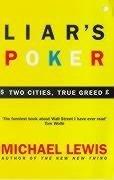
Life on Salomon Brothers' bond trading floor in the 1980s mortgage-bond boom.
“And then "Liar's Poker" from Michael Lewis, love that. I really like - I mythologize like Lewis Ranieri and all these guys when I read it.” — Chamath Palihapitiya
Source: Transcript: Chamath Palihapitiya
Recommended by: Chamath Palihapitiya, Michael Burry and 5 others
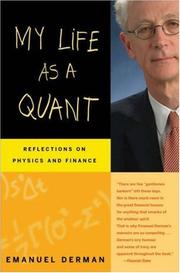
A particle physicist's move to Wall Street and quantitative finance at Goldman Sachs.
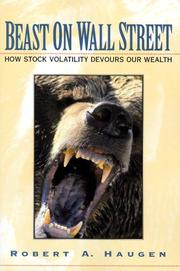
How price-driven volatility explains stock-price puzzles and why few beat the market.
Recommended by: Mohnish Pabrai
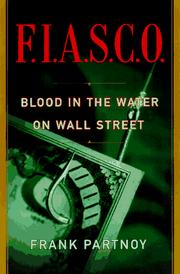
An insider's account of how Morgan Stanley built and sold derivatives in the 1990s.
“F.I.A.S.C.O.: The Inside Story of a Wall Street Trader by Frank Partnoy. Another great writer and great read.” — Christopher Bloomstran
Source: Semper Augustus 2023 Letter to Clients, 'Worldly Wisdom', p. 81
Recommended by: Charlie Munger, Christopher Bloomstran and 1 other
Where it sits in the reference 3
Topics 4
As an Amazon Associate I earn from qualifying purchases.