A Demon of Our Own Design
How financial innovation made markets more crisis-prone, from a risk manager.
Risk-manager's view; LTCM as one case among several.
Summary
Bookstaber ran risk management at Salomon Brothers and Morgan Stanley and worked at hedge funds, and this book argues that financial innovation has made markets more crisis-prone rather than safer, and that the mechanism is structural rather than behavioural.
His framework comes from Charles Perrow's normal accident theory. Systems that are both complex, meaning their components interact in unexpected ways, and tightly coupled, meaning there is no slack between processes and no time to intervene, will produce catastrophic failures as a matter of course rather than as a result of error. Bookstaber argues that derivatives, leverage, algorithmic trading and the interconnection of institutions have made markets both more complex and more tightly coupled, and that each innovation introduced to manage risk has added complexity that created new failure modes.
He supports this with first-hand accounts. He was involved in portfolio insurance, which he shows converted a hedging technique into a mechanism that generated the 1987 crash. He covers the 1998 Long-Term Capital Management collapse and the way liquidation of one fund's positions moved prices against every other fund holding similar trades, which is the mechanism by which a single failure propagates.
His prescription is counterintuitive and unpopular: reduce complexity, reduce leverage, and accept coarser instruments that do not fit needs exactly but that fail predictably. The book was published in 2007, months before the crisis it describes in general terms, which gives it standing. Its analysis of liquidity-driven contagion between apparently unrelated positions is the most useful part.
Key takeaways 7
- Markets have become both complex and tightly coupled, which makes catastrophic failure a structural property rather than the result of error.
- Each innovation introduced to manage risk adds complexity that creates new failure modes not present before it.
- Portfolio insurance converted a hedging technique into a mechanism that generated forced selling, which produced the 1987 crash.
- Liquidation of one leveraged fund's positions moves prices against every other fund holding similar trades, which is how a single failure propagates across unrelated institutions.
- Positions that appear diversified become perfectly correlated during a liquidity event, because the correlation comes from who holds them rather than from what they are.
- Reducing complexity and accepting coarser instruments that fit needs imperfectly produces a more survivable system than precise instruments that fail unpredictably.
- Leverage determines the speed at which a problem propagates, which is why the same shock produces different outcomes in differently levered systems.
Who should read it
Risk managers and investors who need the structural account of why financial systems fail and how liquidity contagion connects unrelated positions.
Who recommended it 3 · 3 direct
“The New York Times of August 18 described A Demon of Our Own Design, by Richard Bookstaber (see “Investment Miscellany,” November 2000) as pointing out that “the proliferation of complex financial products like derivatives, combined with use of leverage to bolster returns, will inevitably mean that there will be a regular stream of market contagions like the one we’re having now – one of which, someday, could be calamitous.” 6”
“From the title of the excellent book by Richard Bookstaber.”
“Also, Richard Bookstaber, A Demon of Our Own Design: Markets, Hedge Funds, and the Perils of Financial Innovation (New York: John Wiley & Sons, 2007)”
Similar books 6
Chosen by shared topics, the entries that hold them, and the people who recommended both.
Fischer Black's life and ideas, from option pricing on, that shaped modern finance.
Recommended by: Mohnish Pabrai
Quantitative investors, from the field's rise to the crises that hit it.
Recommended by: Mohnish Pabrai
A trader's manual for managing books of vanilla and exotic options.
The official report on why Long-Term Capital Management failed.
Trading options as trading volatility: implied volatility, the Greeks, hedging.
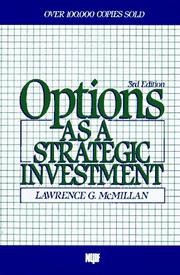
A comprehensive reference on option strategies, organised strategy by strategy.