Option Volatility and Pricing
Trading options as trading volatility: implied volatility, the Greeks, hedging.
The trader's book on volatility and position greeks.
Summary
Sheldon Natenberg traded on the Chicago exchanges and wrote the book that options traders are still handed on their first day. Its subject is not option pricing theory as such but how to think about volatility as the tradeable quantity.
The central reorientation is that an option's price is a statement about expected future volatility, and that a trader's view should be expressed as a view on volatility rather than on direction. Natenberg builds the apparatus for this: the pricing model as a tool for converting price to implied volatility and back, the Greeks as the sensitivities that must be managed, delta hedging as the mechanism that isolates the volatility exposure, and the practical difference between realised and implied volatility as the source of profit and loss in a hedged position.
The second half covers the structures traders use, including vertical spreads, straddles, butterflies, calendar spreads and ratio positions, and explains what each is a bet on. He covers volatility skew and the term structure of implied volatility, and treats them as market phenomena to be traded rather than as model errors. Later chapters address risk management, position limits and the ways option positions fail. The book assumes no advanced mathematics and is written for practitioners; readers wanting derivations should go to Hull. It has been updated across editions and the third edition covers volatility products and electronic markets.
Key takeaways 7
- An option's price is a statement about expected future volatility, and that is what the trader is buying or selling.
- Delta hedging removes directional exposure and leaves a position whose profit depends on realised volatility exceeding or falling short of implied.
- The profit from a hedged long option position comes from rehedging as the underlying moves, so gamma converts movement into money.
- Implied volatility varies systematically by strike and by expiry, and the resulting surface is a market fact rather than a model failure.
- Every spread structure is a specific bet on volatility level, on volatility change, or on the distribution's shape.
- Option positions fail through gap moves and through volatility changes rather than through the gradual movements the models assume.
- Natenberg argues that traders should think in terms of theoretical edge per contract and manage position size against it.
Who should read it
Anyone trading or risk-managing options who needs the practitioner's framework for treating volatility as the traded quantity.
Similar books 6
Chosen by shared topics, the entries that hold them, and the people who recommended both.

How financial innovation made markets more crisis-prone, from a risk manager.
“The New York Times of August 18 described A Demon of Our Own Design, by Richard Bookstaber (see “Investment Miscellany,” November 2000) as pointing out that “the proliferation of complex financial products like derivatives, combined with use of leverage to bolster returns, will inevitably mean that there will be a regular stream of market contagions like the one we’re having now – one of which, someday, could be calamitous.” 6” — Howard Marks
Source: Now It’s All Bad?, page 6
Recommended by: Howard Marks, Jeremy Grantham and 1 other
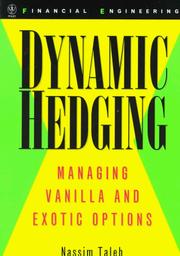
A trader's manual for managing books of vanilla and exotic options.
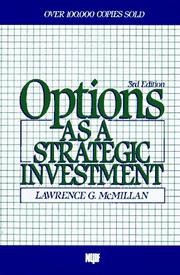
A comprehensive reference on option strategies, organised strategy by strategy.
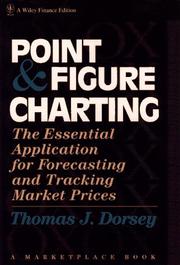
How point and figure charts track supply and demand for securities.
Recommended by: Mohnish Pabrai

An early study of options trading strategies, before Black-Scholes.
The prisoner's dilemma as a model of hidden risk in markets atop a long debt cycle.
Recommended by: Patrick O'Shaughnessy