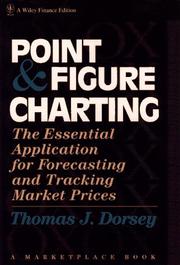
Point and Figure Charting
How point and figure charts track supply and demand for securities.
Summary
The reference has not verified this book in detail; the summary states only what the title, author and subject establish.
Thomas Dorsey explains point and figure charting, a long-established method of tracking the supply of and demand for securities. He starts from the law of supply and demand, which sets the price of everything from lumber to petrol and, he argues, matters even more in securities markets.
The second edition, subtitled The Essential Application for Forecasting and Tracking Market Prices, returns to the method and shows how charting shifts in supply and demand lets an investor spot promising trends early enough to profit from them. The Open Library record files the book under stock price forecasting, speculation and charts. The source read here, the jacket copy, gives the method's purpose but not the patterns, rules or case studies Dorsey uses to teach it.
Key takeaways 4
- Prices in securities markets follow supply and demand.
- Point and figure charts record shifts in supply and demand rather than time.
- Dorsey uses the charts to identify trends early.
- The method is a long-standing technique of technical analysis.
Who should read it
Investors and traders who want to learn point and figure charting.
Who recommended it 1 · 1 direct
Similar books 6
Chosen by shared topics, the entries that hold them, and the people who recommended both.
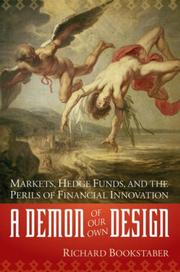
How financial innovation made markets more crisis-prone, from a risk manager.
“The New York Times of August 18 described A Demon of Our Own Design, by Richard Bookstaber (see “Investment Miscellany,” November 2000) as pointing out that “the proliferation of complex financial products like derivatives, combined with use of leverage to bolster returns, will inevitably mean that there will be a regular stream of market contagions like the one we’re having now – one of which, someday, could be calamitous.” 6” — Howard Marks
Source: Now It’s All Bad?, page 6
Recommended by: Howard Marks, Jeremy Grantham and 1 other
A trader's manual for managing books of vanilla and exotic options.
Trading options as trading volatility: implied volatility, the Greeks, hedging.
A comprehensive reference on option strategies, organised strategy by strategy.
An early study of options trading strategies, before Black-Scholes.
The prisoner's dilemma as a model of hidden risk in markets atop a long debt cycle.
Recommended by: Patrick O'Shaughnessy