Updates

  1. 137 new fund letters and reports, each with its own page: Kayne Anderson Rudnick (48 market briefings, KayneCast episodes and TV commentaries), Shelton Capital Management (48 shareholder reports and a commentary), Lakehouse Capital (10 Small Companies Fund letters), Smead (5 newsletters), RIT Capital Partners (5 monthly commentaries), Kovitz, Legal & General, Generation, Hosking, Marram, Munro, Oldfield and others.
  2. 200 new fund letters and reports, each with its own page: Spheria (41 monthly reports), Peapack Private (41 weekly recaps and planning newsletters), Fort Washington (23), Polen Capital (15), Aristotle Pacific (14), Riverwater (13), Chou (10), Apollo Asia Fund (8, back to 1998), Personal Asset Trust, Rockwood Strategic, J Capital Research, I/O Fund, Penn Davis McFarland, Pomona and others.
  3. Investor pages have one Investments tab with shares, changes, % owned, class, market cap and Market cap and Status filters, a Funds tab listing each fund the firm runs, and assets under management from Form ADV. The Investors table shows AUM and current investments, and its search finds investors by what they hold.
  4. Filters, search and sort stay as you left them when you come back to a section. Person cards look like book cards. Company pages name their Investors tab Ownership. Kind and Sector filters use four kinds and GICS sectors with industries. Dead links left the Links tabs.
  5. 190 more investors from fiscal.ai's list, with their sites, letters, partners and 13F holdings; 556 more partner descriptions. Experts now lists only people.
  6. Fund letters lists 144 new documents from 23 firms, each with its own page: a summary, key insights and quotes. Among them: 37 BlackRock articles, 21 Value Partners monthly notes, eight Baron Capital letters, six Stone Sentinel letters to partners, seven Value Line portfolio manager Q&As, BNY's 2026 earnings releases and Starboard Value's 2026 conference presentations.
  7. 584 more investors, with their websites, 6,776 letters from their own sites, 1,385 partners with pages and the 13F holdings of 213 firms. New letters arrive daily from 290 more archives.
  8. Media and Companies filter by GICS sector and industry group, taken from the companies an episode or page names. 1,860 more company pages show a logo, the SEC's list included.
  9. The home page counts what the platform holds and lists features such as the document reader, the player and saved marks. Settings sits at the foot of the rail. Book cards are a quarter wider, so rows hold fewer. Companies drops the Named in filter, and the Role list in your account runs A to Z.
  10. Investor pages of 13 firms show their newsroom's latest posts. New 13F filings are read as the SEC publishes them.
  11. Investor pages have an Investments tab: 13,975 holdings for 105 investors, from their 13F filings with the SEC and their own portfolio pages, with status and sector. 7,338 more companies have a page of their own.
  12. A podcast or YouTube episode keeps playing while you move around the site, in a bar with skip, speed and volume. Media tables show each episode's length and description.
  13. Press releases come from each company's own newsroom (167 companies); SEC filings sit on the Filings tab. Tickers name their exchange, and a company's Experts tab includes guests whose episode description names it.
  14. Letter types now include Market commentary, Fact sheet, Interim report, Annual report, Proxy circular and Governance document. The reader opens over the whole window.
  15. Partners of investment firms have 2,836 appearances and 580 pieces of writing on their pages; Derek Sivers's page lists every book he rates, with his rating.
  16. Fund letters lists three Akre Focus shareholder reports: the ETF's annual report for the year to July 2026, its semi-annual report to January 2026 and the fund's semi-annual report to January 2025, each with its own page: a summary, key insights and quotes.
  17. 837 partners of 73 investment firms now have their own pages, with title, description, photograph and social accounts; Andreessen Horowitz partners' pages also list their writing on a16z.com.
  18. Company pages have a Press releases tab: 8,229 releases for 203 companies, from SEC filings and company newsrooms. Companies filter by For-profit or Non-profit. Own media is a table with filters. Media filters by sector and industry. Publication pages link their publisher in the description.
  19. The Unilever page's Letters tab shows what each fund letter says about Unilever, word for word with its page, and whether the letter is bullish, bearish, mixed or neutral. Filter by sentiment, and see 10 letters at a time.
  20. 492 more fund letters and 3,183 more articles show the day they were published, read from each letter's first page or each article's own page.
  21. The PDF reader has a search box: type words to see every match in the document and step through them. About 540 letters that were web pages, among them Oakmark's commentaries, Bill Miller's letters and Howard Marks's memos, now open in the reader.
  22. Person pages: recommendations open with tier 1 books; one button per organisation; transcripts sit on their episodes; the books on 129 reading lists joined the Recommends tabs.
  23. Companies lists every company with a ticker on the SEC's list, with a Source filter. A quote on a company page opens the letter at that page with the words marked. A company's Media tab lists only episodes that name it, and a new Own media tab lists its podcasts, publications and YouTube channel. Show pages link their publisher. A page opened from a table no longer shows that table's filters beside it.
  24. Company, investor and person pages show more of their social accounts: Facebook, TikTok, Bluesky, Medium, GitHub, Discord and podcast shows. Investor pages list every partner the firm's own team page names: 965 people across 73 investors, 98 for Andreessen Horowitz.
  25. About 170 more letters and papers open in the reader: Mohnish Pabrai's letters and transcripts from his site's new folder, and free copies of papers by Asness, Harvey, Altman, Lo and others from their own or their schools' sites.
  26. Every company a fund letter names has a page, with the letters and quotes that name it: 47 new pages, among them Atom Computing, Hugging Face, Rolls-Royce Holdings and Westinghouse Electric. Company pages have a Quotes tab.
  27. A person's Writing tab has a Type column and filter (Article, Essay, Transcript, Speech, Foreword, Interview and the rest), and Publication names only the publication that published each piece.
  28. Fund letters opens on the newest published letter, and a letter or paper found by search opens its own page here instead of the publisher's site.
  29. A letter or paper with a copy on the site opens its PDF over its page, with a button to open it in a new tab. Select text to highlight or underline it; signed-in readers keep their marks in their account. Each quote opens the PDF at its page with its words marked, and a Source link leads to the publisher's original.
  30. Fund letters lists 61 more documents, each with its own page: Fairfax's 2025 and 2026 interim reports, proxy circulars and 2025 annual report (with their French editions), 26 Charlie Munger meeting transcripts, talks and essays, Third Point's 2026 monthly reports and Malibu Life's interim results, and a Seth Klarman interview. Papers adds Richard Thaler's two 2020 editorials on nudges.
  31. Fund letters lists Lux Capital's letters for Q2 and Q3 2026, by Josh Wolfe, each with its own page: a summary, key insights and quotes.
  32. Fund letters lists Brookfield's letter to shareholders for Q3 2026, by Bruce Flatt, with its own page: a summary, key insights and quotes.
  33. Fund letters lists Howard Marks's memo of 11 November 2026, A Layman Thinks About AI, with its own page: a summary, key insights and quotes.
  34. Fund letters lists 118 more letters, each with its own page: 44 weekly commentaries by Jeremy Siegel from 2026, 31 issues of Van Tharp's newsletter from 2018, 23 Pabrai Investment Funds letters from 2021 to Q3 2026, 13 Efficient Frontier essays by William Bernstein, Oakmark's three 3Q 2026 commentaries, two Lindsell Train reports, a John Hussman comment and Third Point's Q3 2026 letter.
  35. 2,027 more books carry a one-line description in the Books table and on their pages; 7,067 of 7,715 have one, every tier 1, 2 and 3 book among them.
  36. Fund letters lists 187 more letters from 19 firms, among them Permanent Equity, Social Capital, Lux Capital, Square Peg, Bestinver, Cobas, Sequoia Fund, Marketfield and EquityCompass; each shows on its investor's page and has a page of its own.
  37. 2,928 more books carry a one-line description in the Books table and on their pages, so every tier 1, 2 and 3 book has one; 5,040 in all.
  38. Every publication on Newsletters has its own page: its writing, its writers, its staff and who recommends it. Investor pages have a Management tab; a company's Experts tab now leaves out its own people, who list under Management. Tabs on a phone move sideways only.
  39. Every fund letter and research paper has its own page: the thesis, the PDF, the companies and books it names, and for 176 letters and 24 papers so far a summary, key insights and quotes with their page.
  40. 99 books that no page listed now sit under their topics in Books, among them Caste, American Prometheus and Pale Blue Dot.
  41. Newsletters lists every newspaper, magazine, investment newsletter, journal and blog the reference holds, 442 in all, with the people who write there. The search box keeps your last 20 searches. You can create an account.
  42. 283 books that fund managers recommend in their letters are on the shelf, each with the letter's own words and page; investor pages have a Recommends tab.
  43. Person, company, investor and show pages link their own accounts on X, Threads, Instagram, LinkedIn, YouTube and Substack: 275 people, 552 companies and organisations, 88 investors and 478 shows.
  44. 716 more book recommendations name their source: the person's own reading list, letter, blog post, speech or interview, or an article that reports it. 232 of them quote the person's own words about the book, on the book card and on the book's page.
  45. Every US-listed company has a page with its SEC filings. Company pages list their experts and their management, past and present. Fund managers sit under Investors. Each show has a page of its episodes, and an episode page names its guests and hosts. Biographies lists groups, then people. Breadcrumbs show where a page sits.
  46. Media lists every podcast episode, video, interview and talk, over 10,000, by person, company, publisher and event; each filter searches its own choices. Books opens on its table, then Browse, then Authors and Recommenders. A filter's count no longer covers its arrow.
  47. A book that no company, country or subject page lists shows its topics under Where it sits in the reference. On a phone, a page's tabs scroll sideways only. Descriptions read the same on every page. See them in the Experts tab lists every expert the page names.
  48. Every podcast episode, video and interview has its own page with a video or audio player and a link to the source. Investor pages show each company's sector and market cap; firms such as Berkshire Hathaway have one page that holds their letters and their company tabs. Letters tabs filter by company and search the theses. Companies filter by Public, Private and Defunct and link each company's website.
  49. Every tab, view and search has its own address, such as /books/table/asset or /letters/companies, so Back works and a link opens the same place. Page addresses no longer end in .html. Fund letters, Investors, Companies and Papers load about a fifth of the data they did.
  50. Fund letters has a Companies tab: every company the letters name, with its market cap, sector, country, and how many letters and investors name it. Investor pages link each investor's website. Lists in table cells end with “… and N more” at every width.
  51. 1,120 more book summaries; descriptions for 373 papers; pages for 137 more companies, each with the fund letters that discuss it; 215 official photographs; search has its own page.
  52. 411 more books have a summary; person pages list 930 more of the books they wrote; 147 people show their official photograph.
  53. Every investor has a page with its letters and the companies they discuss; company pages list the investors whose letters name them.
  54. A Companies section at the top of the rail lists every company the books, experts and fund letters name.
  55. Person pages list letters, writing, profiles and links as sortable tables with filters, and show each person's companies as links; Fund letters show each letter's description in its own column.
  56. Experts show a checked job title and a short description of each person; 30 more people have photographs.
  57. Every company, fund, university and publication the experts work for has a page listing the people there.
  58. Fund letters show each letter's thesis and filter by it; 225 person pages list the essays, columns and newsletter issues the person wrote.
  59. Person pages list every essay and newsletter issue a person wrote, and their own books as a table in List view.
  60. Recommends shows the five largest kinds of book and the rest under More; browse pictures load sooner.
  61. Podcasts and talks link the original episode, filter by Audio and video or Press, and list each publisher once.
  62. Pages are wider, Recommends has List and Grid, and a filter clicked again turns off.
  63. Book cards sit in a ruled grid with Open Library and Goodreads links and each book's one-line note.
  64. Funds is now Investors; each investor's styles are buttons that filter the table.
  65. Podcasts and talks on a person's page filter by year and publisher and show as a list or a grid of pictures.
  66. Quotes show only people's own words: 472 summaries written by list sites are gone.
  67. Country pages open from Browse again, and every link on the shelf lands on a page.
  68. Subject and person pages show their sections as tabs, and each book appears once on a person's page.
  69. Book cards show the quote, who said it and the source; grids show five cards to a row.
  70. On a phone, a menu holds the sections, search, Updates, Feedback and dark mode.
  71. Feedback takes a screenshot of the page with no browser prompt, opens a screenshot full size when you click it, and clears itself once sent.
  72. Book cards are centred, search names the topic each book sits in, and any text cut short shows whole on hover.
  73. Search groups its results by kind: people, companies, geographies, subjects, topics, books, funds, fund letters and papers.
  74. The Books table lists who recommended each book by name, and the browser tab names the section you are in.
  75. Feedback can take a screenshot of the page, or one you paste or choose, and opens in the corner beside Updates.
  76. Each rail button reopens its section where you left it, and Browse, Table and People show on every book and subject page.
  77. Filters grey out choices that hold nothing instead of hiding them, and Books › People filters by authors or recommenders.
  78. Feedback takes a subject line and up to three screenshots.
  79. Biographies are grouped by the person they are about: 41 new pages, from Abraham Lincoln to Lee Kuan Yew.
  80. Sport splits into 23 sports, and Religion into one topic per faith.
  81. Book lists show as cards: the cover, one recommendation quote and every recommender by name.
  82. Seventeen subjects that had two or three pages under different names now have one page each.
  83. Every page lists its Experts as authors and recommenders, with a link to them on the Experts tab.
  84. Economics, Financial history, Financial panics and Accounting are subjects of their own, with one page per financial crisis.
  85. Book, person and subject pages open inside the app, so the tabs stay in view.
  86. 996 more book covers, and photographs or logos for 227 more people and companies.
  87. Books › Browse shows every subject as cards, and the rail holds Fund letters, Papers, Experts, Books and Funds.
  88. Every topic over 150 books splits into narrower topics, each with a page of its own.

Send feedback

What is it?
Screenshots, up to 3 (optional)
or paste one with Ctrl+V

We use your email only to reply to you.

SD

Scientists, Doctors and Thinkers

Lives and memoirs of scientists, inventors, engineers, physicians, economists and philosophers, including Feynman, Einstein, Darwin, Keynes and Edison.

Start here

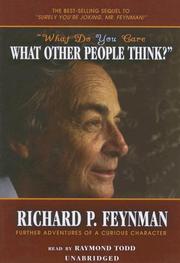
  1. What Do You Care What Other People Think?Richard P. Feynman, 1988
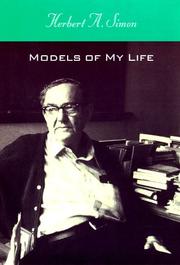
  2. Models of My LifeHerbert A. Simon, 1991
  3. Just for FunLinus Torvalds, David Diamond, 2001
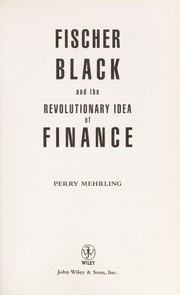
  4. Fischer Black and the Revolutionary Idea of FinancePerry Mehrling, 2005
  5. By Force of ThoughtJános Kornai, 2006
Richard P. Feynman · 1988

Stories of a physicist's first marriage and his inquiry into the Challenger disaster.

“Richard Feynman's books are awesome. Very bright physicist. Must-read!” — Mohnish Pabrai

Source: Mohnish's Bookshelf — Unorganized, yet Interesting, entry 169

Recommended by: Jason Zweig, Mohnish Pabrai, Naval Ravikant and 1 other
Herbert A. Simon · 1991

A life across economics, psychology, organisations and artificial intelligence.

Linus Torvalds, David Diamond · 2001

How Linux came to be developed, and how its creator thinks.
Perry Mehrling · 2005

Fischer Black's life and ideas, from option pricing on, that shaped modern finance.

Recommended by: Mohnish Pabrai

János Kornai · 2006

An economist's path from young communist in Hungary to analyst of socialism.
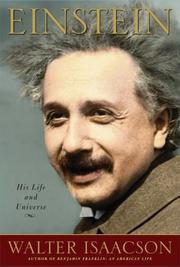
Walter Isaacson · 2007

Einstein's life and science, from the Bern patent office to relativity.

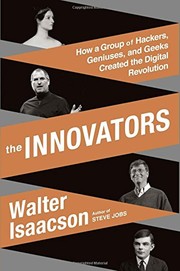
Walter Isaacson · 2014

Computing as a run of collaborations, from Ada Lovelace and Babbage to Google.

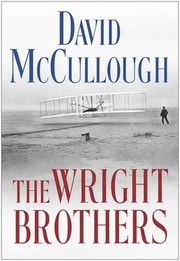
David McCullough · 2015

From a Dayton bicycle shop to the first powered flights and the 1908 demonstrations.

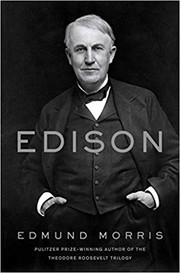
Edmund Morris · 2019

Thomas Edison's life, told in reverse chronological order.

“on perhaps the greatest American builder of all, the builder who brought electricity to us all, Thomas Edison” — Marc Andreessen

Source: @pmarca, companion thread to 'It's Time to Build'

Recommended by: Marc Andreessen
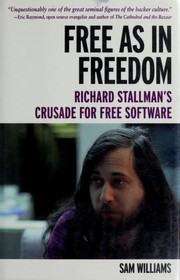
Sam Williams · 2002

Richard Stallman, the free software movement and the GPL licence he wrote.
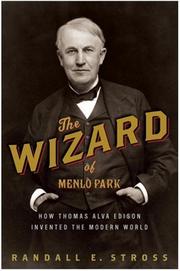
Randall E. Stross · 2007

How Thomas Edison made himself the first modern celebrity.

“I've recently been reading Randall Stross's marvelous book about Thomas Edison, The Wizard of Menlo Park” — Marc Andreessen

Source: The Pmarca Guide to Startups, Part 7

Recommended by: Marc Andreessen, David Friedberg

Theodore H. Schwartz · 2024

A neurosurgeon on how medical decisions and hospital incentives work.

Recommended by: Bill Gates

Jean-Jacques Rousseau · 1782

A philosopher's autobiography of the first fifty-three years of his life.

Recommended by: Li Lu, Paul Graham

Abraham Flexner · 1960

The autobiography of an educator who shaped American medical education.

Recommended by: Mohnish Pabrai

Ved Mehta · 1962

A writer's encounters with British philosophers and historians.

Recommended by: Patrick Collison
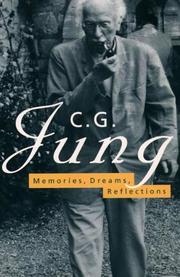
Carl Jung · 1963

A psychiatrist's own story of his life, told late in life with a colleague.

Recommended by: Arianna Huffington
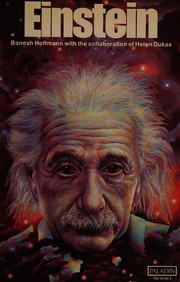
Banesh Hoffmann · 1975

A biography of Albert Einstein.

Recommended by: Paul Graham

Peter F. Drucker · 1979

A memoir told through portraits of the people the author knew, from Vienna on.

Recommended by: Mohnish Pabrai, Stewart Brand
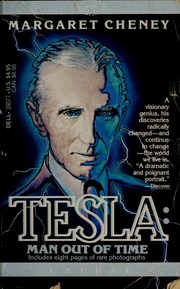
Margaret Cheney · 1981

A life of Nikola Tesla, who found the rotating magnetic field behind AC machines.

Recommended by: Ev Williams
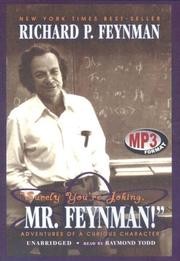
Richard P. Feynman · 1984

A physicist's stories, from fixing radios as a boy to Los Alamos and beyond.

“Autobiographical stories. Fun anecdotes. But they give a great glimpse into an approach to life: Doubt, challenge, and most importantly: test everything. Experiment. See what happens in the real-world, not in-theory. Applied not just to science, but how ants find food, talking to strangers in bars, sketching portraits, and playing a shaker in a Brazilian band.” — Derek Sivers

Source: Derek Sivers book notes (primary, rated list) · Rating: 6/10

Recommended by: Brian Armstrong, Derek Sivers, Jason Zweig and 20 others

Clarence L. Johnson · 1985

The autobiography of the engineer who led Lockheed's Skunk Works, from P-38 to SR-71.

Recommended by: Paul Graham
Susan M. Lammers · 1986

Interviews with leading programmers on the forces and traits behind their work.

Recommended by: Patrick Collison
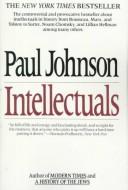
Paul Johnson · 1988

Case studies of thinkers from Rousseau and Marx to Sartre, judged by how they lived.

Recommended by: Marc Andreessen
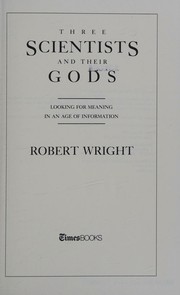
Robert Wright · 1988

Information theory as an idea that ties together three scientists' work.

Lloyd Steven Sieden · 1989

The life and work of the engineer and inventor Buckminster Fuller.

Recommended by: Patrick Collison

Joseph Campbell · 1990

Conversations and speeches on a mythologist's life and thinking.

Mike Gray · 1992

Harrison Storms, an aerospace engineer, and the building of Apollo for the moon race.

Recommended by: Patrick Collison
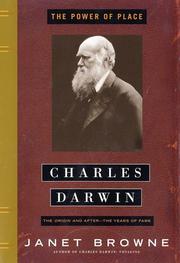
Janet Browne · 1995

The first volume of a biography of Charles Darwin, the naturalist.

Recommended by: Mohnish Pabrai
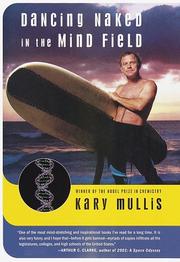
Kary Mullis · 1998

The ideas and adventures of the chemist who invented PCR.

Recommended by: Ev Williams, Peter Attia
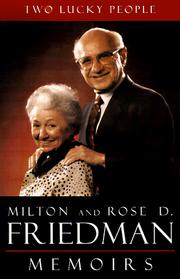
Milton Friedman · 1998

The joint memoirs of an economist and his wife, their lives and their work.

Recommended by: Patrick Collison
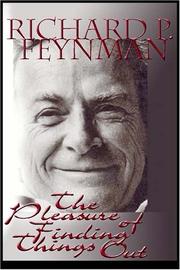
Richard P. Feynman · 1999

A collection of Richard Feynman's best short works.

Recommended by: Brian Armstrong, Larry Page
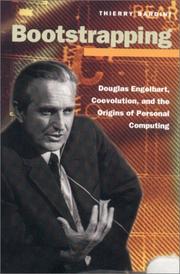
Thierry Bardini · 2000

Douglas Engelbart and the origins of personal computing and its interfaces.

Recommended by: Patrick Collison
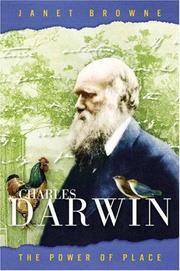
Janet Browne · 2002

The second volume of a biography of Charles Darwin.

Recommended by: Mohnish Pabrai

Atul Gawande · 2002

True cases showing the power and the limits of medicine as it is practised.

“Gawande, Atul, Complications: A Surgeon’s Notes on an Imperfect Science (New York: Picador, 2002)” — Michael Mauboussin

Source: Are You an Expert? Experts and Markets, page 10

Recommended by: Michael Mauboussin, Mohnish Pabrai and 1 other
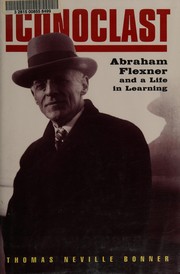
Thomas Neville Bonner · 2002

Abraham Flexner's life in education, up to founding the Institute for Advanced Study.

Recommended by: Mohnish Pabrai

Chandler Burr · 2002

A scientist with an uncanny sense of smell and his attempt to explain how noses work.

Recommended by: Eric Weinstein
Jenny Uglow · 2002

Boulton, Watt, Wedgwood, Erasmus Darwin and the Midlands friends who experimented.

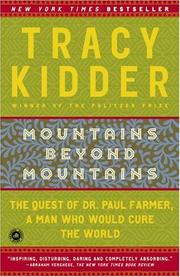
Tracy Kidder · 2003

Paul Farmer, the doctor who co-founded Partners In Health, treating the poor.

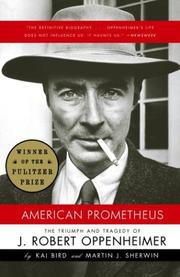
Kai Bird, Martin J. Sherwin · 2005

The life of J. Robert Oppenheimer, who directed the Manhattan Project.

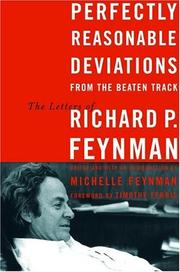
Richard P. Feynman · 2005

A physicist's letters from across his career, many published for the first time.

“I've also been reading Perfectly Reasonable Deviations from the Beaten Track by Feynman and re-reading Genius: The Life and Science of Richard Feynman, a biography about him.” — Naval Ravikant

Source: Naval's Recommended Reading — The Almanack of Naval Ravikant

Recommended by: Jim O'Shaughnessy, Naval Ravikant
Leon Hesser · 2006

The career of Norman Borlaug, the plant scientist who won the Nobel Peace Prize.

Recommended by: Bill Gates, Mohnish Pabrai
James Nichols · 2007

The political philosophy of Alexandre Kojève across his major writings.

Recommended by: Marc Andreessen
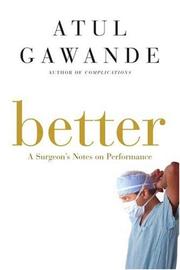
Atul Gawande · 2007

How doctors try to close the gap between their intentions and their performance.

Recommended by: Mohnish Pabrai, John Maeda
Randal Keynes · 2009

Charles Darwin's family life, his daughter's death and his ideas on evolution.

Recommended by: Mohnish Pabrai, Li Lu
K.C. Cole · 2009

A personal life of the physicist Frank Oppenheimer, brother of Robert.

Recommended by: Patrick Collison
Augustine of Hippo · 2009

The autobiography of the philosopher and theologian Saint Augustine.

Recommended by: Patrick Collison
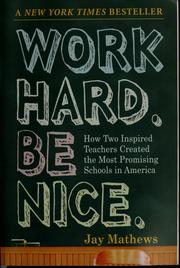
Jay Mathews · 2009

How two Teach for America teachers founded the KIPP charter schools.

Recommended by: Bill Gates
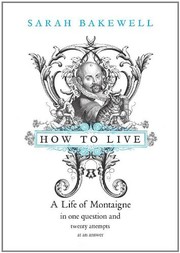
Sarah Bakewell · 2010

Montaigne's life and essays, read as answers to the question of how to live.

“I also recommend Derek's other books (How To Live is especially good).” — Andrew Wilkinson

Source: Newsletter

Recommended by: Andrew Wilkinson, Derek Sivers and 3 others
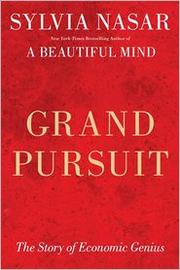
Sylvia Nasar · 2011

How modern economics came to be, through the people who made it.

Recommended by: Mohnish Pabrai

William H. Foege · 2011

How smallpox was eradicated, told by one of the physicians who did it.

Recommended by: Bill Gates
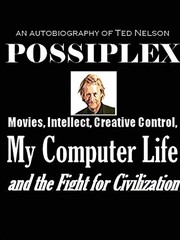
Ted Nelson · 2011

A computer pioneer's autobiography: his life in computing and fight for civilisation.

Recommended by: Patrick Collison
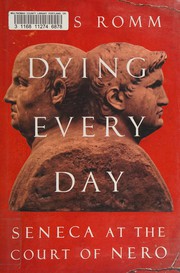
James Romm · 2014

The philosopher Seneca's moral struggles at the court of Nero.

Recommended by: Nat Eliason
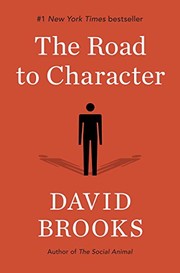
David Brooks · 2015

Humility, character and the virtues, and why they matter.

“It certainly was a stimulating read, and it got me thinking about my own motivations and limitations in new ways.” — Bill Gates

Source: Gates Notes review of The Road to Character

Recommended by: Bill Gates, David Perell, Mohnish Pabrai and 2 others
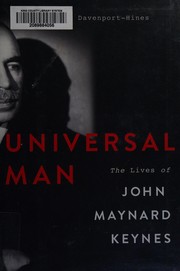
Richard Davenport-Hines · 2015

The many lives of John Maynard Keynes, the century's most influential economist.

Recommended by: Mohnish Pabrai

Robert Kanigel · 2016

A biography of Jane Jacobs, who changed how people see and live in cities.

Recommended by: Paul Graham

Jaron Lanier · 2017

A computer scientist's memoir of virtual reality and its philosophy.

Recommended by: Satya Nadella

Charles Darwin

Recollections of the development of his mind and character, written for his family.

Recommended by: Paul Graham
The life of the economist and statesman, abridged from three volumes into one.

Recommended by: Patrick Collison
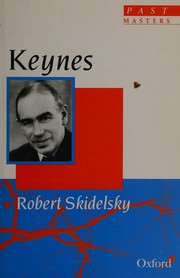
Robert Skidelsky

Keynes's economics and philosophy, and why they matter after the financial crisis.

Recommended by: Mohnish Pabrai
Mark J

An ethnobotanist studies with Amazon shamans to find medicines in rain-forest plants.

Recommended by: Tim Ferriss
More scientists, doctors and thinkers